




On a mission to fight pad poverty
She believes that the next generation, in particular, has to be educated about their right to more accessible menstrual hygiene and health.


Text size
She believes that the next generation, in particular, has to be educated about their right to more accessible menstrual hygiene and health.
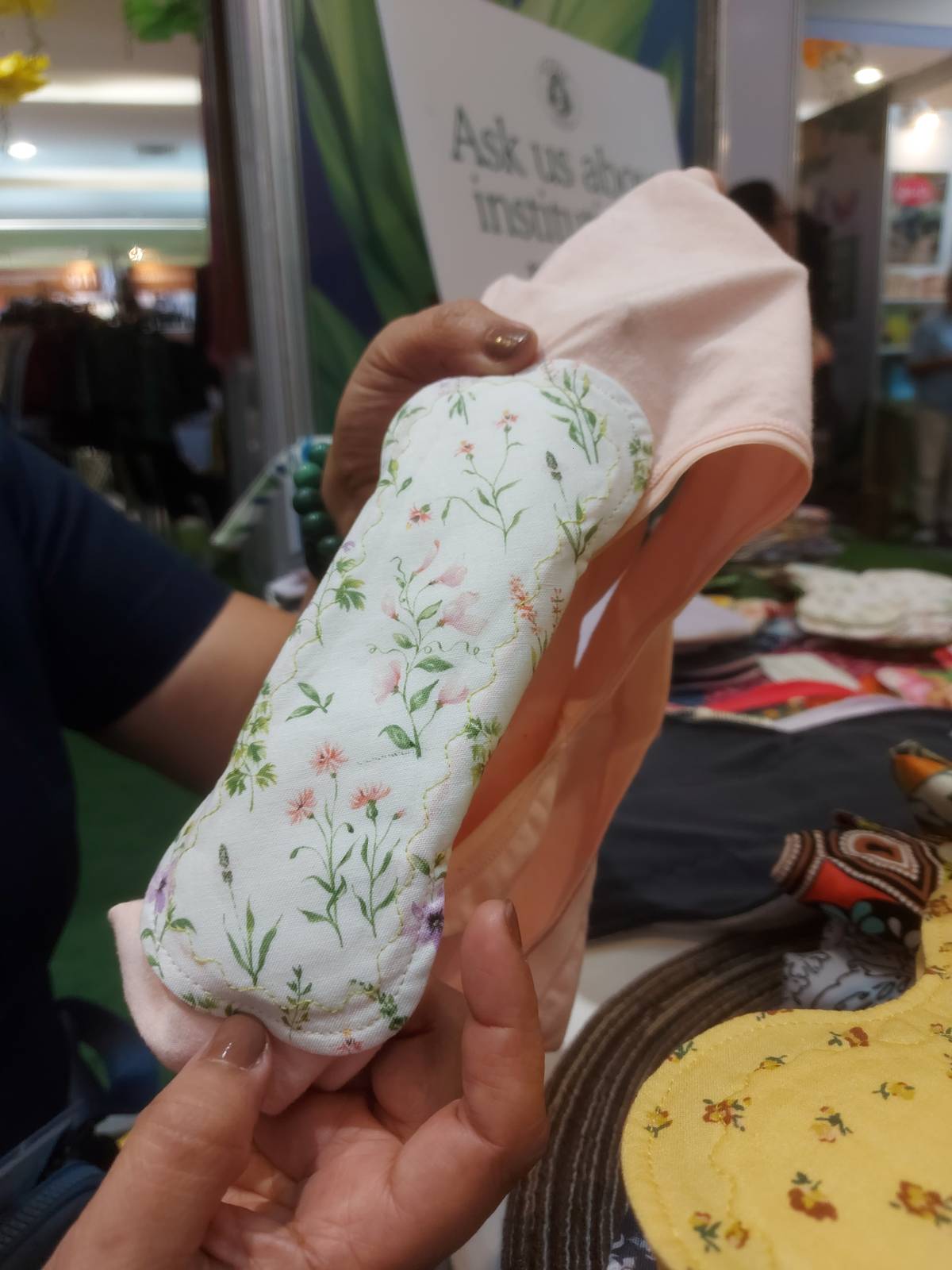
PROPER way of affixing a cloth pad into panty to stay in place.
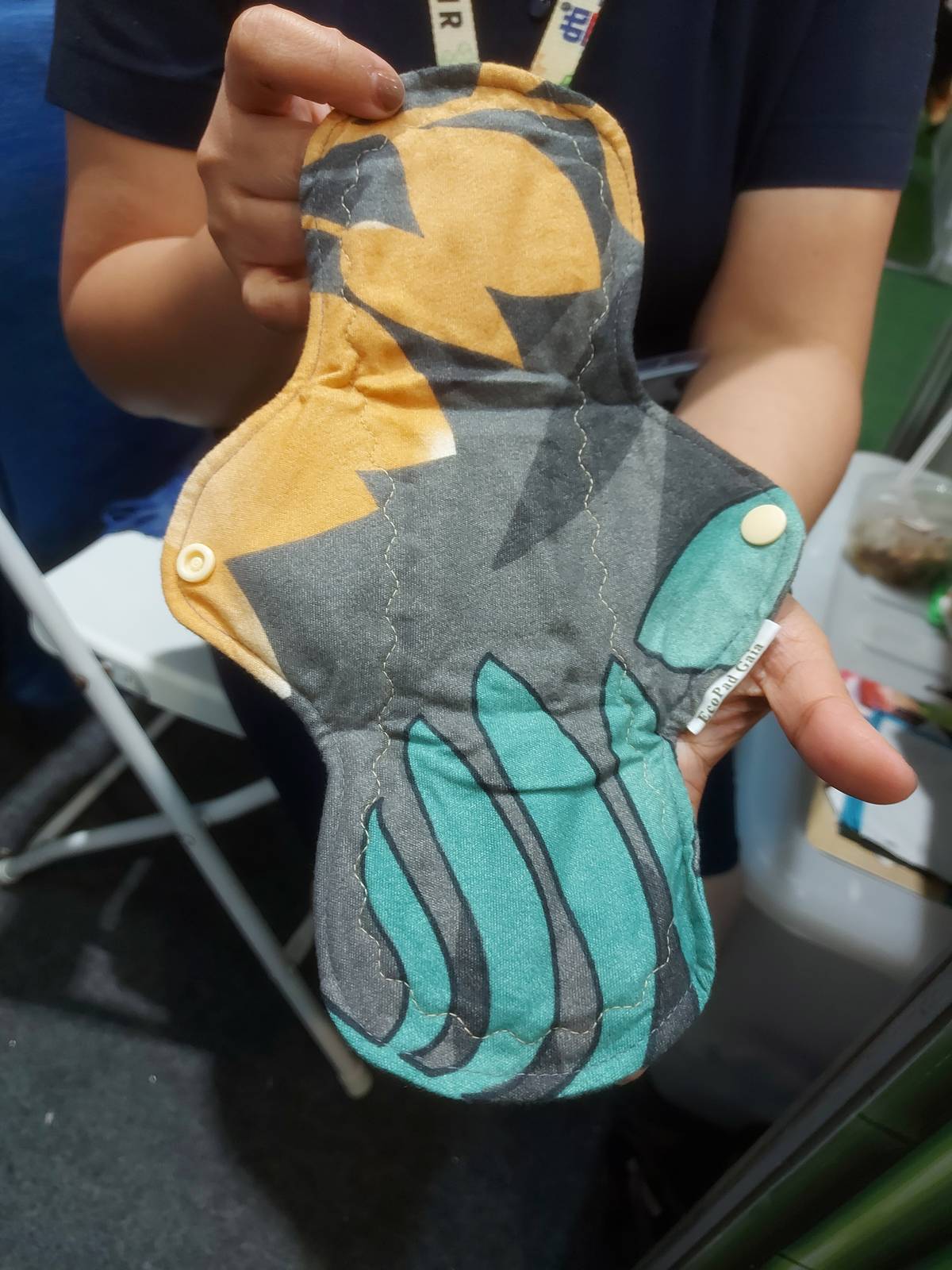
BIG pad for heavy flow — every cloth pad can be used for three years and beyond.
Every month, over two billion people, mostly women, are said to be affected by the so-called “pad or period poverty” — wherein girls are hindered to go to school every time they experience monthly period, due to stigma and lack of access to hygiene facilities and sanitary napkins, resulting in mass school drop-outs and poverty especially among women, the United Nations (UN) said.
Even before Adeline Bondoc knew about period or pad poverty, she had been on a mission to help her fellow women. Every month, Adeline used to dread having menstruation because wearing a sanitary pad irritates her skin and gives her rashes.
“Previously, because there’s a stigma about menstruation, we don’t discuss it. We’re ashamed to talk about it,” she told DAILY TRIBUNE.
In 2018, Adeline’s daughter found something “cute” in Instagram — a cloth pad.
“She (my daughter) said, ‘Ma, it’s cute!’ I told her, ‘Okay, will try.’ I was surprised that I didn’t experience having rashes that month when I had a monthly period. And then I experienced the same the following month. I used to expect the rashes because I thought it was hormonal. So I realized that it’s just like in babies, diaper rash,” she recalled partly in Filipino.
She immediately fell in love with the cloth pad and since 2018, she has used only cloth pads and never went back to using disposable sanitary napkins ever again.
“I really never used disposable pads again because of the trauma of it piercing my skin. It was very painful.”
But cloth pads did not only solve her “buwanang dalaw” or monthly period woes. In 2021, cloth pads started saving not only her skin, but also her life and the lives of pets under her care. With the casino she was working for affected by the pandemic, she needed extra income to be able to continue feeding and taking care of the rescue animals under her wing.
“And then when Typhoon Ulysses came and animal welfare organizations came knocking at my door for donations, I wanted to donate but I didn’t have extra money. That’s when I first started to sew cloth pads. I took the business seriously, starting with my family and friends. And then I realized, they, too, get rashes during menstruation. That’s when I realized that there are many who are suffering from rashes; we just don’t talk about it.”
Thus, in 2021, Bondoc founded Ecopad Gaia, her own cloth pad brand that DAILY TRIBUNE encountered at the recent Department of Trade and Industry (DTI) national fair in Megatrade Hall, SM Megamall, Mandaluyong City.
By using old-stock but high-quality cotton fabric from Korea as raw material, Ecopad Gaia is able to keep its prices affordable. The pads come in different sizes — small or panty liner-size; medium for regular flow and large for heavy flow. The pads have built-in fasteners that make them easy to carry, fold and store especially when they’re already used. Bondoc recommended changing pads every hour for heavy flow days, and three to four hours for regular flow.
According to her, once the menstruation hits the cotton in the pad, it dries and doesn’t smell for as long as it’s properly folded — even if you forget about it in your bag. It is also easy to hand-wash using gentle soap and water. If properly taken care of, the pad could last for repeated use for three years and beyond, making it a sustainable solution even to plastic waste to which disposable pads add up as problems.
Thus, more than just a for-profit business, Ecopad Gaia has been envisioned by Bondoc as a social enterprise that partners with companies and organizations who want to sponsor marginalized women’s cloth pads in the fight against pad poverty.
She believes that the next generation, in particular, has to be educated about their right to more accessible menstrual hygiene and health.
“I’m happy that this venture is also an advocacy; a way for me to tell my fellow women that there is nothing wrong about having menstruation. It’s something natural and healthy.”
Early-stage cancer can be more easily treated than in the later stages. That is why doctors recommend regular cancer…
‘As far as I recall and based on the record, there is no showing.’
President Ferdinand Marcos Jr. is flying to Singapore for a five-day working visit upon the invitation of Singaporean…
