
DENR advocates for conservation of herbal medicine

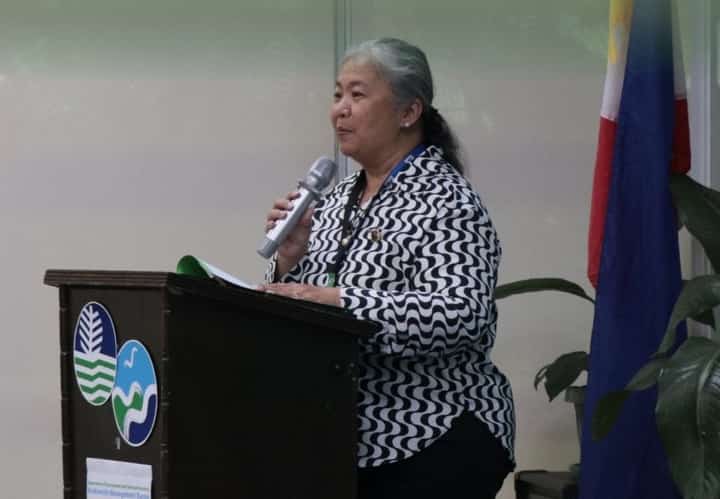
Department of Environment and Natural Resources Biodiversity Management Bureau Assistant Director Mariglo Rosaida Laririt during the World Wildlife Day celebration of the department this Wednesday.
DENR Biodiversity and Management Bureau
The Department of Environment and Natural Resources highlighted the importance of herbal medicine in the country in celebration of World Wildlife Day 2026 this Wednesday.
The department’s Biodiversity Management Bureau themed its event as “Medicinal and Aromatic Plants: Conserving Health, Heritage, and Livelihoods” to emphasize the role that herbal medicine continues to have within the country.
“It’s undeniable that plants remain a fundamental source in the continuing quest for effective and affordable health remedies as well as our attempts as humans to prolong life on earth,” said the bureau’s Assistant Director Mariglo Rosaida Laririt.
Herbal medicine, referred to by the World Health Organization as traditional medicine, was seen as an essential part of global medicine with 170 of the 194 countries under the WHO reporting to be using some form of these remedies.
In the Philippines, a study published through the International Journal of Medical Students in 2021 reported that the use of herbs as medication was linked to family tradition and initiative to supplement modern medical practices in the country.
Doctor Maria Teresa Iñigo of the Philippine Institute of Traditional and Alternative Health Care backed these statistics as she emphasized that plants did not only serve as means of improving health but were also used as a local source of livelihood within rural communities.
“We see that our work reflects three deeply interconnected commitments—first conserving health, second conserving heritage, and third conserving livelihoods,” she said.
PITAHC was launched as part of the Traditional and Alternative Medicine Act (TAMA) of 1997 which sought to promote economically sustainable ways of making the most out of herbal treatments.
The agency was also responsible for approving the 10 medicinal plants endorsed by the Department of Health which are lagundi, ulasimang bato, sambong, ampalaya, bawang, bayabas, tsaang gubat, akapulko, niyog-niyogan, and yerba buena.
These plants are commonly used in various medicines that treat different diseases from fevers and coughs to conditions like diabetes and hypertension.
Iñigo stressed that there are many other plants that the agency was actively researching as these forms of medicine are deeply rooted in a country’s heritage.
“Conservation is not merely an environmental issue, it is a health issue because without plants there is no herbal medicine, it is an economic issue because many farmers depend on herbal cultivation, it is a cultural issue because traditional knowledge is part of our identity,” she said.