
From spilling beans to tea: British Council unveils history and evolution of 100 English phrases


The British Council has unveiled a curated collection of 100 idioms, proverbs and phrases that trace the fascinating evolution of the English language. Phrase-ology highlights how English continues to transform — shaped by global cultures, online communities, and pop-culture shifts — while still carrying expressions rooted in centuries-old traditions, including those dating back to Ancient Greece.
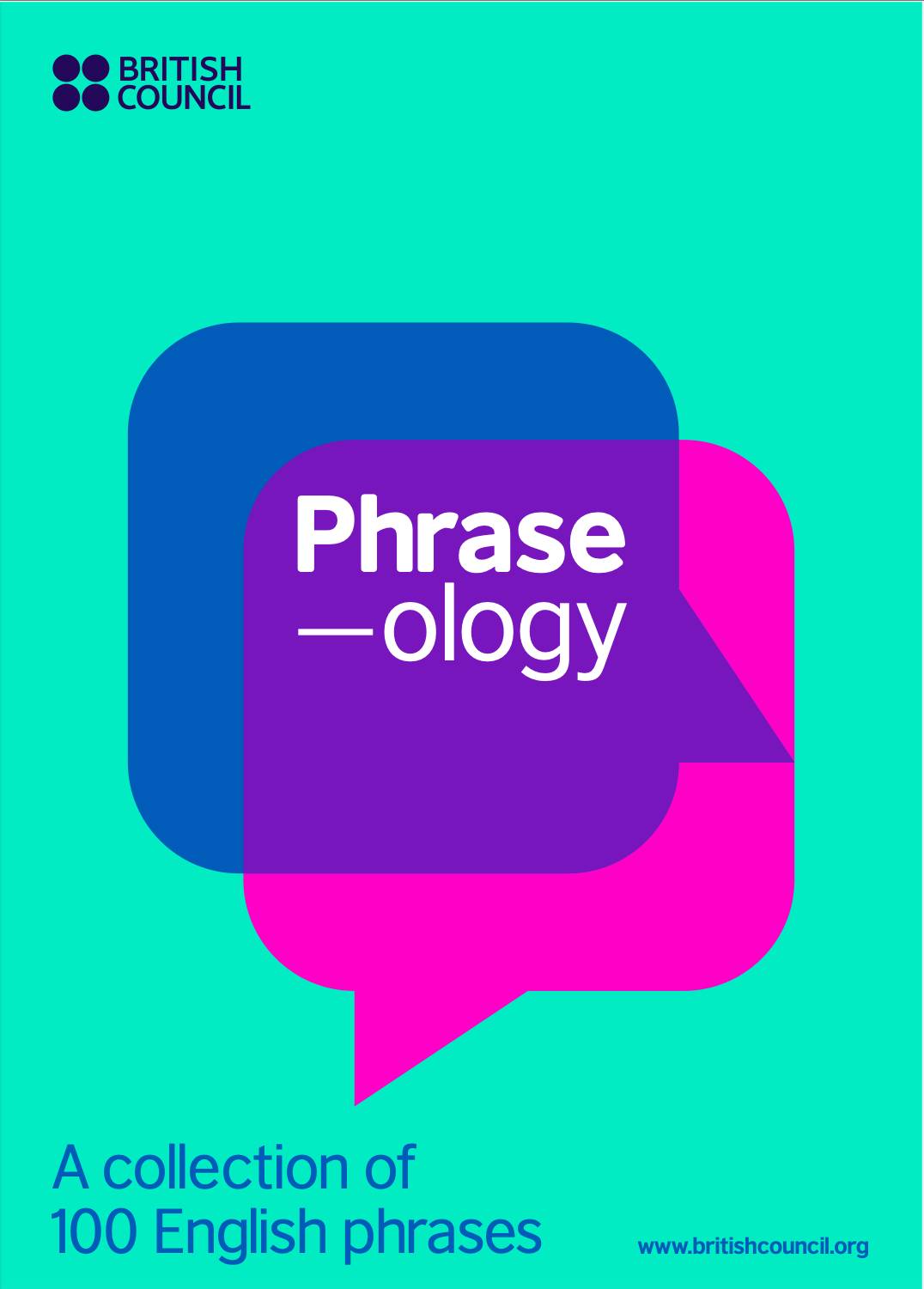
‘PHRASE-OLOGY,’ the British Council’s collection of 100 English idioms and expressions.
PHOTOGRAPHS courtesy of British Council
The project, led by computational linguistics expert Dr. Barbara McGillivray and Natural Language Processing specialist Iacopo Ghinassi, analyzed millions of online documents to map the emergence and frequency of familiar expressions. Their research tracked everything from timeless idioms like “breaking the ice” to Gen Z favorites like “ate and left no crumbs,” meaning to execute something with flawless excellence.
The British Council then distilled the findings into a list of 100 phrases with the most intriguing histories.
New phrases, familiar meanings
Classic idioms such as “kill two birds with one stone” remain staples of everyday speech, but newer expressions are rapidly gaining traction. “Spill the beans,” first recorded in the early 1900s, surged in the 1990s; its more contemporary cousin “spill the tea” — popularized by African American and LGBTIQ+ communities — exploded in use around 2017, thanks largely to social media.
All that glisters is not gold: When pop culture rewrites language
Digital culture has accelerated the rise of new expressions such as “let them cook” and “main character energy.” But as the study shows, reinvention has always been part of English’s story. “All that glisters is not gold” was recorded in Middle English in 1229 — centuries before Shakespeare adapted it in The Merchant of Venice. Other phrases, like “bucket list,” entered the global lexicon almost instantly after the 2007 film The Bucket List.
No cap: How Boomers, Millennials and Gen Z ‘keep it real’
The study also examined how different age groups use language online. While cross-generational expressions such as “better late than never,” “pipe down” and “keep it real” remain widely used, slang like “glow up” skews younger. Surprisingly, “YOLO” — popularized by Drake in 2011 — now appears across all age groups, with social media helping it travel far beyond its millennial roots.
Long time no see: Uncovering the global origins of English
The research shines a spotlight on English expressions with international roots. “Moment of truth” is believed to come from the Spanish bullfighting phrase hora de la verdad. “Long time no see” may trace its origins to Chinese Pidgin English or early 20th-century American Western writing. The familiar toast “chin chin” originates from the Chinese qǐng (“please”). The study also notes parallels, such as the Nigerian expression “to yarn dust,” meaning “to talk rubbish,” which echoes the English phrase “to spin a yarn.”
Eight categories of evolving English
The final collection groups expressions into eight categories: Global English, borrowed from other languages (e.g., let the genie out of the bottle, from Arabic); Classic Evergreen, long-standing idioms (e.g., raining cats and dogs, recorded in 1661); Generational, tied to specific eras (e.g., instant karma, coined by John Lennon in 1970); Pop Culture, popularized by media (e.g., let them cook); Sports, originating from athletics (e.g., straight off the bat); Gen Z, recent slang (e.g., no cap); Language of Belief, rooted in religion (e.g., turn the other cheek); and Shakespeare, originating from or popularized through his plays (e.g., wearing one’s heart on one’s sleeve, Othello).
‘A window into English past and future’
Mark Walker, director of English and Exams at the British Council, noted: “This latest study into the evolution of English explores the phrases we use to express shared ideas and experiences - it shows how much English is shaped by people around the world and how it continues to grow and adapt. By celebrating the richness of our language, we’re not just looking at its past, but also at the future of English. Whether for work, study, travel, relationships, or lifelong learning, as the global lingua franca, English is one of the key ways that people connect and engage across cultures.”
Dr. McGillivray added: “Working on this collection, we had the chance to explore the deep historical roots of English expressions while applying modern computational techniques to trace their evolution. Analyzing the frequency and emergence of idioms, proverbs and phrases, we uncover not only the impact of historical events but also how the digital era shapes the language we use today. This collection offers a unique perspective on how English, as both a living and historical entity, continues to adapt and reflect the changing world.”