
Ruth Handler reshaped childhood through Barbie’s revolutionary story

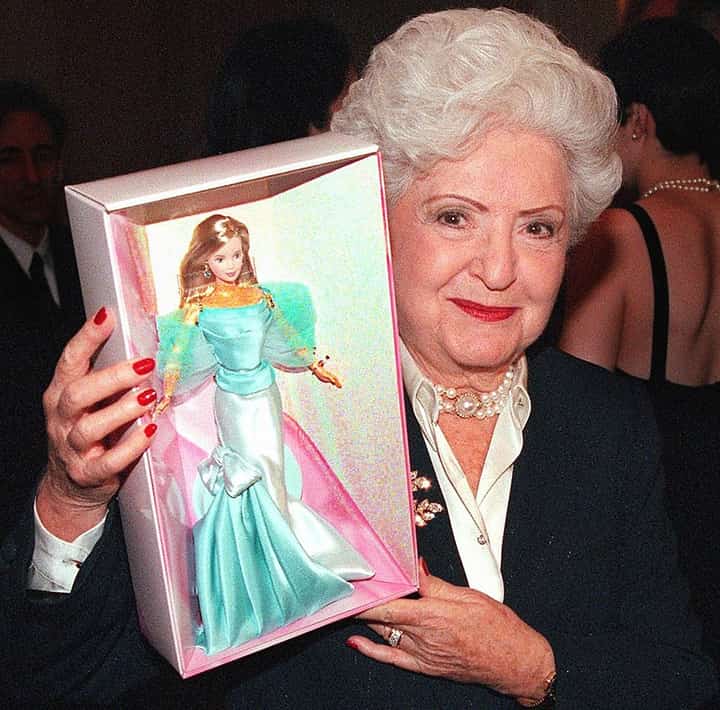
THE Mattel cofounder’s ideas changed how generations of girls imagined their futures, earning her a spot in the Forbes 250.
Photo by Matt Campbell / AFP.
Long before Barbie became a global symbol, Ruth Handler was simply a businesswoman watching her daughter play.
Handler, the daughter of Polish Jewish immigrants, grew up in Denver, Colorado, in a household shaped by hardship. Much of her childhood was spent living with her older sister. It was inside her sister’s drugstore and soda fountain where Handler first developed an instinct for sales and entrepreneurship, an early glimpse of the business drive that would later define her career.
She married Elliot Handler in 1938, and the couple moved to Los Angeles, where their partnership would eventually lead to the creation of Mattel. What began as a modest venture producing picture frames evolved into doll furniture and toys, laying the foundation for one of the world’s largest toy companies. By the mid 1940s, the business was generating millions in annual revenue, signaling Mattel’s rapid rise in postwar America.
But Handler’s most enduring idea did not come from market research or corporate planning. It came from observing her daughter Barbara.
At the time, most dolls marketed to little girls were baby dolls. Play patterns often revolved around nurturing, feeding, and caregiving, reinforcing the idea that girls were expected to rehearse motherhood. Handler noticed something different when she watched Barbara play with paper dolls.
“I discovered something very important,” Handler wrote in her memoir Dream Doll: The Ruth Handler Story.
“They were using these dolls to project their dreams of their own futures as adult women … Wouldn’t it be great if we could take that play pattern and three dimensionalize it?”
The idea was radical for its era. An adult featured doll designed for children challenged long held assumptions within the toy industry, particularly among male executives who doubted that parents would accept a doll with a woman’s body.
Handler remained undeterred.
“I wanted to create a doll that showed girls … that they could be anything,” she is often quoted as saying.
That vision materialized on 09 March 1959, when Barbie made her debut at the American International Toy Fair in New York City. Unlike traditional baby dolls, Barbie was introduced as a teenage fashion model. She had an adult form, a wardrobe of outfits, and an implied life beyond domestic roles.
The concept reshaped childhood imagination.
Barbie was not a baby to care for. She was a character to become.
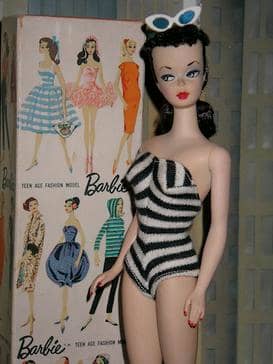
The first Barbie doll wore a black-and-white zebra striped swimsuit and her signature topknot ponytail, available in both blonde and brunette options.
Photo by Barbieologin at Wikimedia Commons.
Over the decades, Barbie appeared in hundreds of professions and identities, from Doctor Barbie and Astronaut Barbie to Princess Barbie and Presidential Candidate Barbie. The doll quietly carried a message that resonated with generations of children: women could occupy any role, pursue any career, and imagine lives unconstrained by a single expectation.
Cultural critics would later debate Barbie’s impact, particularly as popular media increasingly framed the doll as an unattainable beauty standard. Yet Handler’s original intent was rooted less in appearance than in possibility.
“We tried not to make her too beautiful. We were not anxious to have a beautiful doll, because we felt if little girls were going to project themselves through this doll, we didn't want the little girl to be threatened by the beauty of Barbie,” she said.
Before Barbie, dolls largely asked girls to pretend to be mothers. Barbie invited them to pretend to be anything else.
Ballerina Barbies.
Photos from Mattel.
Fashion designer Barbie.
Photos from Mattel.
Doctor Barbie.
Photos from Mattel.
Soccer player Barbie.
Photos from Mattel.
Astronaut Barbie.
Photos from Mattel.
Handler’s influence extended far beyond a single product. As Mattel expanded, the company introduced toy lines that would become fixtures of childhood, including Hot Wheels, Polly Pocket, Fisher Price, and American Girl. Her role in cofounding Mattel secured her place among the figures recognized in the Forbes 250 list, placing at #38, reflecting how her contributions helped redefine the modern toy industry.
Decades later, Handler’s legacy found renewed cultural relevance through the 2023 film Barbie. In the movie, Handler appears not as a corporate executive, but as a symbolic mother figure to Barbie herself. Portrayed as wise, reflective, and deeply human, the character offered audiences a reinterpretation of the woman behind the doll.
For many viewers, the portrayal reframed Handler not just as an inventor, but as a storyteller whose creation shaped how children understood identity, ambition, and womanhood.

Mattel is now known as one of the biggest toy makers in the world.
Photo from Hollywood Insider.

Margot Robbie and Ryan Gosling played Barbie and Ken in the 2023 film.
Photo from Warner Bros.
Handler’s life, however, was not without turbulence. She battled breast cancer in 1970, later developing realistic breast prosthetics for mastectomy patients. She also faced legal and professional controversies that led to her departure from Mattel. Despite these setbacks, she continued advocating for women’s self esteem and early detection of breast cancer.
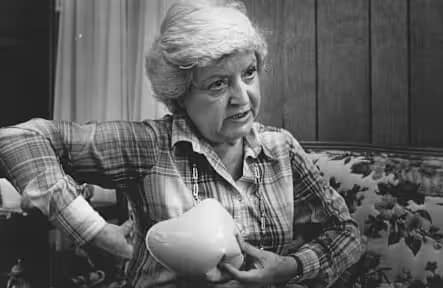
Ruth Handler created the Nearly Me prosthetics for breast cancer survivors.
Photo via History official website.
Her words captured the continuity between her most famous invention and her later work.
“When I conceived Barbie, I believed it was important to a little girl’s self esteem to play with a doll that has breasts,” Handler said.
“Now I find it even more important to return that self esteem to women who have lost theirs.”
Ruth Handler died on 27 April 2002.
By then, Barbie had become more than a toy. She had become an enduring cultural figure, one that continues to evolve alongside changing ideas about gender, work, and identity.
Handler’s central idea remains embedded in that plastic silhouette: childhood is not only about imitation, but imagination.
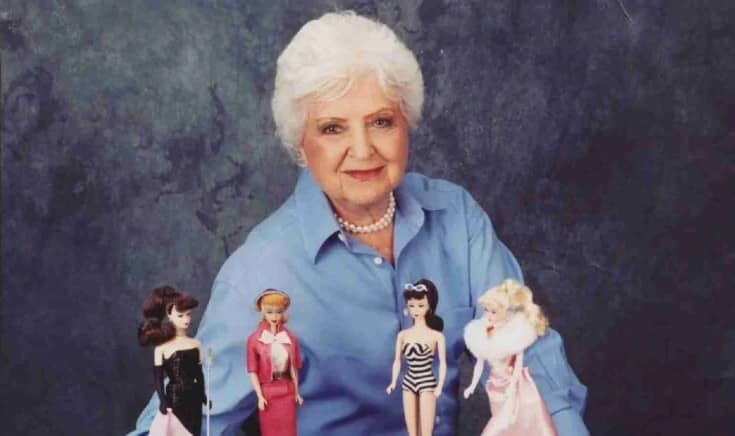
Ruth Handler's legacy lives on through the beloved toys.
Photo from Jewish Women's Archive.