
EDSA rings hollow
Cory spoke of land reform as a moral imperative, yet her administration carved out exceptions that gutted the program.

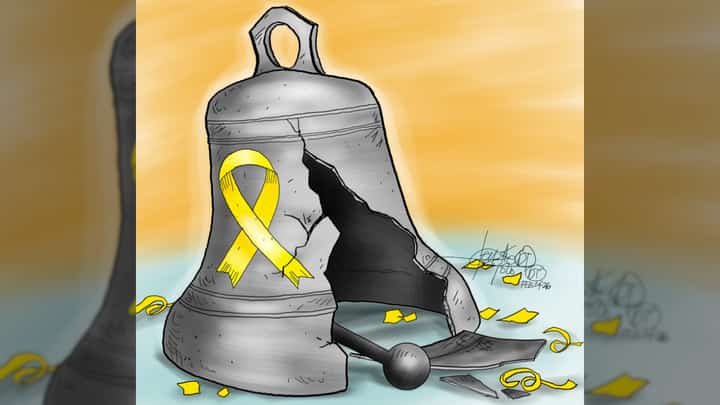
For many Filipinos, the EDSA People Power Revolution is encountered mainly in classrooms, anniversary speeches, archived footage and now social media, where history is compressed and stripped of consequence.
With a population of 115 million and a median age of 26, nearly 60 percent of Filipinos were born after EDSA. For many, it is a distant event, sealed off from daily life and felt more as history than experience.
EDSA removed Ferdinand Marcos Sr. from Malacañang, but it did not dismantle the system that produced the malignancy he represented.
Political dynasties survived. Economic power remained concentrated in a few hands. Patronage politics did not die. The same structures that rewarded loyalty over competence before Martial Law continued to operate afterward.
Democracy returned quickly, but the same could not be said of reform. The political class that dominated before Marcos largely reclaimed its place.
Sure, Corazon Aquino governed under extraordinary strain. Her authority rested on moral legitimacy rather than political machinery. That moral capital kept the system afloat, but it did not rebuild it.
Agrarian reform exposed the Cory government’s hypocrisy most clearly.
Cory spoke of land reform as a moral imperative, yet her administration carved out exceptions that gutted the program. Hacienda Luisita, owned by her family, was placed under a stock distribution option (SDO) that preserved family control while pretending to satisfy reform.
In 2001, Joseph Estrada fell under another people-powered uprising. Another elite transition followed. Another promise of change was made. Again, the system absorbed the shock and carried on. Removing presidents became easier than fixing what produced them.
Cory’s son, Benigno “Noynoy” Aquino III, inherited that fraud when he became president. By then, Hacienda Luisita was no longer just a family estate; it had become proof of how democracy protects privilege.
In 2011, the Supreme Court under Chief Justice Renato Corona ruled the SDO unconstitutional and ordered the land distributed to the farm workers. The response from Malacañang was telling, coming against the backdrop of violence that marked the struggle of the farmers at Luisita and beyond.
Noynoy Aquino soon turned his attention to removing Corona. His minions packaged it as an anti-corruption crusade, but the timing was impossible to ignore.
Corona was not impeached for Hacienda Luisita, at least not formally. Still, a chief justice who ruled against the President’s family’s interest was swiftly isolated, demonized and removed with the help of a House and Senate firmly under Palace control.
The episode did real damage. It blurred the line between accountability and vengeance. It demonstrated how democratic mechanisms could be weaponized. It told the public that institutions matter — until they get in the way.
EDSA itself faded into ritual. Every February, the same speeches were delivered. The same slogans were repeated. “Never again” became ceremonial language, stripped of force.
This was the soil on which Ferdinand Marcos Jr. returned to power. He governs under institutions restored by the revolution that overthrew his father. He benefits from freedoms reclaimed in 1986. Yet his presidency reeks of familiarity.
The “Floodgate” scandal echoed an old pattern: public works as political currency, infrastructure as a pipeline for kickbacks. Flood control has always been urgent, visible and hard to audit. It was ripe for abuse then. It appears to be so again.
The Build, Better, More program promised transformation. What followed were delays, cost overruns, and underwhelming results. Then came the P20-per-kilo rice promise — repeated loudly, abandoned quietly. Rice prices remain high. Farmers remain vulnerable. No one has been held accountable for the lie.
For the generations born after 1986, EDSA is no longer a living warning. It is an inheritance stripped of urgency. And when a country refuses to confront its unfinished past, it does not move forward. It circles back — dragging old names, old habits and old lies with it.