
Ea Torrado: Keeping Daloy alive


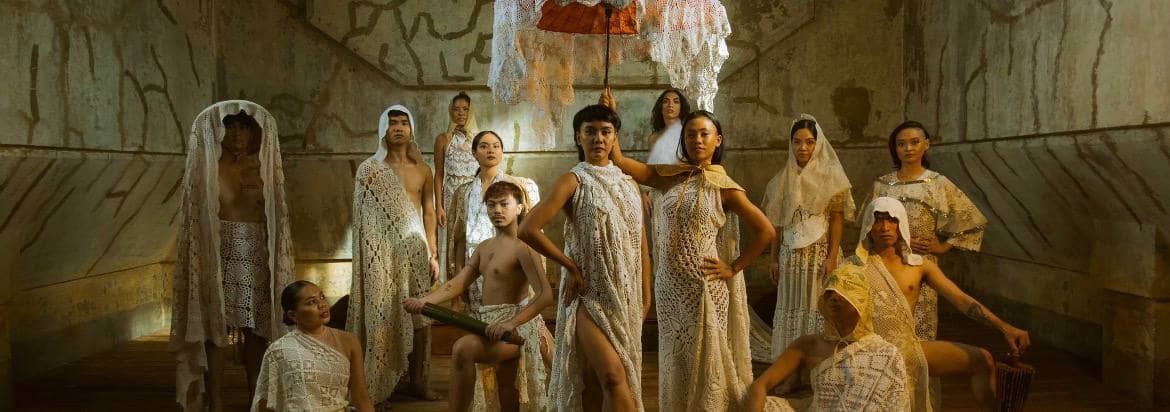
DALOY Dance Co in 'Jodinand Aguilon.'
Over the past decade, Daloy Dance Company has established itself as one of the country’s most active contemporary dance groups, mounting performances both in the Philippines and overseas.
The company, which has received citations from the Aliw Awards, has presented work across Europe, the United States, Canada and parts of Asia. While grounded in contemporary dance, its projects often intersect with improvisation, performance art, visual art and theater.
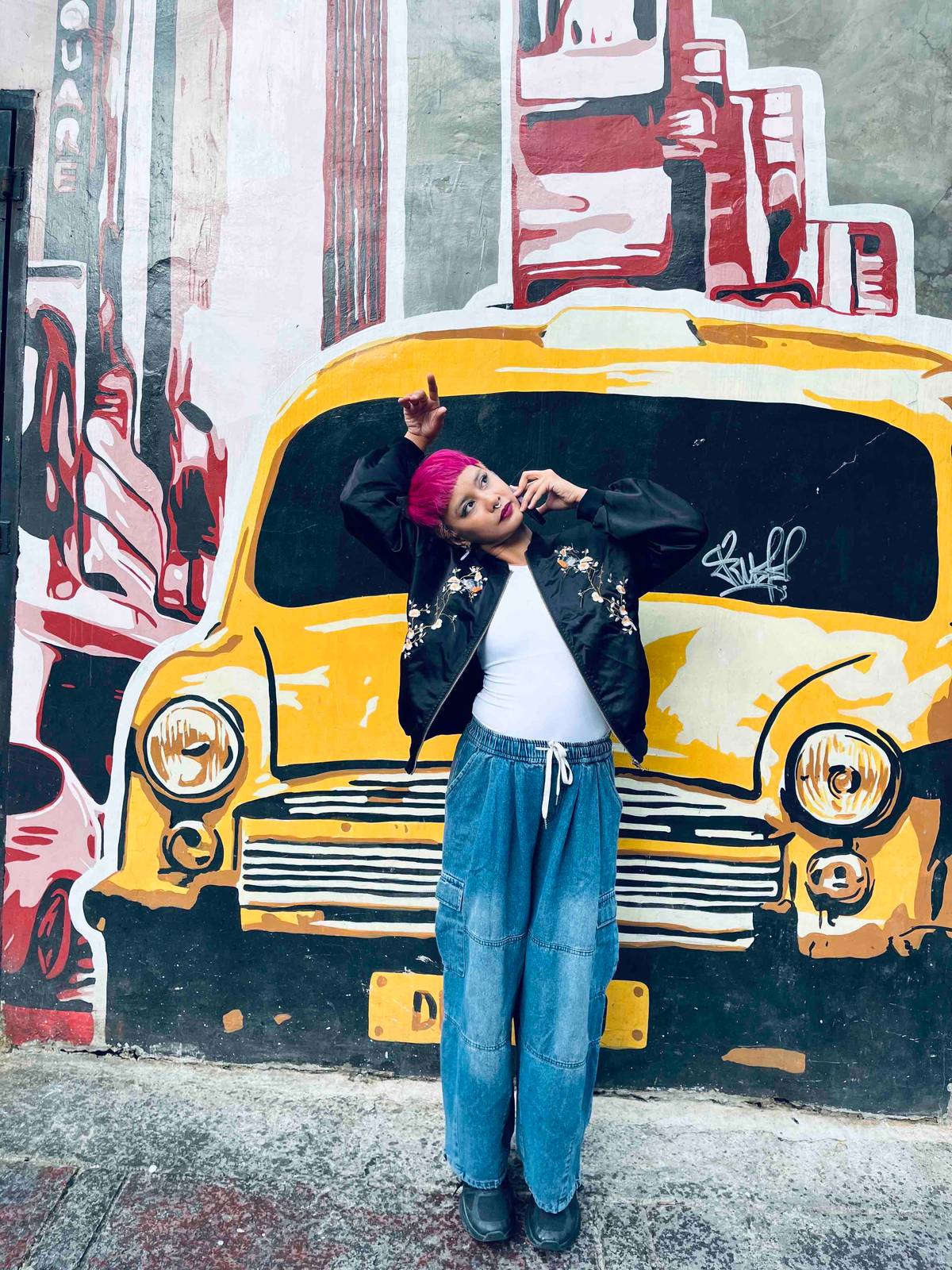
EA Torrado.
Photograph by Stephanie Mayo for DAILY TRIBUNE
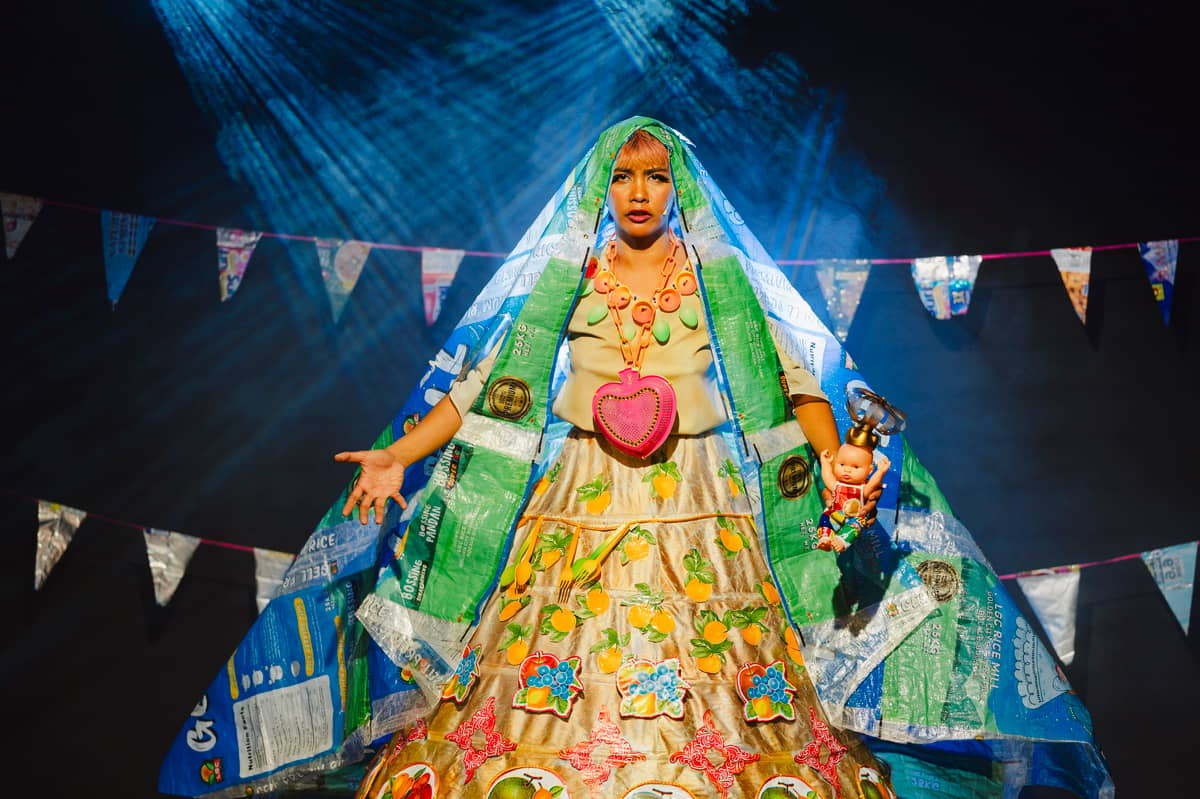
EA Torrado as 'Brown Madonna' at Mousonturm, Frankfurt, Germany.
Photograph courtesy of Noi Crew
DAILY TRIBUNE spoke with Daloy founder and artistic director Ea Torrado following the Germany run of her solo piece Brown Madonna in September 2025.
DAILY TRIBUNE: Daloy Dance Company has been around for over a decade now. When you look back at its beginnings in 2014, what core questions or impulses are still driving your work today?
Torrado: The core question is still the same: How do you build a self-sustaining contemporary performance group in the Philippines — not just surviving from project to project, but actually growing “audienceship” for this niche work and building a culture where contemporary performance feels necessary, not optional?
Artistically, I’m still driven by curiosity and play. I need the studio to feel like a laboratory, not a factory. I keep returning to socio-political, environmental and cultural themes because we don’t make work in a vacuum. Filipino life is layered — absurd, painful, beautiful, political. The body carries all of that. So the work keeps asking: what does it mean to be a Filipino body moving through this time?

EA Torrado during rehearsal for her 'Brown Madonna.'
Photograph by Stephanie Mayo for DAILY TRIBUNE
DT: Let’s talk about Brown Madonna. What was the initial spark for this solo work, and why did it need to be a solo rather than an ensemble piece?
Torrado: Brown Madonna started as a personal excavation. It’s not the kind of material you casually assign to a cast. It’s me unearthing stories that are intimate, contradictory, sometimes funny, sometimes raw — stories that live in my body and in my history. If money wasn’t an issue, I would love to expand it into an ensemble piece someday.
DT: How did audiences respond to Brown Madonna in the Philippines and in Germany?
Torrado: Before the Frankfurt premiere, we had multiple work-in-progress showings in Manila. Philippine audiences responded to how innovative and vulnerable it was — and they really caught the humor. It’s very Filipino in that way: we can be devastated and hilarious in the same breath.
In Germany, people described it as unique, deeply personal and political. What stayed with me was how audiences could meet the work from different cultural contexts and still feel its urgency. It reminded me that specificity travels. The more truthful you are, the more room the work has to be received.
DT: Daloy’s work has been seen both locally and abroad. In your experience, what aspects of Filipino movement or sensibility resonate most strongly with international audiences?
Torrado: International audiences still want culturally specific work — but they don’t want the postcard version. They’re interested when “Filipinoness” shows up with range and complexity, not stereotypes.
What resonates is our ability to shift registers: tenderness and bite, ritual and comedy, intimacy and politics. Filipino sensibility is layered. We can be sacred and campy in the same scene. We can hold grief and pleasure in the same body. That’s not exotic — that’s just real.
DT: Do you feel there is a pressure to “explain” “Filipinoness” when performing on global platforms?
Torrado: Yes, because a lot of Global South support is framed around representation. Sometimes it feels like: please be legible in the way we expect you to be legible.
But I’m increasingly proud of representing my lived experience of being Filipina, not performing an approved version of “Filipinoness.” I resist making work that merely looks Filipino in obvious ways. I’m not interested in reducing identity to surface markers.
DT: Has international exposure changed the way you make work, or reinforced your commitment to your original process?
Torrado: Both. Every creative process is its own adventure — and making work in the Philippines can be just as transformative as making work abroad.
International exposure taught me something practical: conditions matter. Funding matters. Time matters. Space matters. Work-in-progress platforms matter. A stable team matters. There’s a difference between birthing a work with support versus birthing it while you’re also fighting for the basics. Art doesn’t only need inspiration. It needs infrastructure.
DT: What should we look forward to from Daloy in 2026?
Torrado: In 2026, Daloy is co-producing the Pagbubuo Ritual Theater Festival on 4 to 5 April with Greenhouse Theater, led by artist-ritualist Shaina Agbayani.
Brown Madonna will continue touring in Germany starting mid-2026, and we’re hoping for a Philippine premiere under the Performance Ecologies Festival by the last quarter. We’re also on year 12, so the plan is to restage one of our full-length pieces.
DT: What excites you most about the future of contemporary dance in the Philippines right now?
Torrado: There are so many strong young dancers right now, and more people taking contemporary classes than before. After the lockdown, more studios and independent spaces opened up — and that changes the ecosystem. When spaces exist, artists take more risks. When artists take risks, audiences grow.
I’m also excited by emerging choreographers who understand that contemporary work doesn’t have to live only inside the black box. There’s more site work, interdisciplinary collaboration and community-rooted platforms. I feel the field widening, with real potential for bigger collaborations that strengthen community ties within contemporary dance in the Philippines.
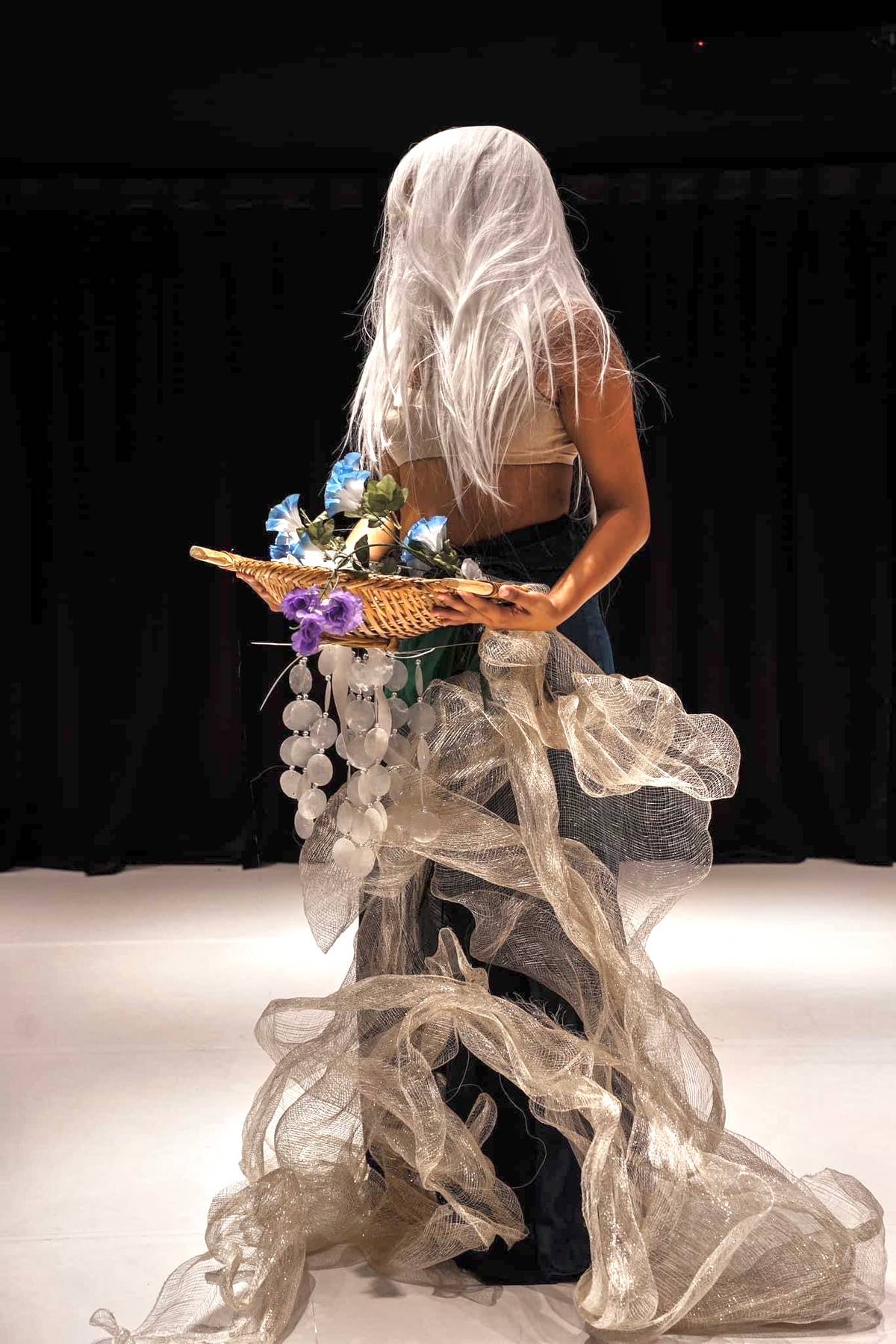
EA Torrado in her performance ritual piece, 'Caburayan,' in Taiwan.
Photograph courtesy of Tjimur Dance Theatre