
Sip. Read. Repeat: stories fill our thoughts in Coffee Project Evia
In a world that often moves too fast, a coffee shop with a shelf of books — like Coffee Project Evia — offers something radical: permission to pause, to linger.
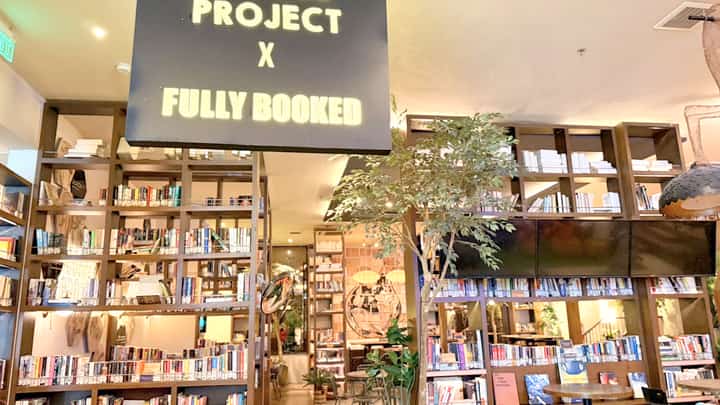
Should I drink coffee? Should I read a book?
There are books we finish and forget, and there are books that remake the architecture of our minds. The difference, I’ve come to believe, is reading — not as a hobby, not as a credential, but as a way of living.
Few writers embody that belief as vividly as Rebecca F. Kuang. When her novel Katabasis was released in August 2025, it wasn’t simply marketed as an academic thriller. It was a descent — literal and intellectual — into Hell. On the surface, it’s fantasy. But underneath, her books are love letters to reading.
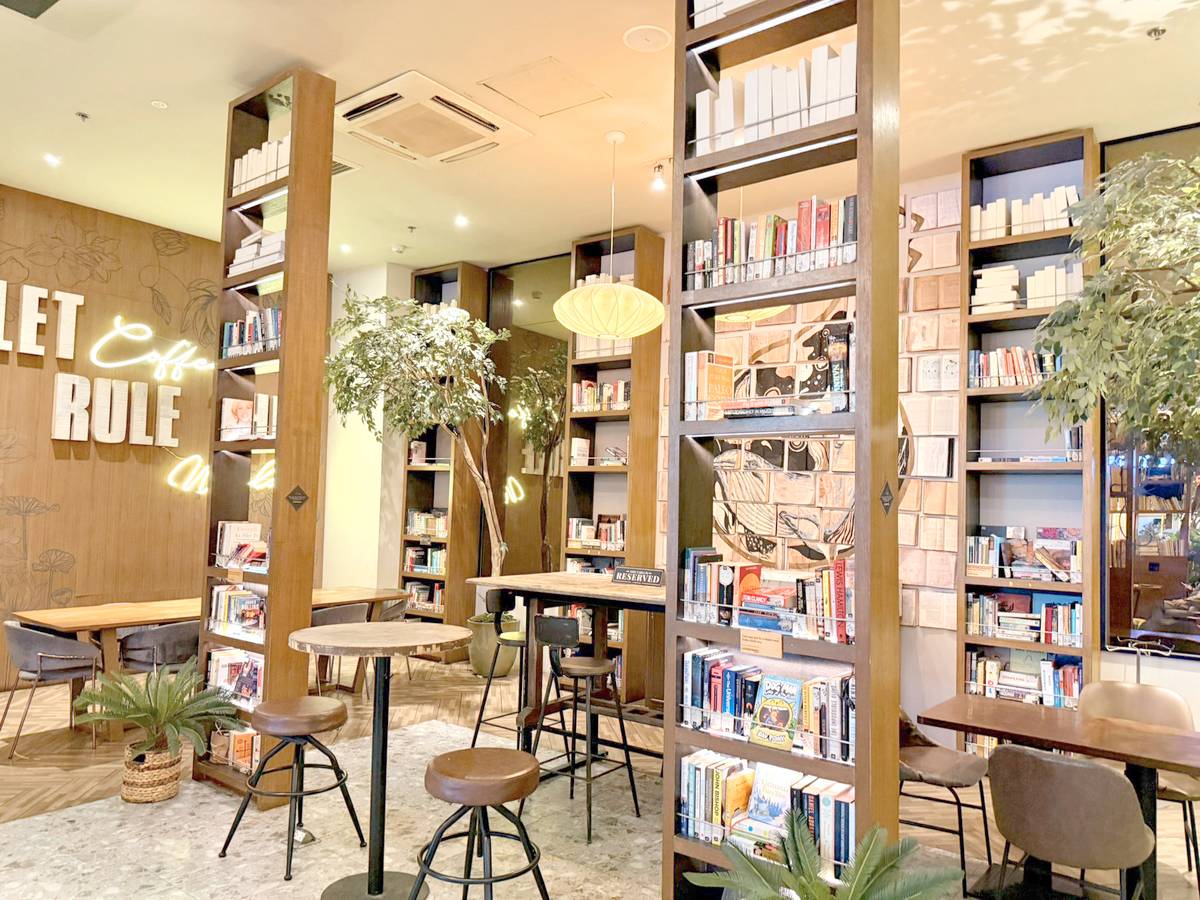
STORIES merit space in the very heart of public life.
Photograph by Pauline Pascual and Pauline Songco for DAILY TRIBUNE
Reading allows a shy person to inhabit bolder selves. It allows someone who feels unseen to discover they are not alone. To read is to practice empathy. To read is to rehearse moral choices without real-world casualties. To read is to descend into imagined hells so that we might better navigate our own.
If reading is a descent into other worlds, then certain spaces in our own world make that descent possible. Not lecture halls, not conference rooms — but cafés, bookstores and quiet corners where coffee steams beside open pages. These spaces remind us that reading does not belong only to universities or syllabi. It belongs to everyday life.
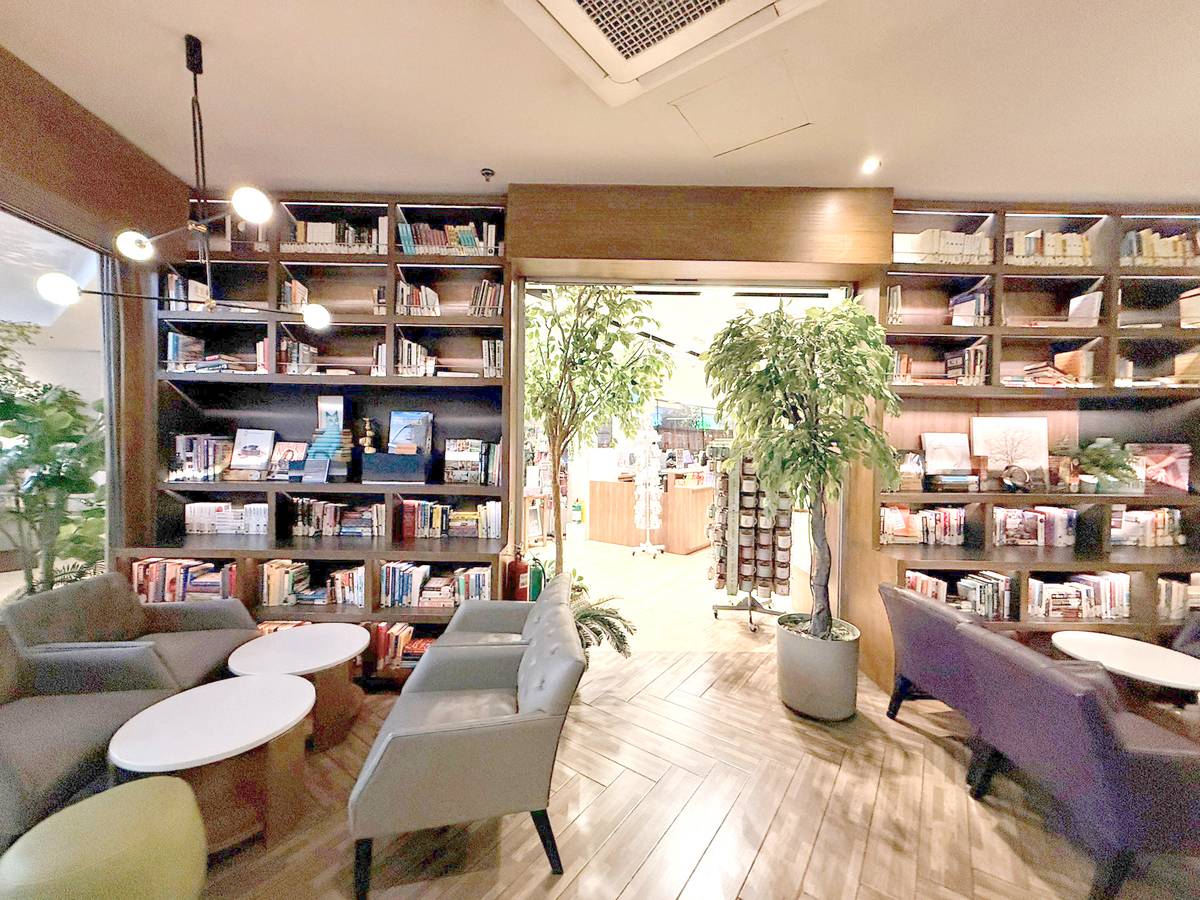
WHERE coffee culture and books seamlessly merge.
Photograph by Pauline Pascual and Pauline Songco for DAILY TRIBUNE
Among these spaces, Coffee Project Evia stands out as a model of literary and coffee culture converging under one roof. Tucked inside Evia Lifestyle Center, the café houses its own branch of Fully Booked, allowing customers to move seamlessly from browsing shelves to settling into upholstered chairs with a warm drink in hand.
The interiors — lush with greenery, textured walls, and soft lighting — are designed not for hurried turnover but for lingering. Books are not decorative props; they are part of the experience. A guest might arrive for a cappuccino and leave with a novel, or spend an afternoon reading uninterrupted while the world hums gently around them. The space suggests that reading is not a retreat from life but an enhancement of it — something that pairs naturally with conversation, solitude, and even the simple pleasure of good coffee.
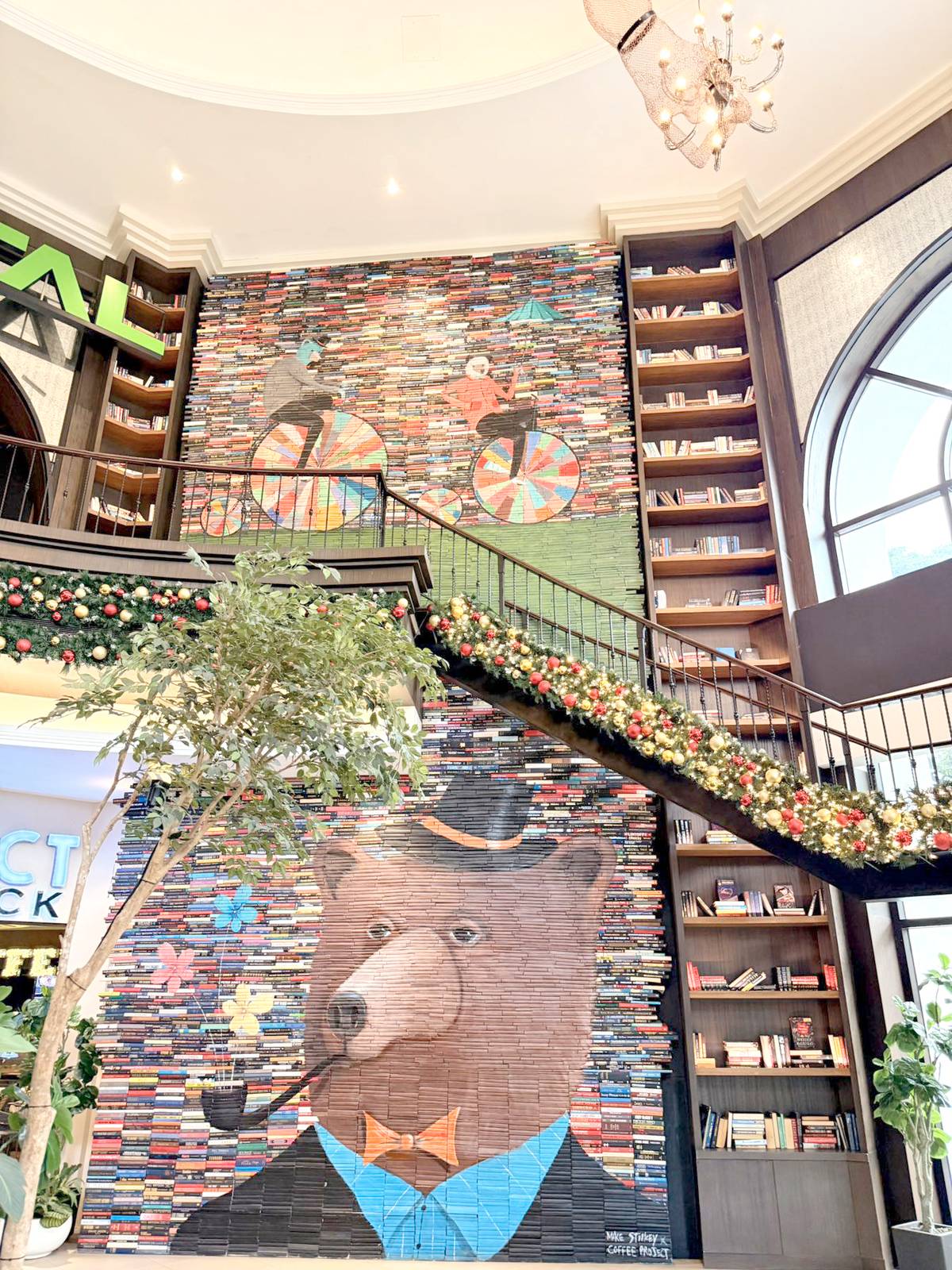
BOOKS are part of the experience at Coffee Project Evia.
Photograph by Pauline Pascual and Pauline Songco for DAILY TRIBUNE
In cities like New York, cafés such as Housing Works Bookstore Cafe blur the line between bookstore and coffee shop. Customers sip espresso beneath shelves of donated novels, the murmur of conversation mingling with the soft percussion of turning pages. Across the Atlantic in Paris, the café culture surrounding places like Shakespeare and Company sustains a similar ritual. Even in hyper-modern cities like Singapore, independent cafés increasingly carve out shelves for paperbacks and poetry.
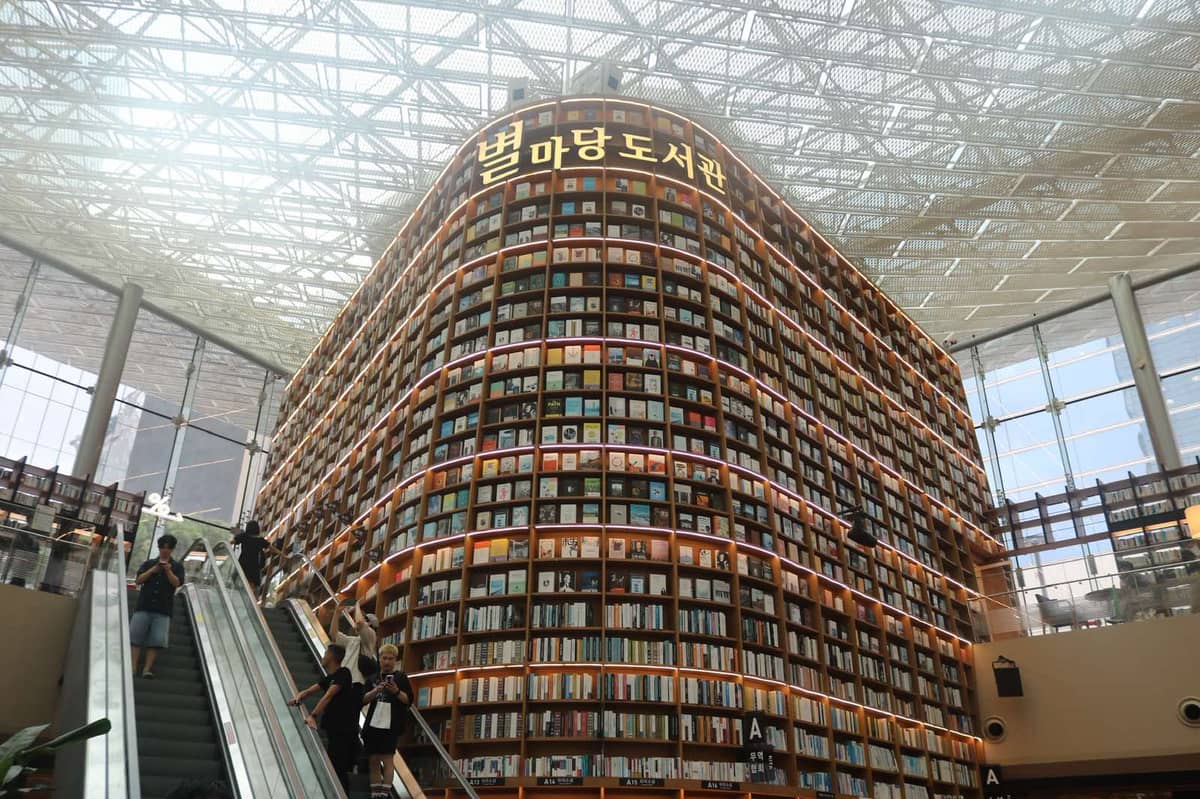
COEX Starfield Library in Seoul, South Korea.
Photograph by Pauline Pascual and Pauline Songco for DAILY TRIBUNE
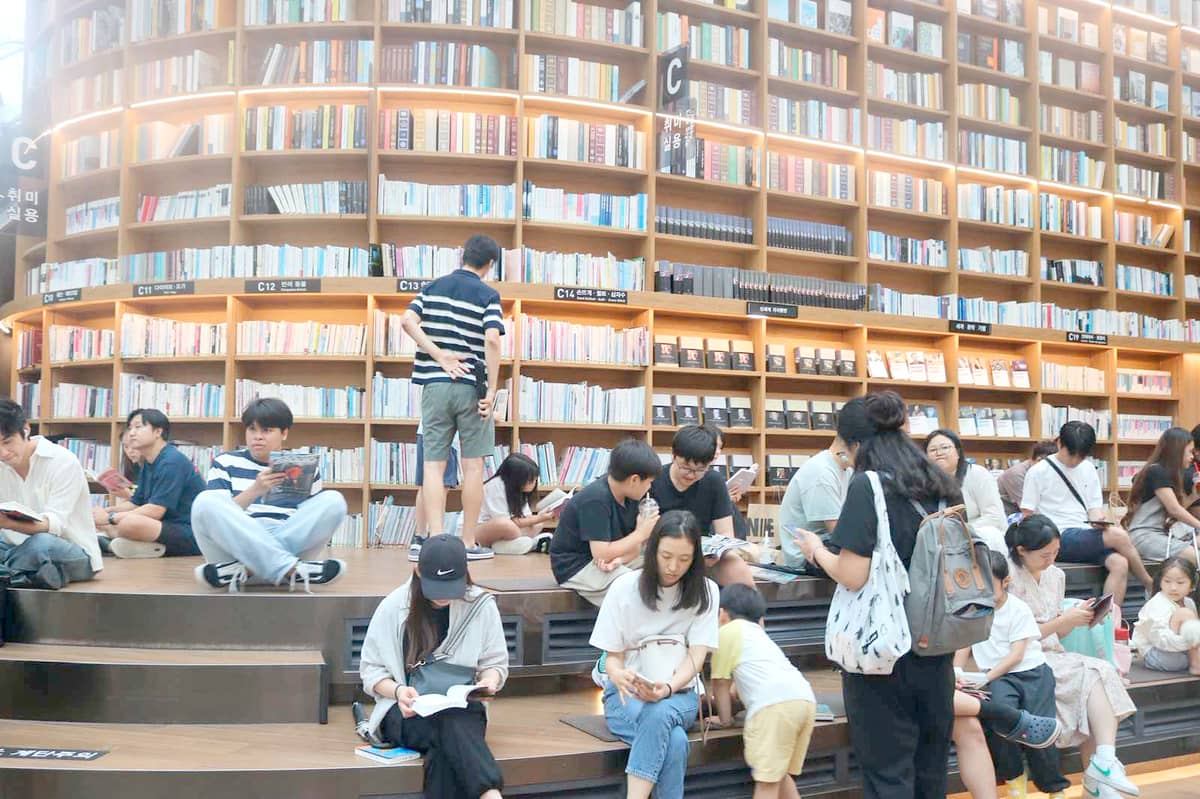
COEX Starfield Library in Seoul, South Korea.
Photograph by Pauline Pascual and Pauline Songco for DAILY TRIBUNE
In Seoul, the soaring shelves of Starfield Library rise several stories high inside COEX Mall, turning an ordinary commercial space into something almost reverent. Shoppers slow their pace. Students gather on the steps. Office workers pause between errands. In the middle of retail noise and fluorescent light, books create a pocket of stillness. The library’s presence is a quiet assertion that reading deserves architectural grandeur — that stories merit space in the very heart of public life.
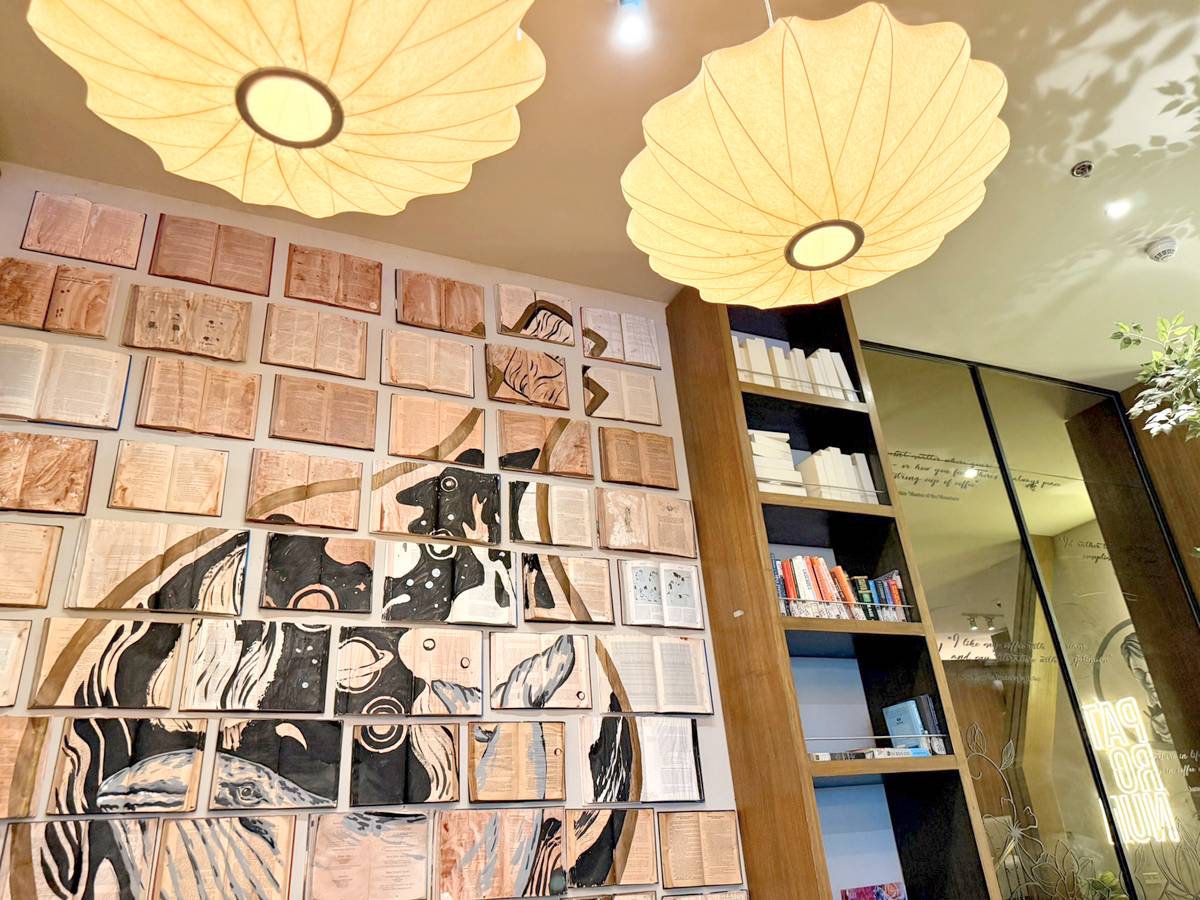
MAKING leisurely reading possible again.
Photograph by Pauline Pascual and Pauline Songco for DAILY TRIBUNE
Places like these, including Coffee Project Evia, make leisurely reading possible again. They remind us that intellectual life does not belong solely to classrooms or private studies. It can thrive in malls, in cafés, in the everyday geography of our routines.
When establishments intentionally carve out room for books, they are making a cultural statement: that reflection still matters, that curiosity still has value and that in a fast-moving world, there is dignity in sitting down to turn a page.
In a world that often moves too fast, a coffee shop with a shelf of books — like Coffee Project Evia — offers something radical: permission to pause, to linger.