
Horse on fire prances
The Fire Horse appears once every 60 years and carries a reputation for excess and unpredictability.

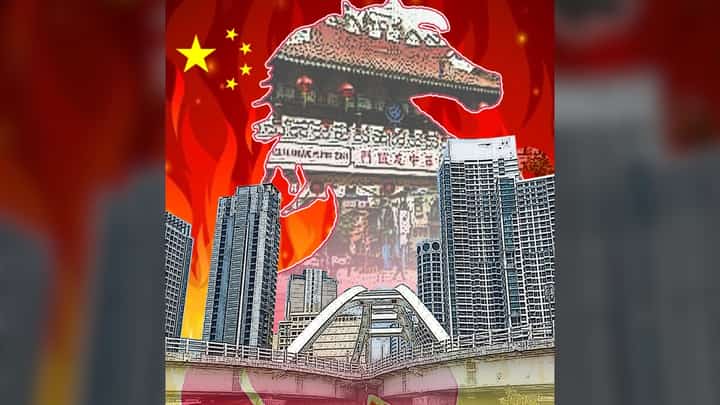
Imagine Binondo in 1594. Not inside Intramuros, of course, where the Spaniards and the more affluent Filipinos lived behind stone walls, firm rules and a very clear sense of who mattered. Power preferred enclosure. It liked to be protected, measured and reassured.
Binondo was established across the Pasig River by design, the place where Chinese merchants were meant to live: close enough to trade with the city, far enough to be kept at arm’s length. The arrangement was practical, not subtle. On one side were authority, privilege and religion. On the other were shops, work and people expected to be useful but not quite equal.
More than four centuries later, Binondo remains the oldest existing Chinatown outside of China, a reminder that history does not always unfold where authority expects it to, and that influence does not always begin where power plants its flag.
The Chinese merchants stayed. They learned the language, married locals, adopted new names and adapted to the demands of colonial life with caution and pragmatism. Some converted out of faith and others out of necessity. Most simply learned how to live with uncertainty as existing outside the walls required it.
Over time, that habit of adaptation became an advantage. Generations later, from modest shops and trading networks emerged families whose names — Sy, Gokongwei, Tan — would come to define modern Philippine business.
But for all our talk of progress, superstition remains stubborn.
We like to think of ourselves as rational, guided by data and reason, yet we still consult calendars, note auspicious dates and pay attention to signs. Even those with no Chinese background pick up the habit. It is less about belief than caution. In a country where institutions often fail, people look for patterns wherever they can find them.
Which brings us to the Fire Horse.
The Fire Horse appears once every 60 years and has a reputation for excess and unpredictability. Tradition says it produces people who are strong-willed, independent and difficult to manage. Whether one believes this or not, the belief alone has consequences.
That consequence was most visible not in China, but in Japan in 1966.
By then, China was in the grip of the Cultural Revolution, a period when personal belief, superstition and private life were officially suppressed. Fertility decisions were shaped more by politics and upheaval than by zodiac signs. Japan, on the other hand, was stable, prosperous and socially conservative — precisely the conditions under which superstition could quietly shape behavior.
Japan treated the Fire Horse seriously. Birth rates fell sharply that year as couples delayed having children. Many feared daughters born that year would be too independent, too difficult, too disruptive to established expectations.
Today, the Fire Horse returns and we insist we know better. We have science, data and forecasts. Still, the sideways glances remain. People joke about it, but they also remember. Superstition survives precisely because it does not demand full belief — only a bit of attention.
Binondo has lived with that mindset for centuries. Existing outside the walls meant learning to deal with uncertainty without expecting protection. It meant adjusting, negotiating and moving forward even when conditions were less than ideal.
That is perhaps the real inheritance. Not superstition, but the understanding that control is often an illusion and flexibility matters more.
The people who built lives across the river learned this early. It is why Binondo endured. And it is why, when the Fire Horse comes around again, the reaction is less panic than recognition.