
Let us ensure that women and girls can realize their scientific ambitions
Globally, only one in three researchers is female.


On the International Day of Women and Girls in Science, we reaffirm a fundamental truth: equality in the sciences is essential for humanity’s progress.
Despite advances in access to education, women in STEM (science, technology, engineering and math) are still held back by a lack of research funding, gender stereotypes and discriminatory workplace practices. Globally, only one in three researchers is female.
This gap is particularly pronounced in the realm of technology, with women representing just 26 percent of the workforce in data and artificial intelligence, and only 12 percent in cloud computing. The absence of female voices, especially in leadership positions, embeds biases into digital tools and leads to real world harm.
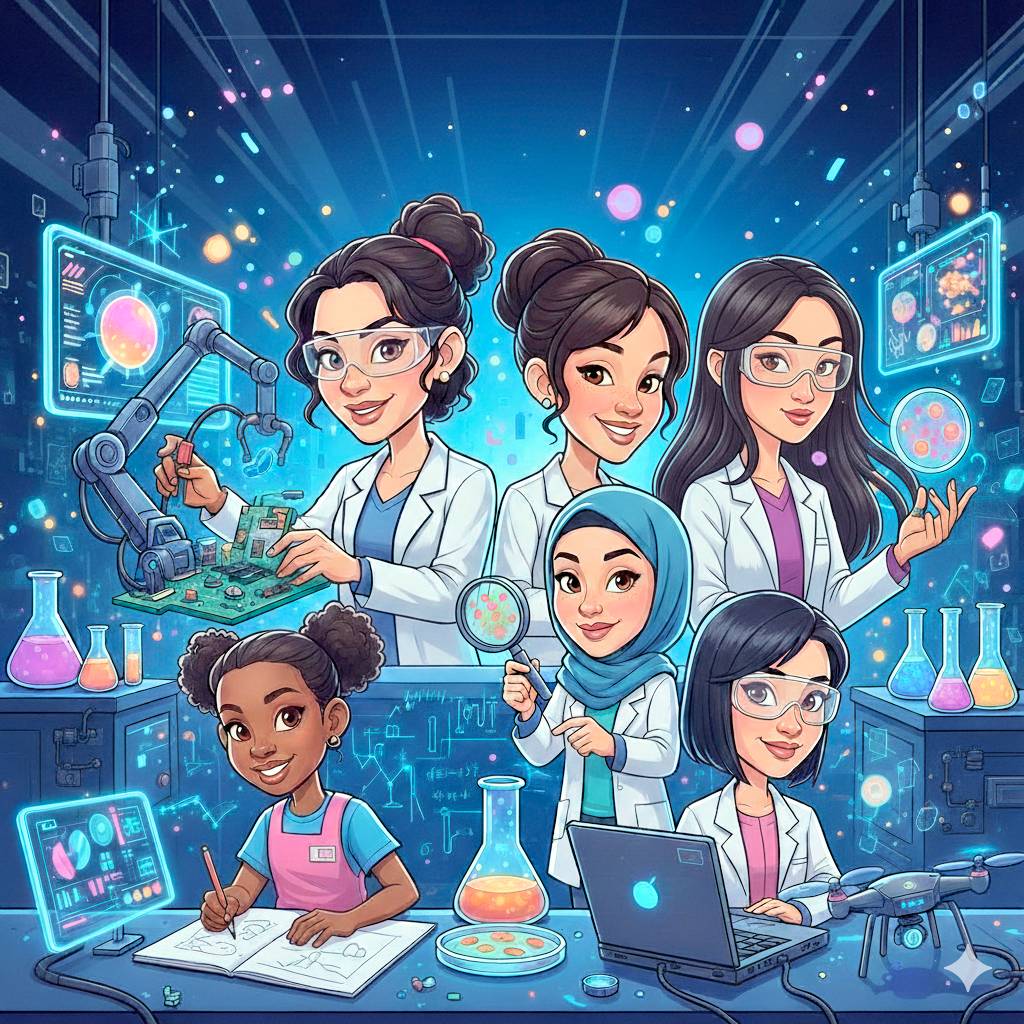
THE United Nations supports women and girls in STEM, including through scholarships, internships and mentorships across multiple disciplines.
ILLUSTRATION BY GEMINI
Excluding women from science weakens our collective capacity to address urgent global challenges, from climate change to public health to space security. To solve these problems, we must ensure that every girl can imagine a future in STEM, and that every woman can thrive in her scientific career.
That’s why the United Nations supports women and girls in STEM, including through scholarships, internships and mentorships across multiple disciplines.
From advancing renewable energy to preventing the next pandemic, our future hinges on unlocking as much human talent as possible. Today and every day, let us ensure that women and girls can realize their scientific ambitions — for their rights, and for the benefit of all.
θ θ θ
Female genital mutilation violates the universal human rights to life, health and bodily integrity — and causes lasting harm to over 230 million women and girls worldwide.
It is rooted in the same gender bias that restricts girls’ access to education, narrows women’s opportunities for employment, and limits their participation in public life.
The world has committed to ending this dangerous practice by 2030. But in the meantime, 23 million girls remain at risk.
Getting to zero will require sustained political commitment — and sustained investment. Governments, civil society, health workers and traditional and religious leaders all have a role to play. The United Nations is working on prevention and advocacy, ensuring that survivors have access to care, and empowering women and girls through education, employment and leadership opportunities.
On this International Day of Zero Tolerance for Female Genital Mutilation, let us renew our promise to protect the rights of women and girls everywhere, and ensure that they can live free from violence and fear.
Together, we can end this injustice once and for all.
θ θ θ
(United Nations Secretary-General António Guterres’ messages on the International Day of Women and Girls in Science in New York on 11 February 2026 and on the International Day of Zero Tolerance for Female Genital Mutilation on 6 February 2026.)