
China denounces Dalai Lama’s first Grammy win as ‘political manipulation’

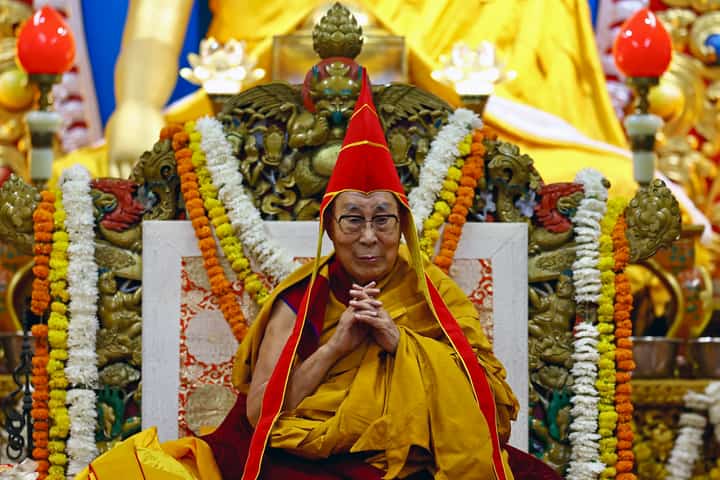
Dalai Lama wins his first Grammy for the audiobook Meditations: The Reflections of His Holiness the Dalai Lama, expressing gratitude while China criticizes the award as political manipulation.
Photo courtesy of AFP
The Dalai Lama’s first Grammy Awards victory has reignited tensions with China, after Beijing condemned the honor as an act of “anti-China political manipulation.”
The 90-year-old Tibetan spiritual leader on Monday expressed gratitude after winning Best Audio Book, Narration and Storytelling Recording for Meditations: The Reflections of His Holiness the Dalai Lama, announced during the Grammys ceremony in Los Angeles.
“I receive this recognition with gratitude and humility,” the Dalai Lama said in a social media post. “I don’t see it as something personal, but as a recognition of our shared universal responsibility.”
While the award was welcomed by supporters worldwide, Beijing swiftly objected. “We firmly oppose relevant parties using art awards as a tool for anti-China political manipulation, and this position is consistent and clear,” Chinese foreign ministry spokesman Lin Jian told a regular press briefing.
The Dalai Lama has lived in exile in India since 1959, when he fled the Tibetan capital Lhasa at the age of 23 following a crushed uprising by Chinese troops. He has never returned. Beijing continues to brand him a separatist, while the spiritual leader insists he seeks genuine autonomy for Tibet rather than independence.
Known globally for promoting peace and compassion, the Dalai Lama reiterated broader humanitarian themes following the Grammy recognition.
“I truly believe that peace, compassion, care for our environment, and an understanding of the oneness of humanity are essential for the collective well-being of all eight billion human beings,” he said.
The audiobook includes contributions from artists such as Rufus Wainwright, who accepted the award on his behalf, and Maggie Rogers.
A Nobel Peace Prize laureate, the Dalai Lama has said he expects to live many more years, even as Tibetans prepare for an eventual transition. Tibetan Buddhists believe he is the 14th reincarnation of a spiritual leader dating back to 1391.
China, a self-declared atheist and Communist state, has said it must approve the Dalai Lama’s eventual successor, a claim his India-based office firmly rejects, underscoring a long-running dispute that continues to shadow even his cultural and artistic recognitions.