
Dr. Fashion: Style hacks that really heal


Do you also get dizzy in a moving vehicle like me? I found out that I don’t need to drink some medicine to prevent “byahilo” (motion sickness) in a car. Wearing tinted sunglasses does the trick!
Similarly, my mom used to always complain about byahilo and even mistook it as a sign for hypertension — so she used to drink anti-hypertension medicines and/or pineapple juice that can lower high blood pressure in addition to her daily maintenance medicines for high blood whenever she traveled. She even used to vomit a lot and get chills and feverish. But ever since I gave a pair of Burberry glasses with transition or color-adaptive lens, she has been traveling more and more because she has been experiencing less and less byahilo.
My theory is that sunglasses help our eyes focus at the center, which was what my doctor prescribed for me to do whenever I’d experience vertigo. Also, the tint in the glasses diffuse strong lights on the streets — including lasers, headlights and the sun’s ultraviolet rays — that are actually the ones that make my head ache and make me dizzy while on the road. Apart from preventing me from getting byahilo, sunglasses or “sunnies” also help me fall asleep and steal some rest.
Apart from providing sun protection, sunnies or “shades” reduce the risks of anything from eyestrain and headaches from glare, to getting cataracts, macular degeneration and eye cancer. These help migraine sufferers while also providing anti-aging benefits by shielding the sensitive eye skin area from sun damage. These block wind or debris from entering your peepers.
Wearing quality sunglasses with 100 percent UVA/UVB (ultraviolet rays A and B) protection is crucial for long-term vision and eye health, said US optometric company Eye Care Center. Benefits such as these make sunglasses a must-have in tropical countries like the Philippines, not only during the upcoming summer.
Besides sunnies, here are some fashion statement pieces that have been proven to aid in healing both the body and mind.

ME wearing Puma Softride and Evangelion shirt in front ABC-Mart in Tokyo’s fashion capital Harajuku.
Photo by Deni Bernardo for DAILY TRIBUNE
Fabrics with Rx
In 2003, scientist Dr. Heidi Yellen used Bioenergetics, a branch of Biochemistry studying energy flow, among others, to study the frequencies of both natural and synthetic fabrics, using a digital instrument called the Ag-Environ Machine. Based on her research, organic cotton has the same frequency as the human body: 100 mHz. Linen, silk and wool, on the other hand, all have around 5,000 mHz. According to her studies, the more a material’s frequency is, the better its healing properties.
As such, cotton and linen, in particular, are being used even in hospitals — from cleaning and dressing wounds, to beddings, patients’ gowns and medical workers’ uniforms — as these are not only lightweight, affordable and comfortable, but are also sanitary and aid in faster wound healing, bacterial growth prevention and infection control through wicking moisture.
Cotton and linen are breathable, hypoallergenic and antibacterial, making them suitable for sensitive skin. Linen, however, is strong and so absorbent and dries faster than cotton. Linen beddings regulate temperature and provide a gentle massaging effect, therefore promoting better blood circulation, reduced skin irritation and overall skin, comfort and health.
Raw wool, says medical journals like Science Direct, is widely used as orthopedic padding, in sheepskins to prevent bedsores, in specialized wool socks for improved blood circulation, and in wound-healing, orthopedic and skincare products such as lanolin creams. When used in winter coats, Merino wool provides odor resistance through its anti-bacterial and natural temperature regulation properties.
Although also natural, with high frequency and lightweight, silk is not traditionally used in Medicine as its processing entails chemical use, which lowers its sanitary value and frequency. It is highly recommended still for being hypoallergenic and gentle on skin, making it a preferred status fabric especially among royals.
According to Yellen’s research, the lower the frequency, like those of synthetic fabrics like rayon that scored only 15 mHz, the lower its healing properties. Other synthetic fibers like polyester, acrylic, spandex, Lycra, viscose and nylon scored zero. Synthetic fabrics burn into the skin in case of fire
Surprisingly, though a natural material, bamboo also scored zero. Bamboo charcoal fabric, on the other hand, is being used for hypoallergenic medical textiles, odor-resistant sportswear, thermal-regulating beddings and moisture-wicking underwear as its key benefits include high porosity for superior moisture absorption, anti-bacterial properties and far-infrared emission or the ability to improve blood circulation, relieve pain and boost metabolism.
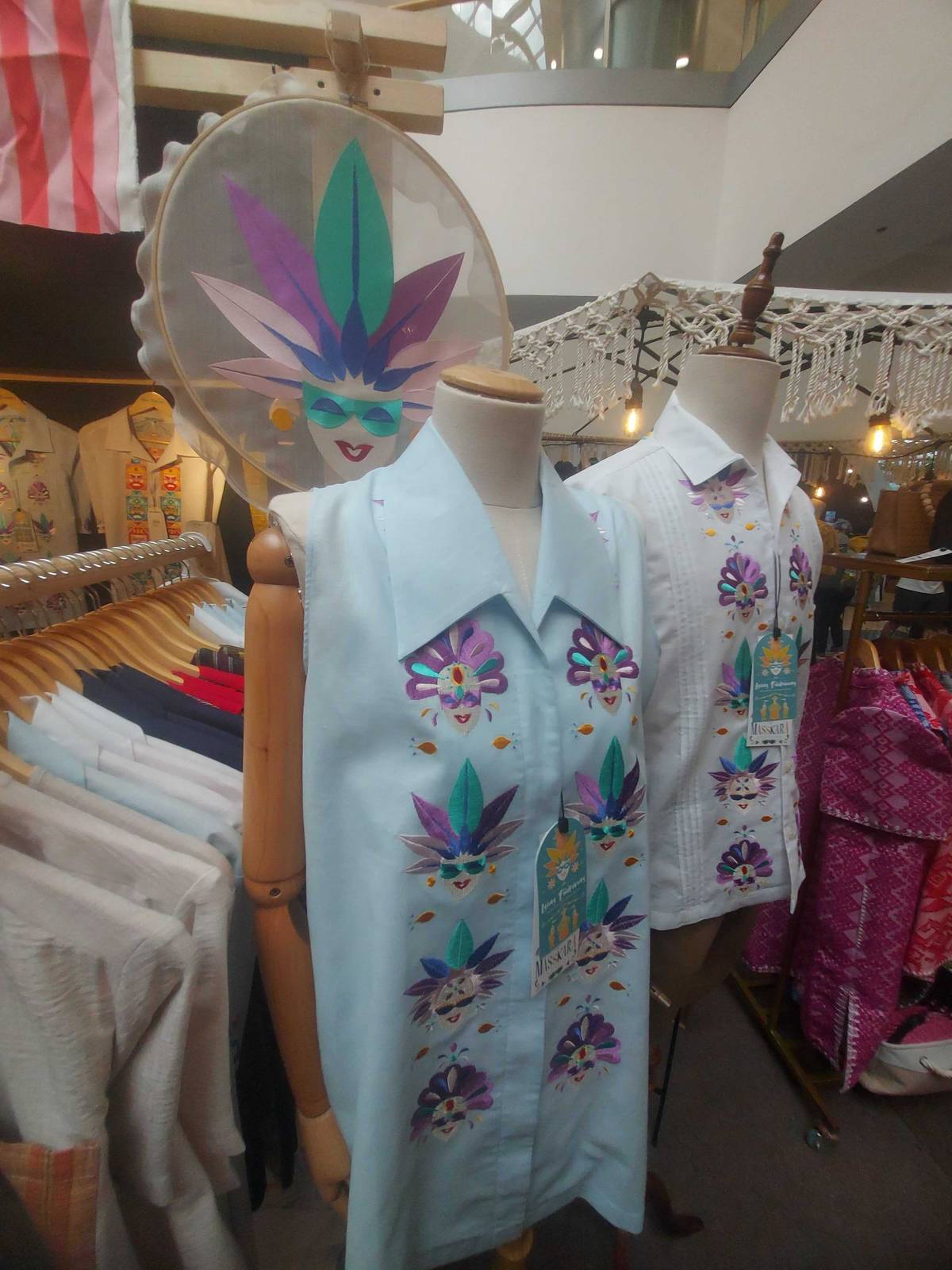
LINEN shirts with embroidered Bacolod Masskara Festival icons-available at Kultura.
Photo by Deni Bernardo for DAILY TRIBUNE
Weighted vests/scarves
But not only lightweight fabrics can provide comfort and wellness. Wool jackets, for instance, apply gentle but deep-touch pressure to the body, helping reduce anxiety and promote a sense of calm.
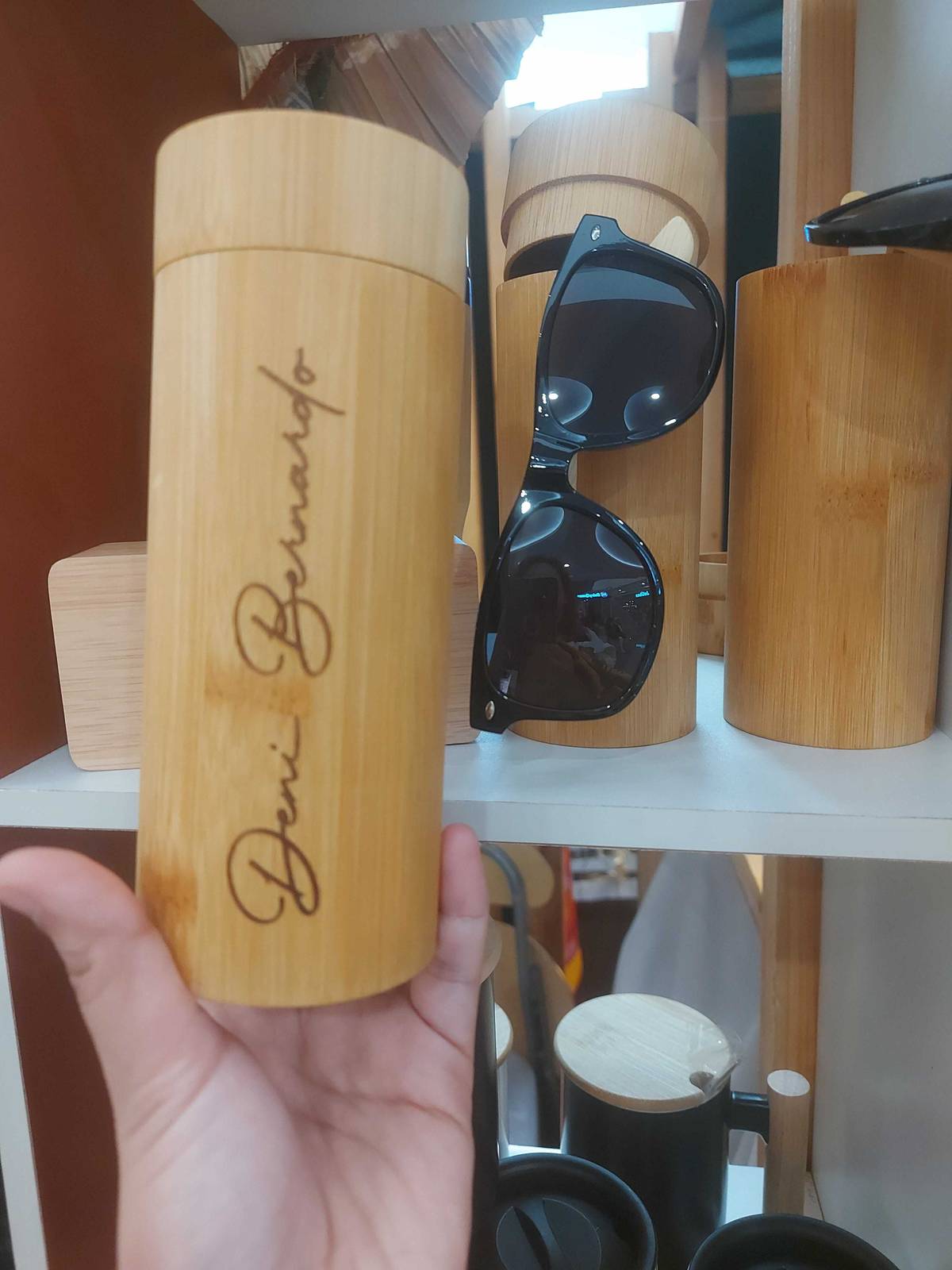
SHADES with a personalized bamboo container both bought from the recent Kultura Crawl.
Photo by Deni Bernardo for DAILY TRIBUNE
High-tech, functional and therapeutic wear
Likewise, although synthetic fabrics have low frequencies, some have been developed to address health issues and concerns. Technological inventions, such as Infrared-emitting leggings and tops, have been woven using bioactive minerals that reduce muscle fatigue, boost blood microcirculation and increase collagen synthesis.
There are activewear, that though made of synthetic materials like spandex, are infused with natural sugar alcohol Xylitol to prevent bacterial growth and cool the body.
Compression wear, which usually is also made of synthetic but stretchable materials, is often prescribed by doctors to flight attendants and anyone whose professions entail standing for a long time as this helps improve posture and blood flow and provide back support.
In 2024, Miss Universe 2018 Catriona Gray used a striped shirt to demonstrate how to spot scoliosis easily for early detection and treatment. According to her, here’s how to do a self-check for scoliosis:
• Wear a fitted horizontal striped shirt. Act as if you are doing a “Get Ready With Me (GRWM)” or “Fit Check.”
• Stand against a plain wall or grid, relax, and see if shoulders, hips and ribs are leveled.
• If your striped shirt is not leveled, consult a doctor.

PUMA ballet sneakers available at ABC-Mart Grand Stage in BGC that offers premium collections and collaborations.
Photo by Deni Bernardo for DAILY TRIBUNE
Well-cushioned shoes
Ironically, the ones that have been adding pain to Catriona’s scoliosis is another fashion statement — high heels. Thus, since she no longer competes in pageants, she now only reserves her stilettos for special events and as a budding runner, has traded her high-heels for running shoes.
Besides looking for shoes that provide proper support and cushioning, runners like Catriona have been advised by doctors to have at least two shoes in rotation to easily spot signs of cushioning deterioration, which could affect one’s running performance and might even cause injuries or accidents. Interchanging shoes also prevents plantar fasciitis or stabbing ankle pain after prolonged use.
In the past, I’ve used different shoe brands claiming to be therapeutic, such as MBT Shoes with rocker-bottom heels for improving posture, among others; and Saucony, with soles developed for midfoot strikers and to help focus running’s impact into the center of the foot, thereby preventing injury and pain on the feet’s ankles and front. I can’t tell if they actually worked because they broke before I could see any health benefit. If there’s anything, MBT Shoes’ tall soles even made me trip and off-balanced several times.
For sports, I use UnderArmour Hover and took out the shoelaces. They’re so lightweight and breathable that my feet don’t sweat and get smelly even with no socks on after running for hours. They fit like a glove, so they don’t get disoriented or fly out of my feet even when I do my mixed martial arts kicks.
For travel, Adidas’ running shoes, like my favorites from the Stella McCartney collaboration, are stylish for any OoTD (outfit of the day) while providing no-brainer, worry-free and comfortable support that make you ready for any terrain or change of plans and itinerary.
UnderArmour and Adidas shoes might be expensive, but I assure you, they will save you a great deal from injuries and accidents that are not only painful but can ruin your day especially when traveling.
A less expensive, but equally stylish and functional option is Puma’s Softride — the ones with no shoelaces, as shoelaces could be bothersome when traveling or running. Nonetheless, it is less expensive than other Puma models and other brands for a reason — because the soles become uneven quicker than others. I’ve tripped several times in Switzerland and even got bruises and a broken leg in Japan wearing Puma shoes. I’m eyeing to get a pair of Puma ballerina sneakers as it’s been talked about a lot by many people nowadays and see if it holds better than the Softride. I’m also rooting for Onitsuka Tiger Mexico 66 in yellow/black and see if these are as sturdy and would enable me to move as smoothly as Black Mamba in Kill Bill.
The charm of crystals
Long before “arm party” or stacking bracelets became a thing, I’ve been filling my wrists with bracelets since college. Nowadays, every bracelet I wear tells the stories of the different places I’ve been to — snake bones from Palawan; stone skull beads from the Capuchin monks of Rome; dried black lava stones from Bali’s Mount Batur; semi-precious stones from Versailles; hand-blown glass from Murano; blue and white ceramics from Holland; and a sculpted silverwork from Dubai, among others.
I have a lot of jewelry with semi-precious stones, and my favorites are Tiger’s Eye for power and confidence and Turquoise for protection, prosperity and wisdom. I appreciate the meanings behind semi-precious stones, but I’m into them more for the looks and color.
Although crystal healing is still regarded as a pseudoscience with no proven scientific evidence for healing, studies show that it has a “placebo effect” and their therapeutic powers is “anecdotal” or in a “case-to-case basis” that differs from person to person.
If anything, crystal accessories, like any clothing of any color, can provide color therapy, which has been scientifically proven to be good for mental and psychological well-being.
In general, much like how Hollywood superstar Katherine Hepburn uses wide-legged trousers to look taller, the confidence that fashion gives is in itself therapeutic.