
Where hundreds of Santo Niño images meet in one faith


More than 300 images of the Santo Niño filled the Pasay City Astrodome this January, transforming the venue into a vast sanctuary of color, devotion and shared memory.
For devotees, the annual Fiesta del Santo Niño is a living testimony to faith carried across generations and continents.
Organized by the Congregacion del Nombre de Jesus, this year’s gathering marks the 47th celebration of the fiesta. Each image on display — ranging from antique heirlooms to newly carved figures —represents personal stories of prayer and gratitude entrusted by families who have journeyed with the devotion for decades.
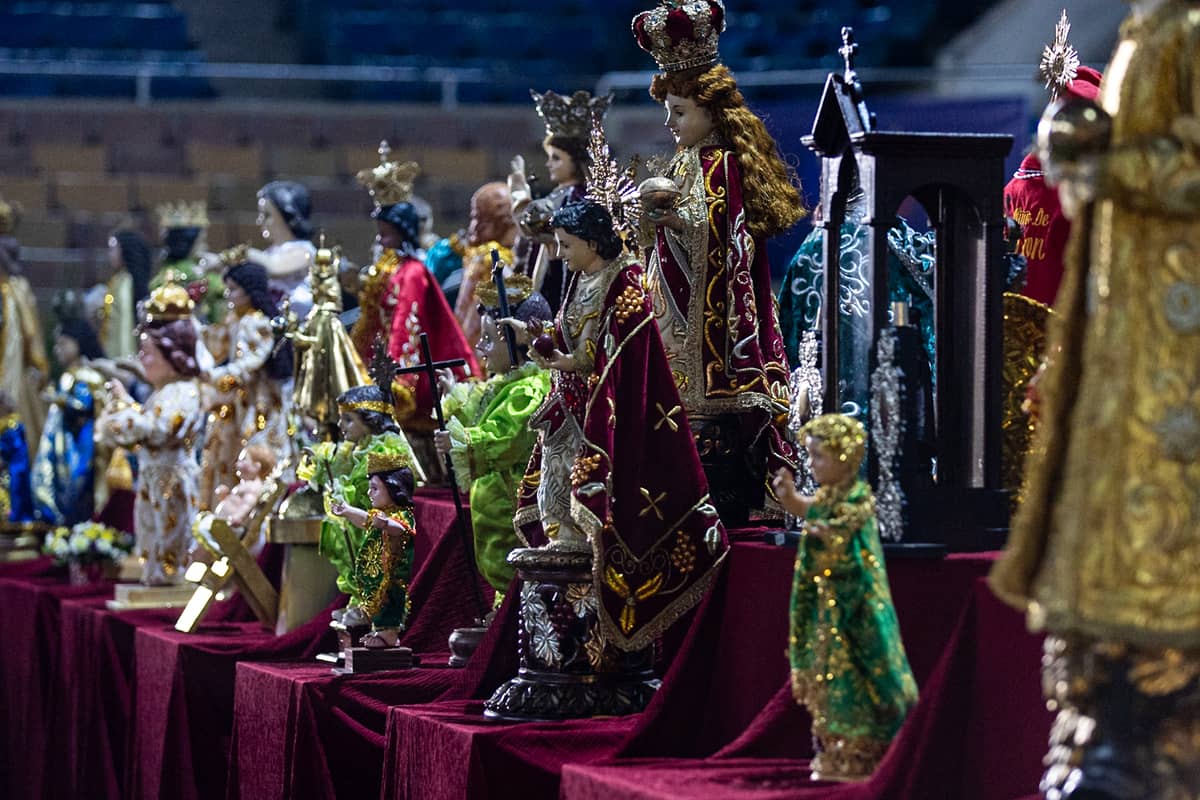
IN a sea of Santo Niño images, faith stands multiplied, shared and alive.
Photograph by Jefferson Fernando and John Carlo Magallon for DAILY TRIBUNE
Brotherhood born out of devotion
The roots of the Congregacion trace back to 15 August 1979, when 11 laymen — mostly artists and cultural workers — united to honor the Holy Name of the Child Jesus. Inspired by traditions in Bulacan, they envisioned a Manila-based congregation to bring the devotion closer to the urban faithful.
Guided spiritually by Carmelite nuns and granted pastoral blessing by the late Jaime Cardinal Sin, the group was formally inaugurated in Quezon City. At its heart was a four-foot image of the Child Jesus that became the center of a continuous nine-day novena carried from home to home.
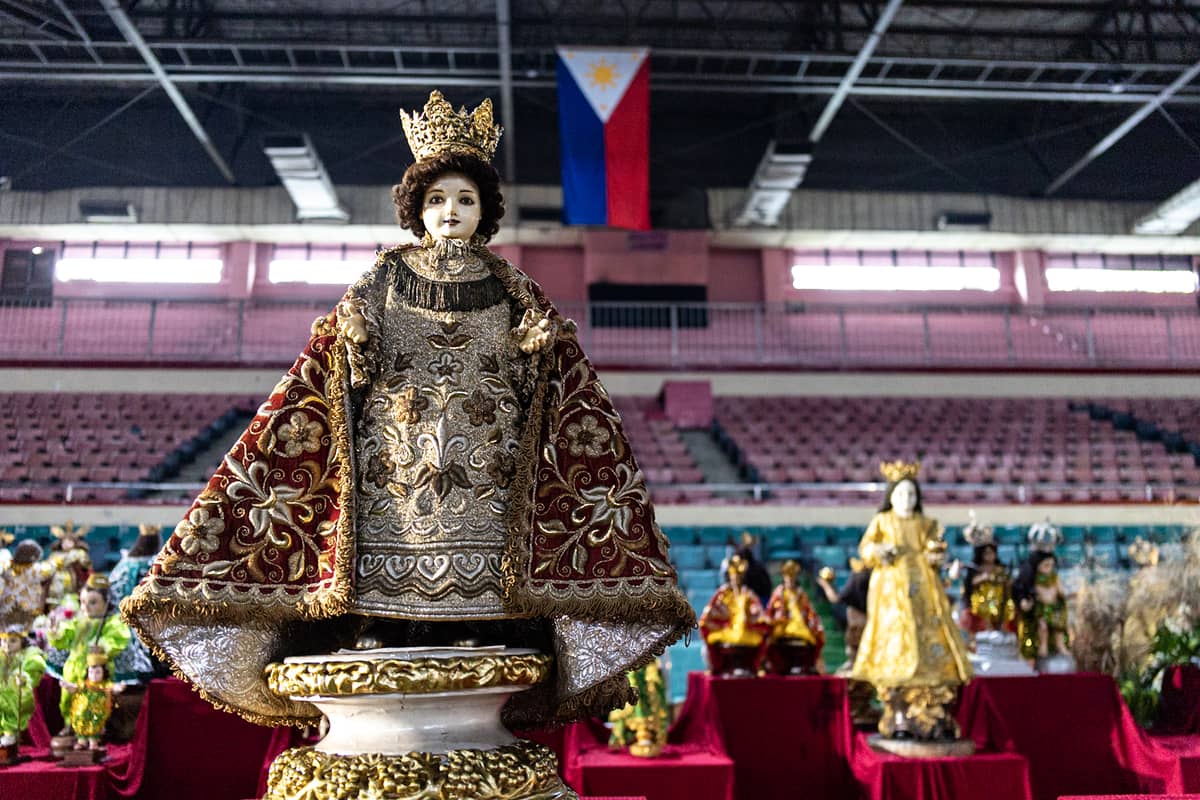
FIESTA del Santo Niño, a faith that continues to walk.
Photograph by Jefferson Fernando and John Carlo Magallon for DAILY TRIBUNE
From mission to ministry
What began as a lay initiative grew into a recognized apostolic force. In the early 1980s, the group was entrusted with a chapel along E. Rodriguez Sr. Avenue, which eventually evolved into the Sto. Niño de Violago Quasi-Parish.
The Congregacion’s outreach extended beyond liturgy. Through the Hatiran-Sunduan initiative, images and novena prayers reached households nationwide. Their efforts supported disaster relief, medical missions and aid for marginalized communities. In 1983, the organization received a Papal blessing in recognition of these works.
The fiesta as a gathering of stories
The Pasay City Astrodome now serves as the sanctuary for this spiritual summit. The event features nine days of novena Masses celebrated by various bishops and priests, alongside the expansive exhibit.
After the quiet years of the global pandemic, the return of the in-person fiesta represents a rebirth for the community. Devotees have once again gathered to light candles and reconnect with a devotion that sustained them during isolation.
Faith that continues to walk
The story of the Fiesta del Santo Niño is one of continuity. From the original 11 members to thousands of devotees today, the mission remains anchored in service. Members have even journeyed to shrines in Europe and Mexico, exchanging traditions and replica images to link Filipino devotion to the wider Catholic world.