
Misquoted, misheard and misjudged: When public words become private wars
It all started when a Batangas vlogger asked her reaction to bashers criticizing her, her husband — Executive Secretary Ralph Recto — and their son, Ryan Christian.


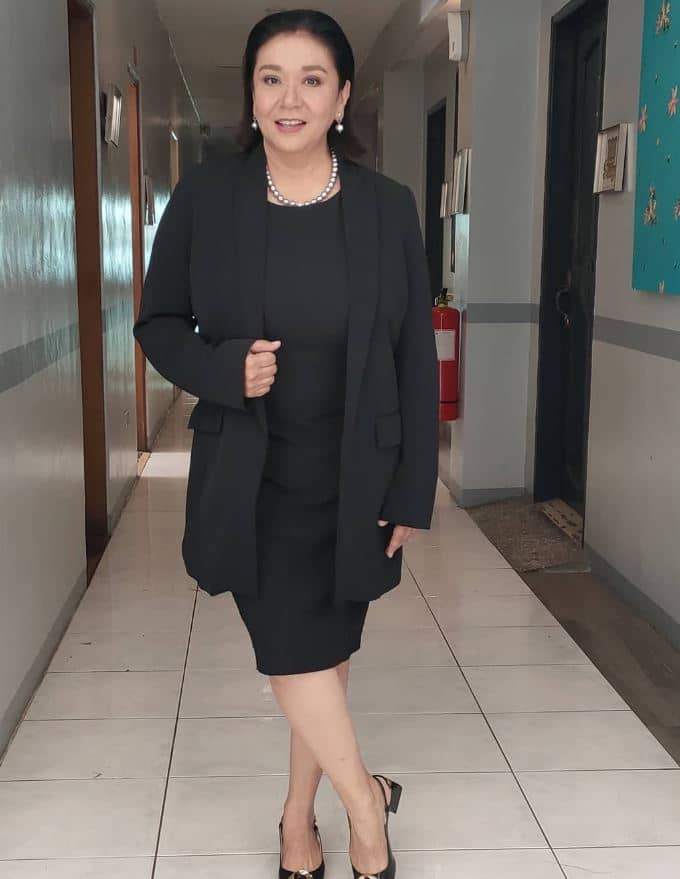
ALMA Moreno
One of the biggest box-office hits of 1978 was Magkaribal. In the film, Vilma Santos and Alma Moreno were rivals for the affection of Christopher de Leon. During filming, Vilma and Alma indeed became rivals — not for De Leon’s affection, but for star magnitude.

VILMA Santos-Recto.
After wrapping up her scenes, Vilma decided to take a well-deserved rest in the US. Movie scribes who saw her off at the airport asked about the chances of Alma outshining her in Magkaribal. Possibly annoyed, she shot back: “No way!”
That must have been the nastiest comment she had ever made in her public life — until her now-infamous “balcony” statement. You know the one: how they are up there, while the rest of us are down here.
I need not repeat the actual quote, since that controversial remark dominated Christmas reunions this most recent Yuletide season. Clearly, however, the Batangas governor’s statement was taken out of context.
It all started when a Batangas vlogger asked her reaction to bashers criticizing her, her husband — Executive Secretary Ralph Recto — and their son, Ryan Christian. After the content was uploaded, some mean soul re-edited the interview to make her look pompous.
In my recent communication with Vilma, she did not deny issuing the controversial statement. Her fault? A “wrong choice of words,” which she readily admitted.
Lyka Manalo, the Batangas vlogger who originally uploaded the interview in full, later posted on Facebook a complete transcription of Vilma’s chat with local media. It is tedious reading, having been transcribed from video, but the essence is clear: Vilma was referring to her family’s bashers — not the rest of humanity — in that conversation with the Batangas press.
Vilma will surely get over this hump in time. Still, one can only imagine the kind of Christmas she endured during what is supposed to be a season of joy.
Jose Avelino — who? To get the attention of millennials, Jose Avelino was the great-grandfather of actor Paulo Avelino. He was also the grandfather of singer Coritha, who passed away in 2025.
A native of Samar, Avelino was a former Senate president and Labor Secretary. At one point, he was also appointed Secretary of Public Works and Communication — what we now call the Department of Public Works and Highways.
Why “Communication”? As I understand it, part of his job was to communicate to the public what his department had accomplished. In that sense, he may have been the equivalent of today’s Vince Dizon, since DPWH secretaries now bring media along during site inspections.
For all his accomplishments, what remains etched in public memory is this quote attributed to him: “What are we in power for?” Jose Avelino was clearly misquoted.
The infamous line was supposedly uttered during a party caucus. A language barrier likely started it all. Like most of his generation, Avelino was more proficient in Spanish. The reporter who interviewed him apparently knew very little Spanish and misquoted him.
There are also theories that the statement was fabricated by political rivals and later attributed to Avelino. Whatever the truth, the quote was bannered in a popular daily for everyone to see: Avelino: What are we in power for?
Avelino ran for president in 1949. With an unpopular statement like that clinging to his name, how could he have won? Still, despite the controversy, he fought a good fight. Many believe he could have been a great president.
After a brief stint in diplomacy, Avelino returned to private law practice. He could have gone all the way to the presidency — but was derailed by a misquote.
All guts, no glory? Of course not. Gloria Diaz has had innumerable glorious moments — starting with her crowning as the first Filipino Miss Universe and continuing with her evolution into an acclaimed actress. It may have taken her 24 years to win her first acting award, but she is now recognized as one of the finest performers in local cinema. To this day, Gloria remains good copy.
But how many times has she landed in trouble because of things she said in public? Is it gutsiness, or simply a lack of tact?
Only last month, while promoting her Metro Manila Film Festival entry Rekonek, Gloria granted a press interview that got her bashed for siding with her friend, Trade Secretary Cristina Roque, who infamously claimed that P500 is enough
for noche buena.
I actually agree with both Gloria and Secretary Roque. Yes, one can buy noche buena for P500 — but don’t expect a festive spread, as Roque stubbornly insisted.
Based on Gloria’s budgeting, a family could have corned beef, fruit salad, pancit and pineapple juice with plenty of ice. She even suggested a practical alternative: “Maki-kain sa kapitbahay.” She was obviously joking, but in hard times, even humor has become an expensive commodity.
When noche buena finally arrived, Gloria appeared online eating soft-shell crabs and foie gras. Foie what? How many millions of Filipinos have lived — and died— without ever tasting foie gras, or even hearing of it, much less pronouncing it correctly?
I’d like to think I can say foie gras well enough not to be spat at by a Parisian snob, though I relied on spell check while typing this.
In Gloria’s defense, she was merely suggesting an affordable menu. She never said she herself would be eating corned beef and pineapple juice on Christmas Eve.
But did she have to post her foie gras and soft-shell crabs for the world to see? Perhaps it was a family member. Still, it was Gloria who got bashed yet again.
Controversies are nothing new to her. Years ago, during a Miss Universe season, she told the late Mario Dumaual on TV Patrol that Pinay contestants should be allowed to answer in their native language. If a contestant were Cebuana and not fluent in English, she should be allowed to speak Bisaya. Cebuano was merely an example — yet Gloria ended up being declared persona non grata in Cebu.
Few remember that a month after winning Miss Universe 1969, Gloria caused another stir when asked in a forum if she was comfortable speaking Filipino. Fresh from impressing host Bob Barker with her English, she replied: “I only speak Tagalog to maids.”
The public bristled. Gloria was simply being honest. In the Diaz household, English — and Spanish — were spoken. Tagalog was reserved for household help. That was a way of life half a century ago. Before Ferdinand Marcos Sr. pushed for Filipino in the early 1970s, private-school students were required to speak English on campus — or face fines or remedial classes.
Today, Gloria speaks excellent Tagalog. On screen, she is the “Queen of Punchlines,” all deliciously delivered in the language.
The problem with Gloria is her brutal honesty. The problem with the public? Poor comprehension — or laziness in analyzing what was actually said. Many lack discernment, yet are quick to pass judgment.