




Traslación: The centuries-old journey behind the Black Nazarene

Text size
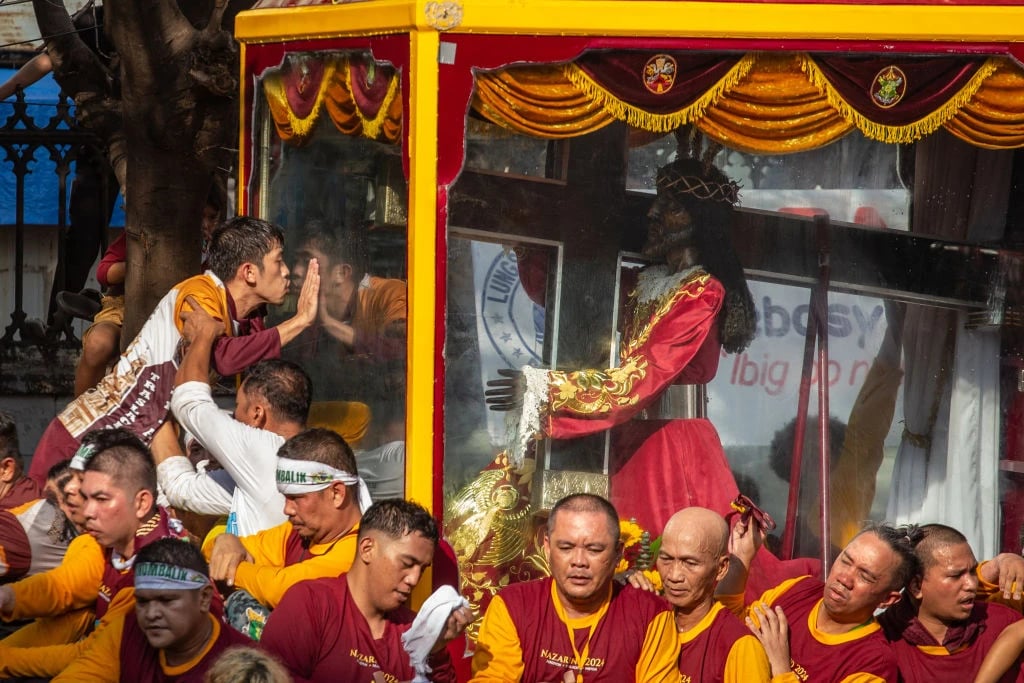
Every 9 January, Manila awakens to a sea of maroon and gold as millions of barefoot devotees flood the streets for the Traslación, one of the largest religious processions in the world. For hours—often stretching into an entire day—the image of the Black Nazarene is carried through packed avenues, accompanied by prayers, tears, chants, and an unshakable belief that faith can move mountains. What many experience as a personal vow or miracle is, at its core, a ritual rooted in centuries of history and devotion.
The story of the Black Nazarene began long before Quiapo became its spiritual home. The life-sized image of Christ carrying the cross was brought to Manila in the early 17th century by Augustinian Recollect missionaries from Mexico, then part of Spain’s vast empire. Darkened by age, candle smoke, and lore, the image soon gained a reputation for surviving fires, earthquakes, and wars—feeding the belief that it was no ordinary statue, but a vessel of divine grace.
For decades, the Nazarene was enshrined in Intramuros, within the walls of the old Spanish city. Its eventual transfer to Quiapo in the late 18th century marked a turning point. That solemn journey—later remembered as the first Traslación—was not simply a change of location, but the beginning of a living tradition. The faithful retraced that historic move, transforming it into an annual act of remembrance and renewal.
As the years passed, the devotion evolved into a deeply Filipino expression of faith. By the early 20th century, ordinary believers had taken the lead in organizing and sustaining the procession. The Traslación became less clerical and more communal, shaped by the stories of workers, mothers, jeepney drivers, and vendors who found solace in the suffering Christ. Even when Quiapo Church was ravaged during World War II, the image endured—strengthening the conviction that the Nazarene walks with His people through history’s darkest hours.
At the heart of the Traslación is imitation. The grueling procession—marked by heat, exhaustion, and crushing crowds—mirrors Christ’s own journey to Calvary. Devotees reach out to touch the rope, the carriage, or the image itself, believing that even fleeting contact can bring healing, forgiveness, or strength. Many walk barefoot, not out of spectacle, but as an offering of sacrifice known as panata—a vow born of gratitude or desperation.
The word Traslación literally means “transfer,” yet its meaning goes far deeper. It is the transfer of pain into hope, of burden into prayer, of private suffering into a shared pilgrimage. For devotees, the Nazarene does not remain on the altar; He moves through the streets, among the wounded and weary, carrying their stories with Him.
Housing is probably the biggest issue affecting people the world over.
Malacañang on Monday called for a more thorough investigation into the questioned flood control projects in Taguig…
The defense on Monday backed the move by senator-judges to exclude a prosecution witness who testified on the firearms…
