
DoST pushes fire-retardant tech for safer construction
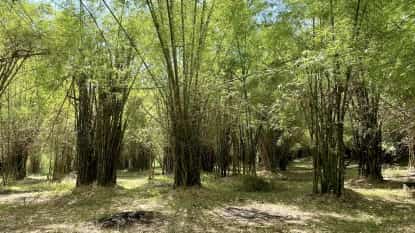
FIRE-RESISTANT Construction a Bamboo research and development center in Batac City, Ilocos Norte in an undated photo. The Department of Science and Technology-Forest Products Research and Development Institute (DOST-FPRDI) on Friday (Dec. 26, 2025) said it has been advancing research initiatives to ensure that bamboo remains not only a sustainable and affordable material, but also a fire-safe construction and building component. (Contributed photo)
PNA photo
Following a recent fire in Hong Kong that raised public concern over the safety of bamboo in high-rise construction, Philippine researchers are advancing new technologies to make the sustainable material more fire-resistant.
The Department of Science and Technology’s Forest Products Research and Development Institute (DoST-FPRDI) is developing treatments and testing protocols to ensure bamboo remains a viable and safe building component.
While bamboo is an organic material that is naturally combustible, Dr. Rico J. Cabangon, director of DoST-FPRDI and a bamboo expert, said risks can be mitigated.
“With proper testing, drying, treatment, and the use of fire-safety technologies, the risk of ignition and flame spread can be significantly reduced,” Cabangon said.
Bamboo is often favored for its sustainability, as some species can be harvested in only a few years, making it a faster-growing alternative to timber. It also absorbs carbon dioxide during growth and is generally more cost-effective to process than metal or concrete.
To address flammability, the institute is exploring fire-retardant technologies designed to interfere with combustion.
One previous study focused on using nano-sized montmorillonite clay — an affordable, less toxic alternative to imported chemicals — to create a protective layer on wood. Researchers are now looking to apply this same patented technology to bamboo.
The institute is also developing a cellulose nanofiber aerogel derived from kauayan-tinik, a local bamboo species. The aerogel is intended to serve as a sustainable, non-hazardous additive for construction insulation.
Safety evaluations are conducted at the institute’s Fire Testing Laboratory, which tests how easily materials ignite when exposed to heat and open flames. The facility currently tests small specimens but plans to acquire advanced machinery to test larger construction components for local contractors.
DoST Secretary Renato U. Solidum Jr. said the department’s long-running support for the bamboo industry includes ensuring its safety across various applications.