
Old habits die hard
Marcos Jr. would do well to remember this: When scandals flood the gates and usefulness ebbs, Washington has a habit of packing off liabilities.


The United States insists that its recent military buildup in the Caribbean is part of a noble crusade against drug trafficking. That is the public narrative, at least — a storyline polished with moral varnish and strategic ambiguity.
But strip away the diplomatic propriety, and what remains is a depressingly familiar picture. It’s an itch to scratch for mighty America, a country that has long mistaken intervention for righteousness, and whose foreign policy is powered as much by oil barrels as by lofty ideals.
Venezuela is only the latest stage for Washington’s theater of global policing. The country has just sworn in 5,600 new soldiers, with the sheer size of the force explaining the magnitude of the threat perceived from outside its borders.
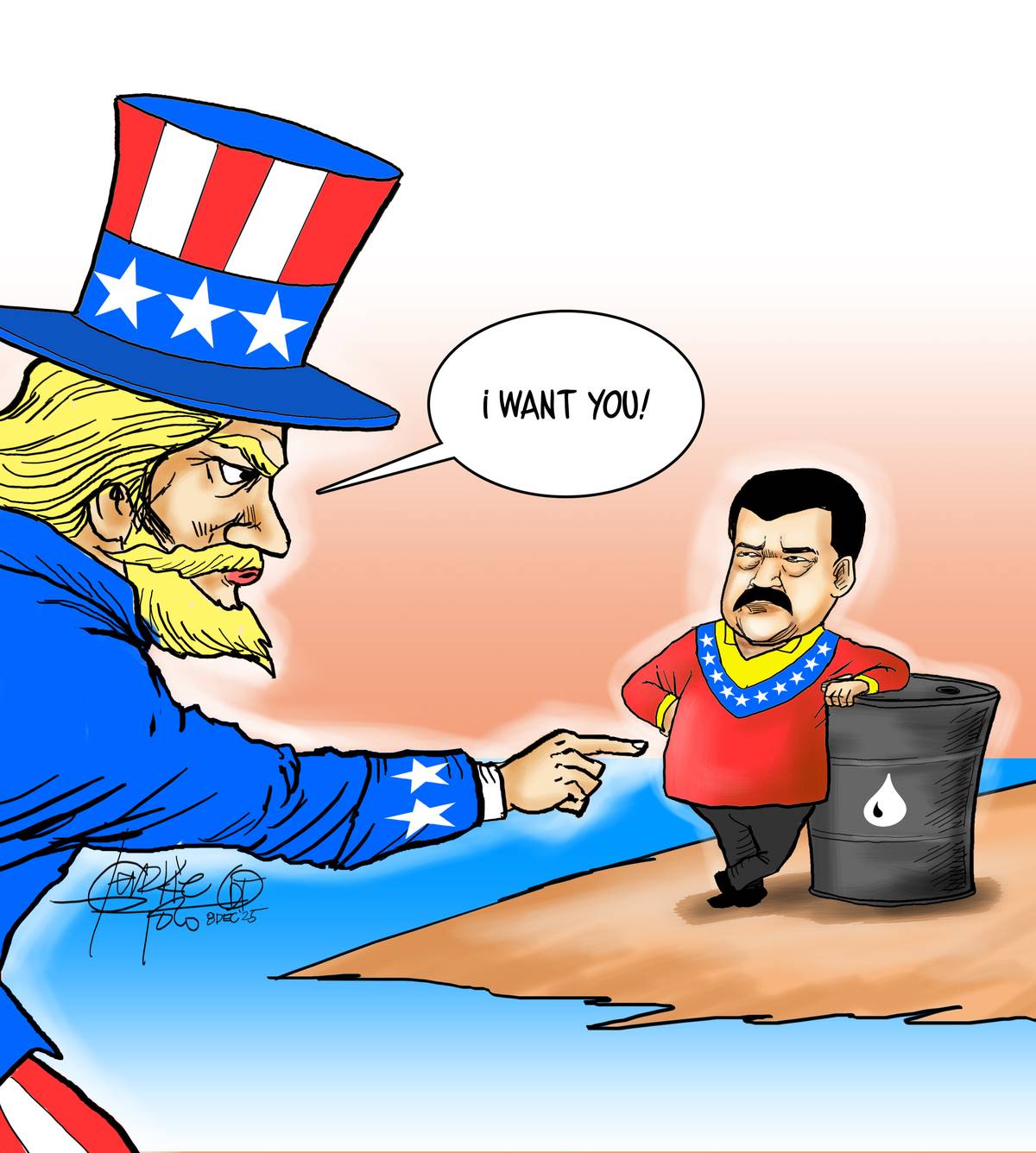
And why not? The US has just parked the world’s largest aircraft carrier and a fleet of warships within striking distance. It has conducted deadly strikes on more than 20 vessels, with at least 87 people killed.
Washington claims this is all part of a regional crackdown on narcotics. Yet Donald Trump has accused President Nicolas Maduro of running a so-called “Cartel of the Suns,” conveniently declared a terrorist organization.
The pattern is unmistakable: criminalize a regime, soften international opinion, and prepare the chessboard for an engineered transition. Maduro says this “anti-drug” US expedition is aimed at overthrowing him and seizing Venezuela’s oil.
When seen through the long lens of history, Washington’s denials ring hollow. This, after all, is a nation that helped topple Iran’s Mohammad Mossadegh in 1953 after he nationalized his country’s oil industry.
This is the same superpower that destabilized Guatemala’s Jacobo Árbenz in 1954 when his agrarian reforms collided with American corporate holdings.
Each time, democracy was the justification raised by the US, but that’s just a tired, overused cover story for its capitalist self-interest. Those who think Venezuela is a different story should recall how quickly the US has shifted allegiances when its strategic interests are threatened.
In the Philippines, Ferdinand Marcos Sr. was a dependable ally for years, an essential anti-communist buffer in Southeast Asia who opened Philippine territory to American military bases.
But when Marcos 1.0 outlived his usefulness, Washington nudged him into calling a snap election, then turned away as millions of Filipinos marched through EDSA, stopping the strongman’s tanks.
Certainly, America did not plan the People Power Revolution, but it was quick to shift sides to Corazon Aquino when the mob stormed the Palace by the Pasig River. It facilitated the Marcoses’ exile to Hawaii, not out of love for democracy, but because a Marcos who could no longer govern was a liability.
Three years later, in 1989, the United States protected Cory’s administration with F4 Phantom jets that buzzed in “persuasion flights” the rebel planes that lorded it over the skies. That turned the tide of the battle; that ensured Aquino would finish her term.
For America, the Philippines was too important to lose to loose cannons like Gringo Honasan. Yes, democracy was celebrated, but only because it aligned with US imperatives.
The Venezuelan crisis is being presented as another moral duty, another attempt to clean up the hemisphere. But drug trafficking is a convenient banner. It is broad, dramatic, and easily expanded into a catch-all rationale for intervention.
The US has never been comfortable with a resource-rich nation choosing independence over alignment. Venezuela possesses the world’s largest proven oil reserves. It does not take a geopolitical savant to understand why it is suddenly the subject of a military encirclement.
The harassment of Maduro’s government is also part of a larger global recalibration. The United States is wrestling with its waning influence amid the rise of China and the assertiveness of Russia. A pliant Venezuela strengthens Washington’s hand in the Americas. A defiant one must be neutralized. The language changes, but the logic does not.
And if history is any guide, President Ferdinand Marcos Jr. would do well to remember this: When scandals flood the gates and usefulness ebbs, Washington has a habit of packing off liabilities — and a Marcos who can no longer govern can find himself booked on the same outbound flight his father once took.