
Pioneering sustainable lifestyle
‘This project reflects the evolution of our commitment. It’s about moving past operations and efficiency, to rethink the very materials that define the built environment.’

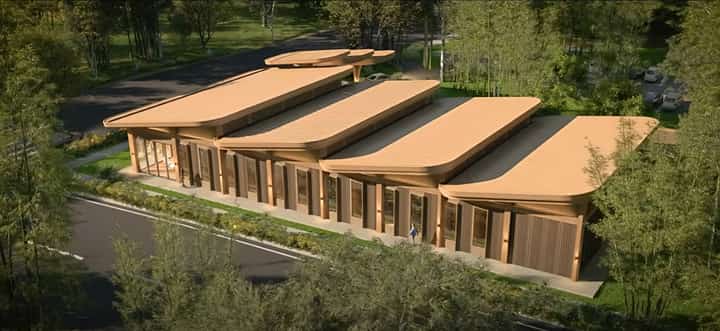
PROJECT BEAM (Bamboo for Ecological Architecture and Materials), the Philippines’ first commercial-scale bamboo structure.
PHOTOGRAPHS COURTESY OF ARTHALAND
Arthaland represents the intersection of sustainability and luxury. With a fully certified sustainable portfolio, it creates spaces that are elegant, mindful and enduring.
With world-class residential and commercial developments stamped with both local and global green certifications, it continues redefining what “future-ready living” means.
At Arthaland, sustainability isn’t a chapter; it’s the whole story. The company has shifted from simple environmental awareness to real climate action. It became Asia’s first real estate signatory to the Net Zero Carbon Buildings Commitment, aligning its goals with the rigorous standards of the Science Based Targets Initiative (SBTi) and even joining the ESCAP Sustainable Business Network (ESBN).
This vision is anchored on one mission: to create enduring spaces that future generations can truly value. Every development stands as a testament to the company’s belief that responsibility, sustainability, and environmental well-being should be built into every square meter of tomorrow.
Meet Project BEAM
With the introduction of Project BEAM (Bamboo for Ecological Architecture and Materials), the nation’s first commercial-scale bamboo structure, ARTHALAND, the leading sustainable real estate developer in the Philippines, is commemorating yet another milestone.
The project is a significant step toward its long-term goal of “Life Built for Tomorrow,” turning audacious climate pledges into a practical, natural solution for the built environment.
From being Asia’s first real estate signatory to the Net Zero Carbon Buildings Commitment, aligning with the Science Based Targets Initiative (SBTi), and taking on a pioneering role in the ESCAP Sustainable Business Network (ESBN), Arthaland has consistently moved from advocacy to action.
With Project BEAM, this momentum reaches a new phase, firmly anchoring the company’s sustainability strategy in circular construction, carbon reduction, and inclusive economic growth.

ARTHALAND vice chairman and president Jaime C. González.
“This project reflects the evolution of our commitment. It’s about moving past operations and efficiency, to rethink the very materials that define the built environment,” Jaime C. González, vice chairman and president of Arthaland, said.
Project BEAM is a prime example of how using natural solutions can transform the construction industry. The transition to bio-based, carbon-sequestering materials has become more crucial because embodied carbon currently makes for over half of all building-related emissions worldwide. One particularly noteworthy resource that is quickly renewable and regenerative is bamboo, which can serve as a structural component while greatly lowering the carbon footprint of buildings.
Over a 10-year period, bamboo forests in the Philippines can restore damaged soils, improve ecosystem health, and sequester an estimated 100 to 400 tons of carbon dioxide per hectare. Beyond its benefits to the environment, bamboo sustains livelihoods all over the nation, from the vast farms of Central Luzon to the artisanal craft traditions of the Visayas and the furniture industry of Mindanao.
The enormous potential of the sector is demonstrated by the worldwide bamboo market, which was estimated to be worth USD 67.4 billion in 2024 and is expected to increase at a rate of about eight percent per year. Less than 3.5 percent of the 1.5 million hectares that are suitable for bamboo growth are currently in use, making the Philippines in a unique position to increase production, boost rural economies, and become a regional leader in bamboo innovation.
The circular construction concepts are also embodied in bamboo. It minimizes resource depletion, regenerates after harvest without the need for replanting, and permits modular, lightweight, and flexible design that permits buildings to be repaired, reused, or repurposed rather than demolished.
Bamboo acts as a natural carbon sink throughout its life cycle, converting constructed buildings into long-term carbon reservoirs and completing the circle between sustainable sourcing, prolonged material usage, and positive environmental effects. Arthaland director Christopher T. Po highlighted the initiative’s deeper significance in his statement. Through the program, Arthaland hopes to lower embodied carbon while boosting regional businesses and generating worthwhile employment possibilities in rural areas.
The first Project BEAM building will soon be built in Sevina Park, Arthaland’s master-planned mixed-use estate in Biñan, Laguna, which is renowned for being the first in Southeast Asia to receive both the BERDE District’s 5-Star rating and LEED Platinum certification for Neighborhood Development. The 600-square-meter medical facility combines sustainable practices, innovative design, and state-of-the-art medical services. One of the first tenants and partners for this innovative project is Maxicare Healthcare Corporation, the top healthcare provider in the nation.
By producing top-notch properties that uphold the greatest standards of environmental and social responsibility, the business continues to reinvent what is possible in the Philippine real estate industry through innovative initiatives like Project BEAM.