
Sierra Madre: Luzon’s storm shield
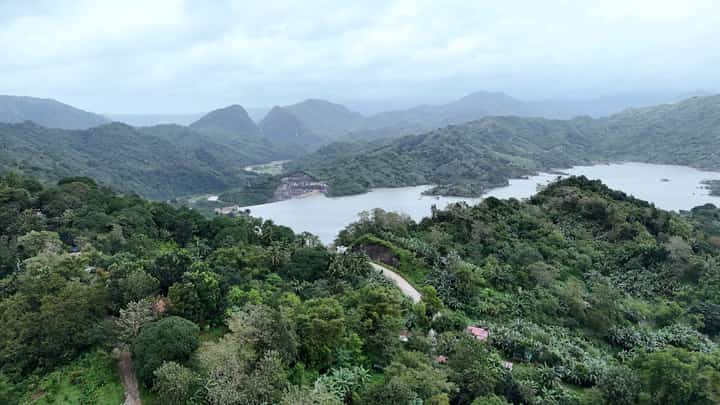
DARK clouds loom over the Sierra Madre mountain range along the Casili River in Barangay Pintong Bukawe, San Mateo, Rizal. Philippine Atmospheric, Geophysical and Astronomical Services Administration notes that Luzon’s mountainous terrains, including Sierra Madre, helped weaken super typhoon ‘Uwan’ (Fung-wong) as it crossed the country.
Photograph by Analy Labor for DAILY TRIBUNE
The Sierra Madre mountain range, stretching 540 kilometers from Cagayan in the north to Quezon in the south, continues to play a vital role in protecting Luzon from the wrath of tropical cyclones. Rising to 6,283 feet, this natural wonder spans 10 provinces, including Cagayan, Isabela, Nueva Vizcaya, Quirino, Nueva Ecija, Aurora, Bulacan, Rizal, Laguna and Quezon.
While foreign storm chaser Josh Morgerman of iCyclone recently downplayed the range’s ability to protect the east coast of Luzon, he acknowledged its role in reducing the intensity of storms before they reach inland communities.
In a social media post on 10 November, Morgerman clarified: “The Sierra Madre weakens typhoons after they make landfall. It doesn’t protect the east coast of Luzon, which regularly experiences some of the strongest tropical cyclones in the world. So, yes, the Sierra Madre helps slow storms and protect inland Luzon, but it doesn’t shield coastal towns from the initial, most destructive impact.”
Morgerman’s observations align with a study published in the Philippine Journal of Science, which confirms that typhoons hit the eastern coast at full strength but lose power after crossing the mountain range.
Following recent typhoon “Uwan,” the National Disaster Risk Reduction and Management Council (NDRRMC) reported only two deaths in Luzon, compared to hundreds in Cebu from typhoon “Tino” — underscoring Sierra Madre’s role as a natural protector.
The Climate Change Commission (CCC) describes Sierra Madre as Luzon’s first line of defense against climate-induced disasters: “Perhaps Sierra Madre’s most renowned role is its function as a natural barrier against tropical cyclones. When storms approach from the Pacific, the mountain range slows down and deflects strong winds, significantly reducing their intensity before they reach inland areas.
“This natural shield helps minimize the destructive force of typhoons, saving lives, protecting infrastructure, and reducing damage to ecosystems and livelihoods.”
Beyond typhoon protection, Sierra Madre supports 40 percent of the Philippines’ forest cover, harboring around 3,500 plant species — 58 percent of which are endemic. It also acts as a critical carbon sink across 1.4-million hectares, absorbing carbon dioxide, regulating temperature, stabilizing weather patterns, and maintaining ecological balance. These forests provide vital habitats for countless wildlife species while sustaining biodiversity and rural livelihoods.
Despite its importance, the Sierra Madre faces significant threats from illegal logging and deforestation.
Former Agriculture Secretary Manny Piñol reiterated his September 2016 observation of rampant illegal logging during a Biyaheng Bukid sortie, posting on Meta last 10 November:
“Corn and other crops were planted in parts of the forest which were cleared, a farming practice which is not sustainable simply because land with very steep grades cannot be productive for long due to soil erosion.”
“Along the way, I saw signs warning against illegal logging, but these were apparently ignored by the illegal loggers. Government must act now before it is too late.”
Urban planner Felino “Jun” Palafox Jr. has also emphasized the danger posed by logging, linking it to mudflows, erosion, and flooding, particularly in Infanta and Real, Quezon. He called for government action, including reviewing the Subdivision Law and other regulations, to safeguard the mountain range.
ResearchGate highlights that illegal logging remains rampant in the Northern Sierra Madre Natural Park, the largest protected area in the Philippines, with 20,000 to 35,000 cubic meters of wood extracted annually. Despite protections, enforcement is weak, putting biodiversity and rural livelihoods at risk.
The Sierra Madre is also home to indigenous communities, including the Dumagat tribe, and serves as the watershed for the mighty Cagayan River, supplying irrigation to rice farmers in Cagayan Valley and Nueva Ecija.
Piñol warned that continued deforestation could have catastrophic consequences on agriculture, water supply and flood control.
The recent typhoons “Tino” and “Uwan” have underscored the mountain range’s importance. While the eastern coast bears the brunt of storms, the Sierra Madre protects inland Luzon, mitigating damage, preserving livelihoods and safeguarding ecosystems.
The CCC stresses: “Preserving the mountain range is a crucial step to enhancing our climate resilience, as it acts as a natural defense against typhoons, floods, and landslides.”
The Sierra Madre is more than a mountain range — it is a lifeline. Its forests regulate the climate, its peaks deflect destructive winds, and its rivers sustain agriculture and communities.
Protecting this natural fortress is not just an environmental imperative, but a critical measure to ensure the safety, resilience, and survival of millions of Filipinos.