The 50-year checkup


Text size


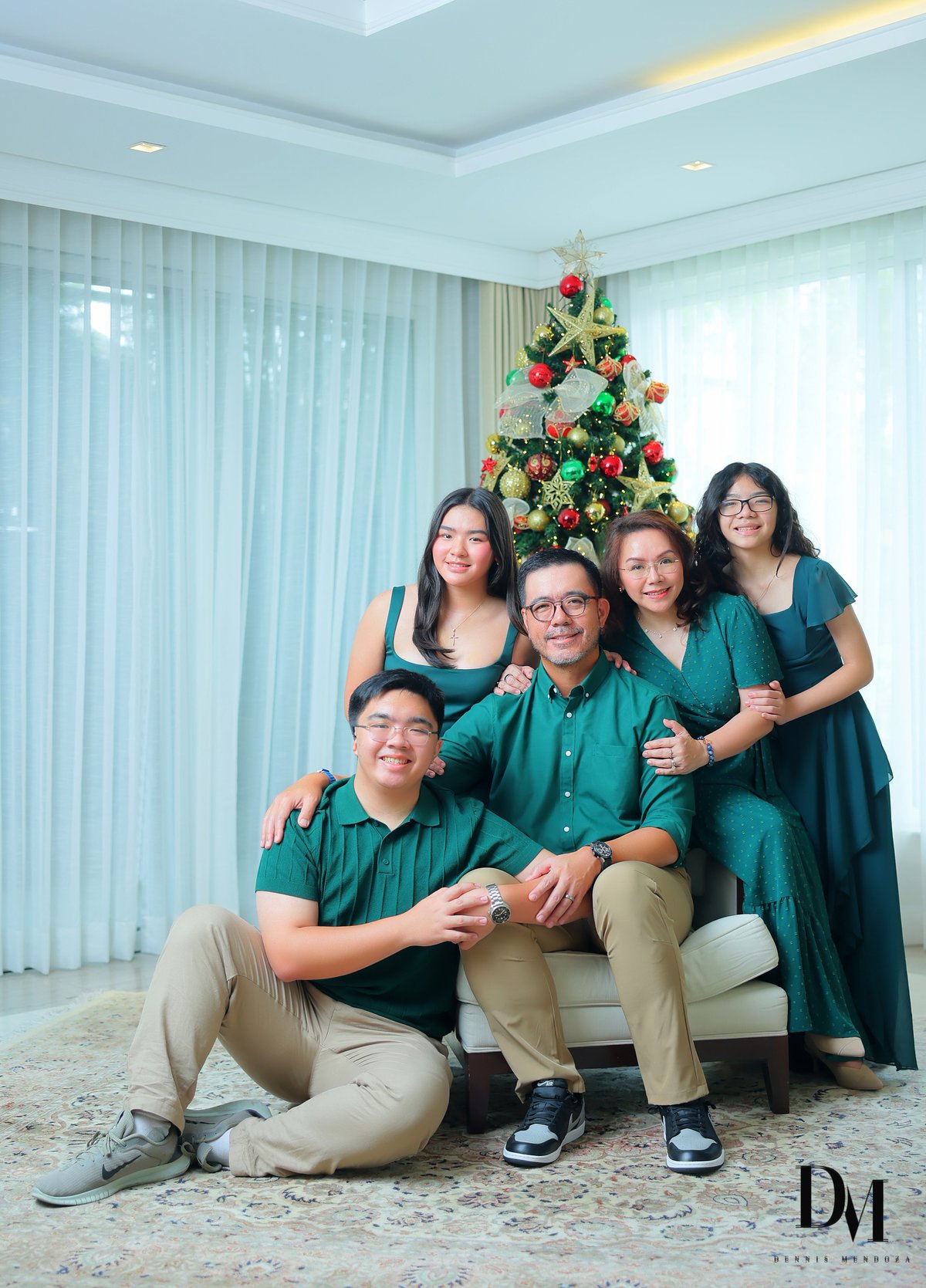
Dr. Brian Cabral with his wife, Dr. Monica Therese Cating-Cabral, an Endocrinologist, who co-authors this column, and their three children.
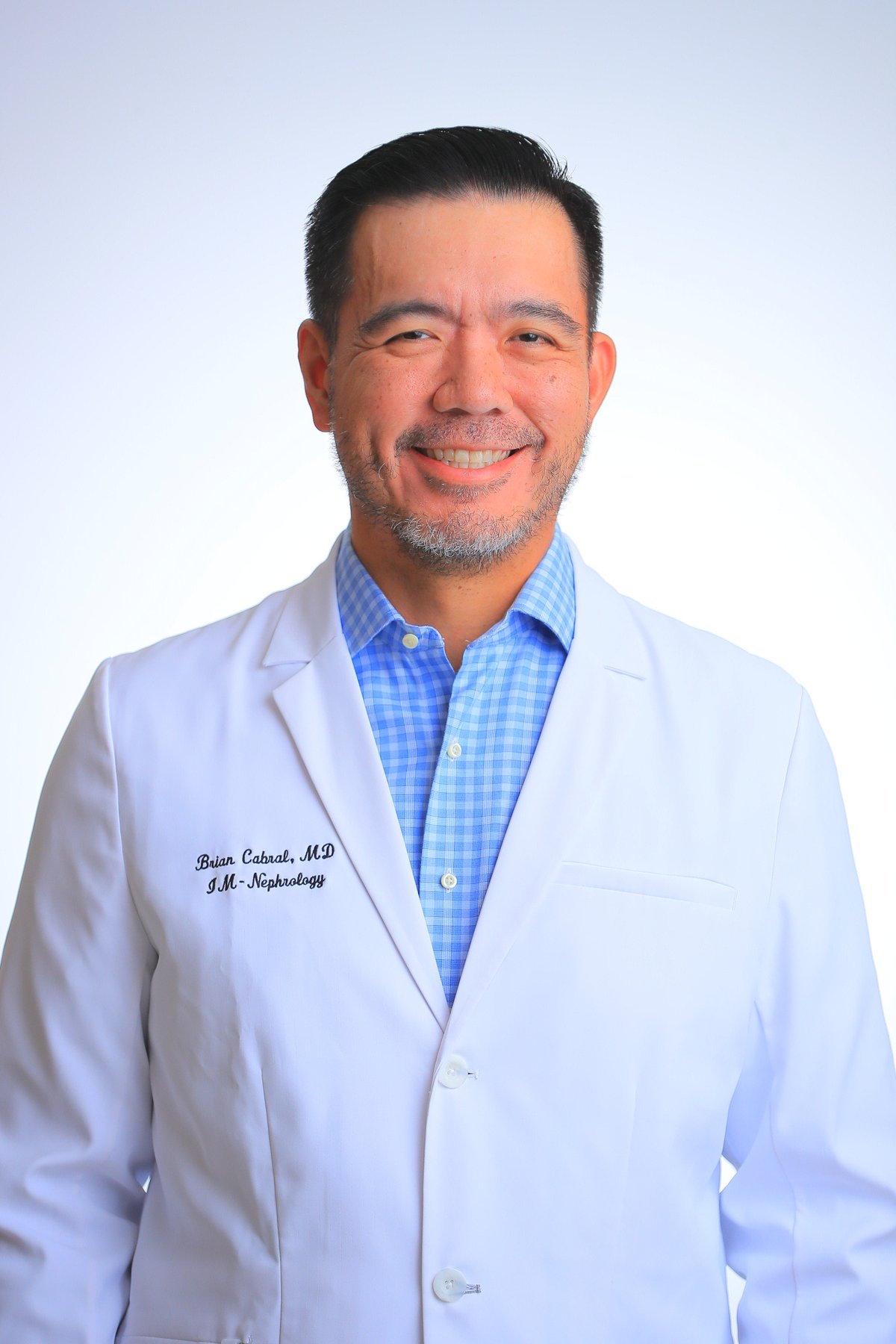
Dr. Brian Cabral is a General and Transplant Nephrologist.
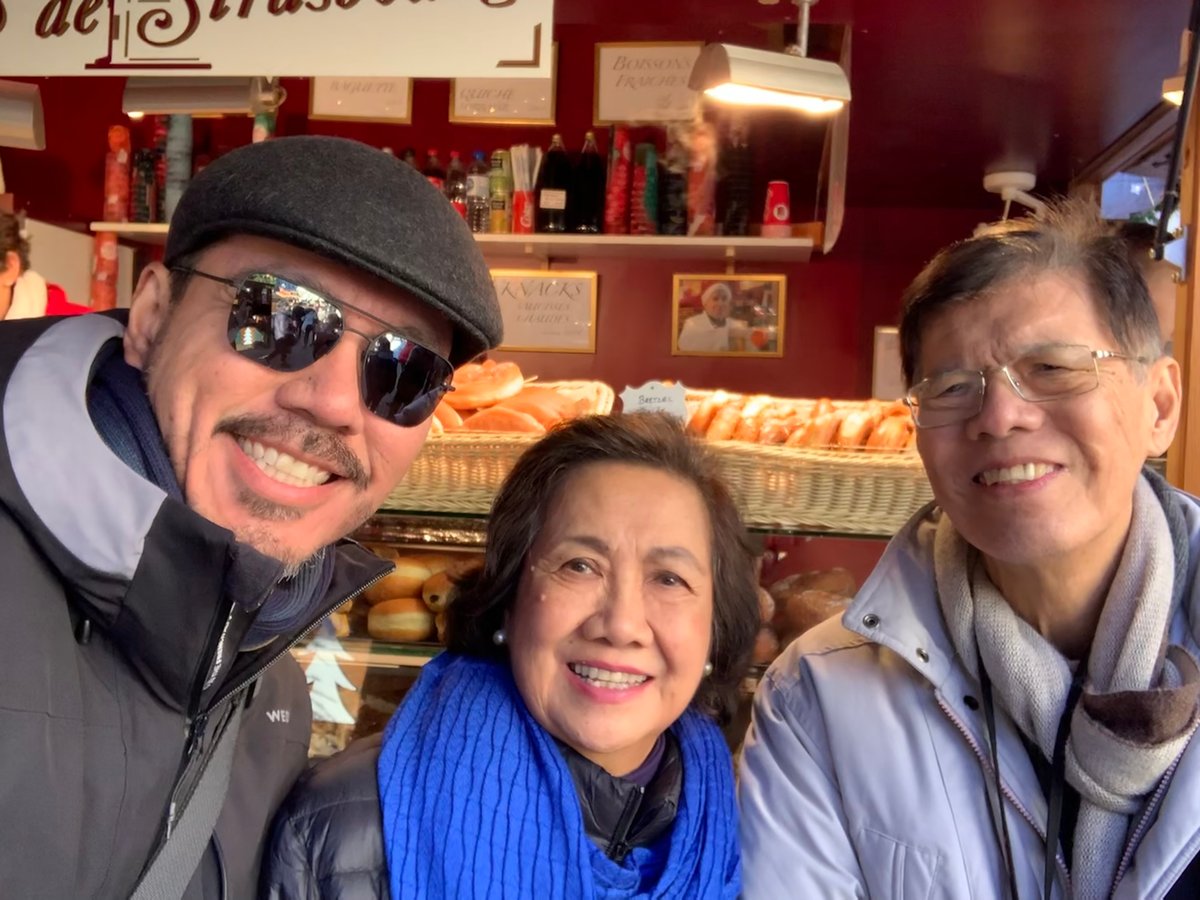
The author, with his parents, Dr. Esperanza Cabral, a cardiologist and former Secretary of Social Welfare and Development and former Secretary of Health, and Dr. Bienvenido Cabral, an ophthalmologist.
It’s strange being on this side of 50. We, doctors, are used to interpreting numbers — creatinine, cholesterol, ejection fraction, GFR — and making sense of someone else’s life. But when the chart belongs to you, the numbers suddenly feel different.
If life were a patient encounter, this would be my 50-year checkup. A long-overdue annual exam — part reflection, part confession, part gratitude note for still being here.
Subjective
Chief Complaint:
Occasional disbelief that time has moved this fast. Associated with nostalgia, mild back pain after golf, and an increasing tendency to start sentences with, “Back in my day…”
History of Present Illness:
Symptoms began subtly after turning 40 — occasional fatigue from chasing too much, rare episodes of cynicism, and a growing desire for quiet. Now at 50, there’s a new awareness that some ambitions have been replaced by purpose, that meaning has slowly overtaken momentum. There’s also a deeper craving for stillness — fewer victories to count, more moments to feel.
Review of Systems:
Cardiac: Heart slightly enlarged, still easily moved by small acts of kindness.
Respiratory: Occasionally breathless — not from exertion, but from gratitude.
Gastrointestinal: Can now stomach disappointment better than before.
Neurologic: Memory for names declining; memory for lessons improving.
Psychiatric: Improved insight. Occasional melancholy, well-controlled with humor and caffeine.
Objective
General:
Awake, alert, and aware that half a century has passed in what feels like a few rotations of a hospital shift.
Appearance:
Wiser eyes, slower walk, but still responds to messages that begin with “Doc, sorry to bother you…” even at 11 p.m.
Cardiovascular:
Rhythm regular. Rate sometimes elevated by late-night worries about patients, parents, and children - usually in that order.
Musculoskeletal:
Joints protest more, but spine still upright. Reflexes for compassion remain brisk.
Psychiatric:
Stable mood, with episodes of reflection triggered by songs from the ’90s and reunions with colleagues who now lead programs I once helped build.
Assessment
Fifty-year-old male, physician, husband, father, still clinically functional despite chronic exposure to bureaucracy, late-night calls and unrealistic expectations. Stable condition.
Signs of professional fatigue occasionally present, but compensated by purpose, laughter, and the company of people who remember who I was before the titles.
When I was a younger doctor, I thought success meant being the busiest, the most in-demand, the one with the longest line outside the clinic. I chased every opportunity, every extra case, every invitation that might prove I was good enough.
Now, some years later, I see that the things that mattered most were never the things written in resumes. It’s the quiet victories — the patients who lived because you didn’t give up, the students who learned because you stayed kind, the colleagues who stayed because you listened.
Somewhere along the way, ambition softened into purpose. What used to feel like pressure now feels like privilege. And what once felt like sacrifice — missed dinners, sleepless nights, unspoken goodbyes — has slowly become gratitude for being allowed to live this kind of life at all.
There’s a certain clarity that comes with age. You realize that not all battles are worth fighting, and not all victories are worth winning. You start to understand that sometimes doing less is not giving up — it’s growing up.
I look at my parents now — older, slower, but still carrying themselves with that quiet dignity that defined their generation. They never chased recognition or wealth, yet they gave everything that mattered. I see in them what I hope my own children will one day see in me: that you can live a meaningful life without making noise about it.
Medicine, too, has changed. Machines now read scans, algorithms flag lab results, and information moves faster than conscience. But the things that truly matter — the listening, the patience, the presence — can’t be automated. I tell the younger ones: your skill may open doors, but your kindness will keep them open.
Plan
1. Continue current medications: compassion (as needed), honesty (daily), humility (lifelong).
2. Add supplements: doses of gratitude daily, taken with quiet mornings and good coffee.
3. Reduce dosage of worry; taper gradually.
4. Avoid toxic environments, both in hospitals and in hearts.
5. Schedule family time PRN, increase frequency as tolerated.
6. Resume hobbies for mental health: golf, laughter, writing columns that remind me why I still care.
7. Return to clinic daily, Monday to Friday — or sooner if humility levels drop.
There’s an old saying that midlife is when you stop asking how much time you have left, and start asking what you’ll do with the time you still have.
If the first half of life is about accumulation — degrees, possessions, validation — then perhaps the second half is about subtraction. Letting go of what no longer fits, simplifying the load, choosing what truly deserves your effort. The irony is that it takes half a lifetime to learn that less can actually mean more.
I no longer count the patients I see or the hours I spend in the hospital. I count the people I love, the ones who stayed, the few who still text just to ask how I’m doing. I count the quiet moments: my children’s laughter, the sound of rain, the comfort of silence after a long day.
Fifty is not an end — it’s an adjustment of pace. The same way we slow down an IV drip when the patient stabilizes, maybe life asks us to move more gently now, to let the medicine of time take effect.
I still feel the same jolt when a patient says, “Thank you, Doc.” It’s the kind of gratitude that resets you — reminds you why you stayed, even when it would’ve been easier to walk away.
Prognosis:
Guarded, but hopeful — as all lives should be.
The treatment plan?
Keep showing up. Keep doing good work. Keep being kind. Because the best medicine will never come from a bottle — it comes from presence, from integrity, from the humanity you choose to keep.
And so, at fifty, I sign off this note the way I end my rounds each day — grateful for the privilege, mindful of the responsibility, and still quietly amazed that after all these years, I still get to do this.
Signature:
Brian Michael I. Cabral, M.D.
Age: 50 years
Condition: Stable
Prognosis: Excellent, provided faith and humor are maintained.