
Brawner: U.S. Typhon missile in Philippines can reach China

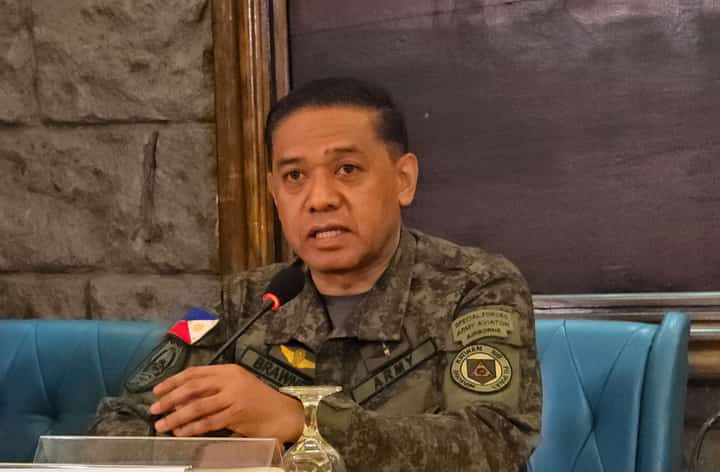
The United States (US)-deployed Mid-Range Capability (MRC) missile system, also known as the Typhon weapon system, stationed in the Philippines, has a range that could reach mainland China, Armed Forces of the Philippines (AFP) Chief General Romeo Brawner Jr. confirmed Friday.
However, Gen. Brawner emphasized that the deployment of US military assets in the country is not specifically aimed at China but is intended for training purposes and to bolster credible deterrence.
“It [China] shouldn’t care if we are strengthening our Armed Forces of the Philippines to defend our country against any threats,” Brawner said in a radio interview.
Beijing has repeatedly called for the removal of the U.S. military asset in the Philippines, accusing Manila of “introducing geopolitical confrontation and an arms race into the region” by allowing the deployment of the American missile system.
“Regarding the US deployment of the Mid-Range Capability (MRC) missile system in the Philippines, China has stated its firm opposition on multiple occasions,” Chinese Foreign Ministry spokesperson Mao Ning has repeatedly told reporters in previous interviews.
She added that “the Philippines said openly that the Typhon system was only used during Balikatan and Salaknib exercises and will be shipped out of the country in September following the military exercises.”
Brawner said the Typhon weapon system’s ability to reach mainland China and its artificial islands explains Beijing’s concern and call for its removal from the Philippines.
“These are medium-range missiles, meaning that if they are launched, they can reach mainland China and even their artificial islands. But for us, they do not matter to others; we are strengthening the AFP to defend our country against any nation attempting to invade or seize our territory,” he emphasized.
“It is not specifically targeting China, but these missile systems are here so we can train. Once we acquire these capabilities, we must be ready to use them,” he added.
Brawner dismissed concerns that U.S. missile systems deployed at Enhanced Defense Cooperation Agreement (EDCA) sites could make the Philippines a target, saying the country’s strategic location alone already makes it significant.
“You know, whether there are EDCA sites or not, we are still a target,” he said.
“Why? Because of our geolocation. We are very strategic, close to Taiwan, and we are in the middle. We block the exit routes of their ships going to the Pacific Ocean,” he further explained.
Defense Secretary Gilberto Teodoro Jr. has been defending the deployment of the Typhon missile system in the Philippines, emphasizing that no foreign country can interfere with Manila’s independent foreign policy.
“The Philippines is a sovereign state, not any country’s ‘doorstep.’ Any deployment and procurement of assets related to our security and defense fall within our own sovereign prerogative and are not subject to any foreign veto,” Teodoro said.
He added that the U.S. missile deployment in the country is “completely legitimate, legal, and beyond reproach.”
Teodoro also stressed that efforts to enhance Philippine defense capabilities under the Comprehensive Archipelagic Defense Concept (CADC) are guided solely by national interest and in line with the country’s independent foreign policy.
“It is not targeted against specific countries. Instead, it is targeted against security risks, threats, and challenges,” he said.