 Daily Tribune
The multi-agency task force, which will combine the legal, investigative, and financial intelligence powers of its member institutions, will operate under ICI coordination.
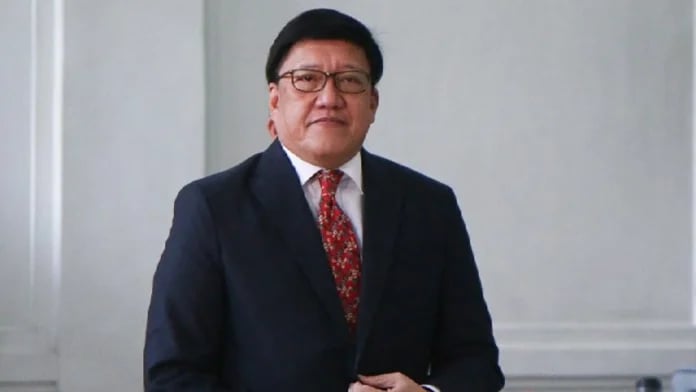
Retired Justice Andres Reyes, chairperson of the ICI.
Supreme Court
Adding to its objective of prosecution, the Independent Commission for Infrastructure (ICI) said the response to the flood control scandal would include restitution.
ICI chairperson Andres Reyes, a former Supreme Court justice, said the nation is “enraged, hurt, and betrayed,” thus the need to form a powerful multi-agency task force to recover the billions of pesos lost to anomalous flood control projects.
The multi-agency task force, which will combine the legal, investigative, and financial intelligence powers of its member institutions, will operate under ICI coordination.
The Anti-Money Laundering Council (AMLC) and the Securities and Exchange Commission (SEC) are expected to spearhead the tracing of illicit financial flows, while the Bureau of Internal Revenue (BIR) and the Commission on Audit (CoA) will provide forensic audit support to identify undeclared assets and irregular transactions.
The Office of the Solicitor General (OSG) and the Department of Justice (DoJ) will lead in the filing of civil forfeiture and criminal cases once assets are located.
Reyes said the partnership embodies a united front against corruption, built on the shared recognition that plundered public wealth must be returned to the people.
Diversion underway?
Reyes met with representatives of 18 agencies to unveil the new asset retrieval direction of the body looking into the flood control mess.
“We are here to band together and pool our resources,” Reyes said. “Our goal is to go after and recover the assets of these criminals. These assets were purchased using public funds. They belong to the Filipino people.”
In the high-level meeting, Reyes emphasized that prosecuting the guilty is not enough, stating that true healing depends on restitution or recovering the public money that was plundered and diverted to finance lavish lifestyles.
“Money that should have been utilized to better the lives of Filipinos was instead used by corrupt individuals to feed their greed,” Reyes said. “The Filipinos have now been awakened and are watching.”
According to the ICI, the gathering marked the formal launch of a coordinated government drive to trace, seize, and recover assets acquired through fraudulent flood control contracts.
Reyes defined restitution as “the act of making good or giving equivalent for any loss, damage, or injury,” explaining that every peso recovered represents an opportunity restored, funds that could have been used to build schools hospitals and roads.
State of crisis
The commission’s investigation into the flood control projects, described as one of the largest corruption probes in recent history, reportedly uncovered massive fund diversions, ghost contracts, and overpriced procurements involving billions in public works allocations.
The scandal has drawn outrage after revelations that some officials allegedly used the diverted funds to buy exotic cars, go on luxury vacations abroad, and gamble in casinos.
“The country is in a state of crisis, fueled by public rage, hurt, and betrayal,” Reyes said, echoing the growing clamor for accountability. “Let us work together. Let us recover what was stolen. Only then can our nation truly heal.”
“This is not only about punishment,” he said. “This is about justice and healing — about giving back what was taken from our citizens.”
The ICI said followup coordination meetings with the participating agencies will begin next week to finalize the operational framework and timeline for the recovery campaign.
“This is a historic moment. The Filipino people are watching, and this time, we cannot afford to fail,” Reyes said.
Missed potential again
Meanwhile, the Department of Finance (DoF) revealed that an estimated P118 billion was lost to the flood control anomalies.
Finance Secretary Ralph Recto estimated the economy lost between P42.3 billion and P118.5 billion due to the anomalous flood control projects.
Speaking during the DoF’s 2026 budget hearing, Recto said the losses translated to 95,000 to 266,000 potential jobs and warned that the economy’s sluggish growth may continue until early 2026.
“We at the DoF will never tolerate corruption or wasteful spending,” he said. “The recent flood control controversy may have cast a shadow on public spending, but this is the start of a cleanup, and we only see an upside over the next few months.”
According to the ASEAN+3 Macroeconomic Research Office (AMRO), the Philippine economy maintained a 5.6-percent growth rate as of September 2025, a figure Recto believed could have been higher.
“If part of the budget hadn’t been lost to corruption, the economy might have been growing by around six to 6.2 percent and revenue collections from the BIR [Bureau of Internal Revenue] and BoC [Bureau of Customs] would’ve been higher,” Recto said.
Despite the losses, Recto said the DoF remains confident the country will still meet the lower end of its 5.5 to 6.5-percent growth target this year.
He added the government aims to raise revenue collections by 10.2 percent in 2026 without imposing new taxes.
“We want to collect better, spend smarter, and borrow less,” said Recto, who referred to the DoF as the country’s “pambansang (national) fundraiser.”
Recto, who co-authored Republic Act 9337 (the Expanded Value-Added Tax Law) during his first Senate term, noted that reforms in taxation and fiscal discipline remain central to his economic strategy.
The 2005 law raised the VAT rate to 12 percent and expanded its coverage to include previously exempt items such as petroleum, electricity, and certain transport and toll services, measures that boosted government revenues but drew widespread political and public backlash.


