Flight of R.E. fancy
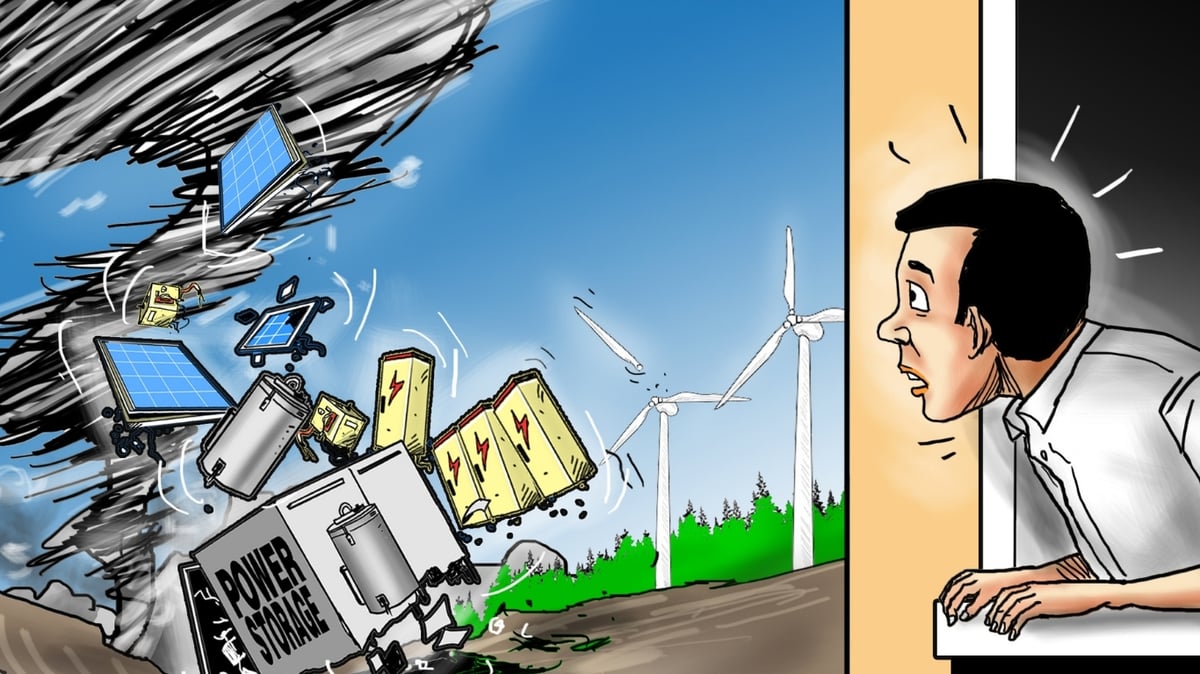
Experts said that if poorly planned, Germany risks entering a new era where daily life would depend again on the variability of the weather, as it did centuries ago.

Text size
Experts said that if poorly planned, Germany risks entering a new era where daily life would depend again on the variability of the weather, as it did centuries ago.


Is renewable energy truly the future of energy security, as hyped primarily by environmental groups?
These environmental groups are demanding that the Philippines abandon coal and embark on a rapid transition to renewable energy (RE), which may turn out to be like following the Pied Piper to perdition.
Germany, considered a showcase for the use of green energy, is not showing encouraging progress.
Germany made a significant commitment to renewable energy, with wind and solar power reaching a record 59-percent share of total electricity generation in the first nine months of 2024, surpassing fossil fuels for the first time.
Driven by the country’s Energiewende (Energy Transition) policy, the expansion of renewables continues to accelerate to achieve 75 percent renewable electricity production by 2030 and a net-zero economy by 2045.
Lately, however, the country has been grappling with the hidden consequences of the massive use of intermittent renewable energy systems for electricity production.
Electricity production data from Germany for the last five years shows a system presently in operation with an installed capacity of about 50 (gigawatt) GW in wind turbines, which is the sum of onshore and offshore wind, and 40GW in photovoltaic panels.
The fleet of intermittent renewable systems produces more than half of Germany’s yearly renewable electrical energy, with the rest being generated by hydro, the so-called “biomass,” and a tiny fraction from geothermal sources.
Energy production has gone through periods of massive overproduction as well as renewable power shortages due to the high variability of both sun and wind.
To compensate for this, ideally both storage and backup power should be able to deliver nearly the full grid load at any time.
However, storage in the scale required for a targeted 100-percent renewable system is not feasible with current technologies.
Battery storage is totally insufficient and will need a substantial technological breakthrough.
Power-to-gas (methane) to power has a low overall efficiency of approximately 15 percent due to the various transformations involved, and thus wastes essentially most of the carbon-free excess power. Hydropower systems require vast volumes of water with a height difference of a few 100 meters, and options for such storage locations are nearly exhausted throughout Europe.
Trying to reduce storage by cogenerating power and heat plants has the drawback of such systems often producing heat when only power is needed or power when only heat is needed.
Thus, the country that has attempted to turn its RE ambition into reality has realized the urgent need for a critical assessment of the practical feasibility of a 100-percent renewable power system, with due consideration of the required backup and storage systems.
Turning away from conventional sources of energy has become a trap for its flexibility in energy options.
Suppose the outcome of studies being conducted on Energiewende would show that the required huge storage systems are unfeasible but at the same time Germany sticks to its policy of rejecting fossil and nuclear options, the only solution would be for the country to adapt to the availability of electricity and to restrict power to parts of the population or activities during periods of darkness or the absence of wind.
Experts said that if poorly planned, Germany risks entering a new era where daily life could again depend on the variability of the weather, as it did centuries ago.
How then can the use of renewable energy be hailed as the way of the future when even energy security — the very thing it is supposed to ensure — is compromised?