
Patterns of a modernist mind


Imagine stepping into a universe where color swirls, dots dance, and the canvas feels alive. SALINLAHI: Connecting the Dots invites visitors into Nena Saguil’s world, a space where Filipino modernism meets Parisian experimentation, and abstraction becomes both spiritual and playful. Curated by Art House in collaboration with the Nena Saguil estate, the exhibition celebrates the restless imagination of an artist whose work feels as if Yayoi Kusama’s polka dots and Vincent van Gogh’s swirling skies had a child.
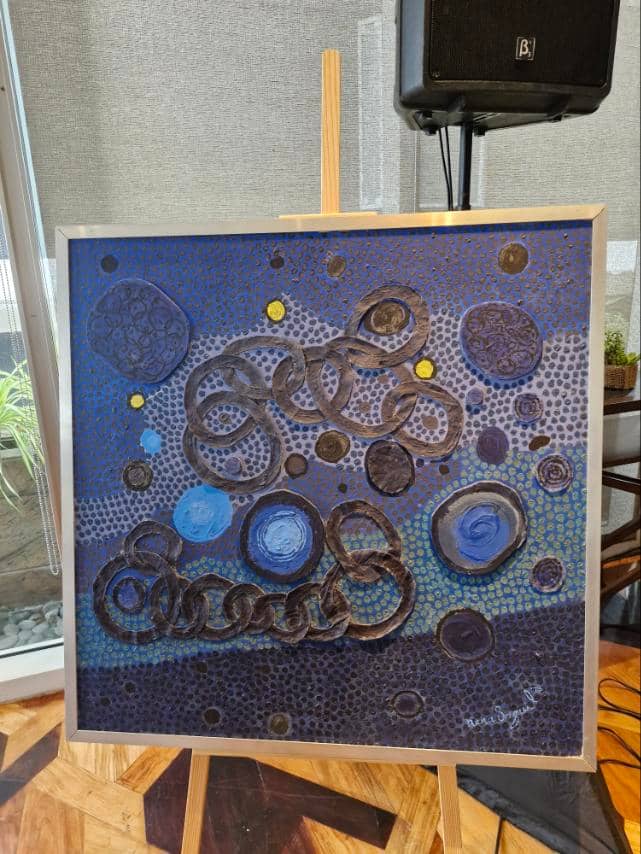
NENA Saguil’s universe where dots and color collide into cosmic landscapes.
PHOTOGRAPHs by patricia ramirez for DAILY TRIBUNE
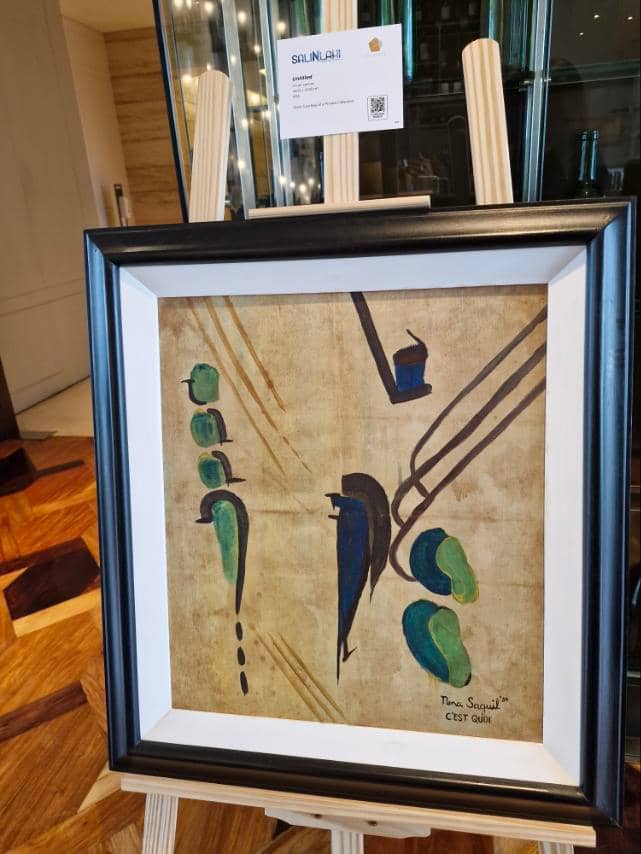
FROM Parisian studios to bold canvases, Saguil’s vision turns the ordinary into the extraordinary.
Saguil’s creative journey was forged through discipline and curiosity. Spending decades in Saint Germain des Prés, Paris, she lived a life devoted to practice, connecting with luminaries like Waldermar George, Gérard Dufaud, and Matisse, yet always maintaining a signature style that is unmistakably hers. The exhibition showcases how these years of immersion and dialogue translated into works that pulse with rhythm, cosmic energy and emotion.
Visitors trace her evolution from her early studies at the University of the Philippines College of Fine Arts to her late, experimental works. Some pieces nod to Picasso and Matisse, but most soar in directions entirely her own. Lines, dots and color fields collide in compositions that feel alive, drawing viewers into a meditation on space, time, and creative freedom. Every brushstroke and swirl invites reflection, as if the universe itself had been captured on canvas.
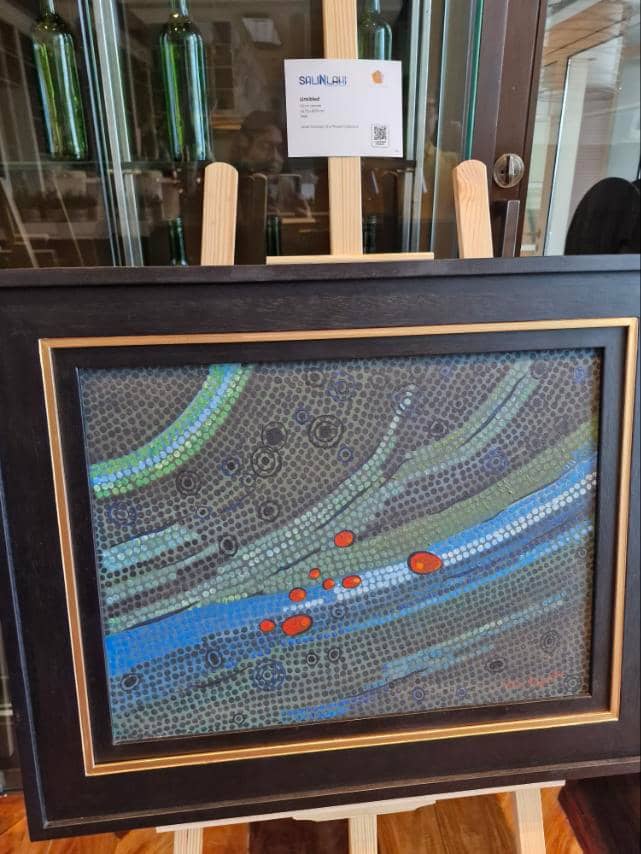
EACH stroke and shape invites you to wander through decades of fearless abstraction.
The exhibition also explores the layered meaning of “salinlahi,” linking participation, lineage and generational dialogue. Each piece becomes a conversation across time, a bridge between Saguil’s personal journey, her contemporaries, and the audiences who experience her work today. It is both a celebration and an invitation, encouraging viewers to connect the dots not only on the canvas but within their own perception of art and culture.