




Robot painting aims to boost artist income
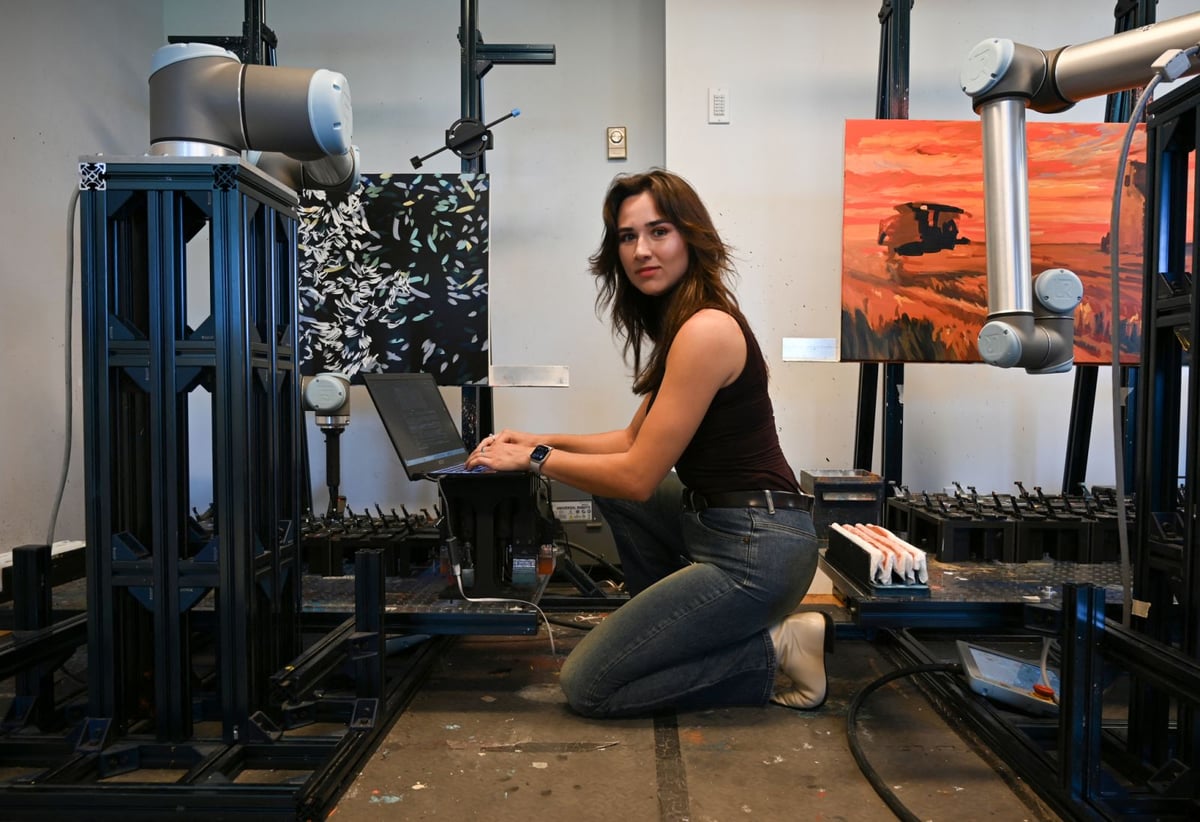
Montreal-based artist Audrey-Eve Goulet was initially uncertain as she watched an AI-powered robotic arm reproduce one of her works, but said the outcome was “really impressive.”
“I was surprised, in a good way,” she said, as she watched the device grab a brush, dip it into a pot of paint, and replicate her work stroke after meticulous stroke.
Goulet had agreed to work with Acrylic Robotics, a Montreal-based company that says it aims to help artists earn a living by making high-quality replicas of their work, with their consent.
Company founder Chloe Ryan told AFP the idea began after coming to a discouraging realization about her own income.
She said she first starting selling paintings at 14, but grew frustrated at the weeks, or even months, required to make each piece.
“I did the back of the napkin math, and I said, ‘Oh my god, I’m making $2 an hour.’”
Ryan studied mechanical robotics at Montreal’s McGill University, and began considering how robots could help reproduce her own work, before launching a company to make the technology accessible to artists worldwide.
‘The last layer’
Assessing the robot’s performance, Goulet said: “It truly looks like one of my works.”
“I like that you can see the strokes... You can really see where the brush went and the shape it drew,” she said, conceding the robotically producing version had “less story behind it” than her own.
“My final piece might have gone through five lives before getting to this, but the robot only sees the last layer,” she said.
Three decades after the Marcopper mining disaster devastated Marinduque’s waterways, the province is again pressing the…
Housing is probably the biggest issue affecting people the world over.
Malacañang on Monday called for a more thorough investigation into the questioned flood control projects in Taguig…
The defense on Monday backed the move by senator-judges to exclude a prosecution witness who testified on the firearms…
