
Bistro Aurora: stunning fare at the top of the Podium
To ooohhs and aaahhs from around the table, a large platter containing a large, bone-in ribeye Australian Tomahawk steak was laid on the table. It was a beautiful hunk of prime meat, perfectly seared, done medium, with a rich, juicy, buttery taste.


At Bistro Aurora — the branch of Pacific Star, Makati-based restaurant Aurora, which is one of a handful of select dining establishments invited to open at Podium Social on the 6th Level of The Podium along ADB Avenue in Mandaluyong City — the repertoire of dishes that comes out of the kitchen is a veritable take-your-breath-away stunner.
A recent visit had us taste, for starters, ikura-topped GenSan tuna ceviche mixed with kimchi aioli and spiced quinoa furikake.
Fermented blood orange dressing was poured over the dish and house-made rice crisps were brought to pair the dish with. I popped a dollop of ceviche along with a crisp in my mouth, and I swear, all I could tell myself was, what an absolute killer of a dish this is!
The ceviche set the tone for the rest of the victuals that we feasted on: plump New Zealand mussels in a bowl of Nyonya laksa broth, tamarind-glazed pork belly in skewers with a piquant salted egg curry sauce, luscious Wagyu beef dumplings with a dash of Szechuan oil and a Gaeng Gati (Thai yellow curry) sauce for dipping, and a drop-dead delicious apple wood chip- smoked house-cured salmon donburi topped with mentaiko, and paired with barley, black rice and Japanese rice all mixed with tare and yuzu kosho.
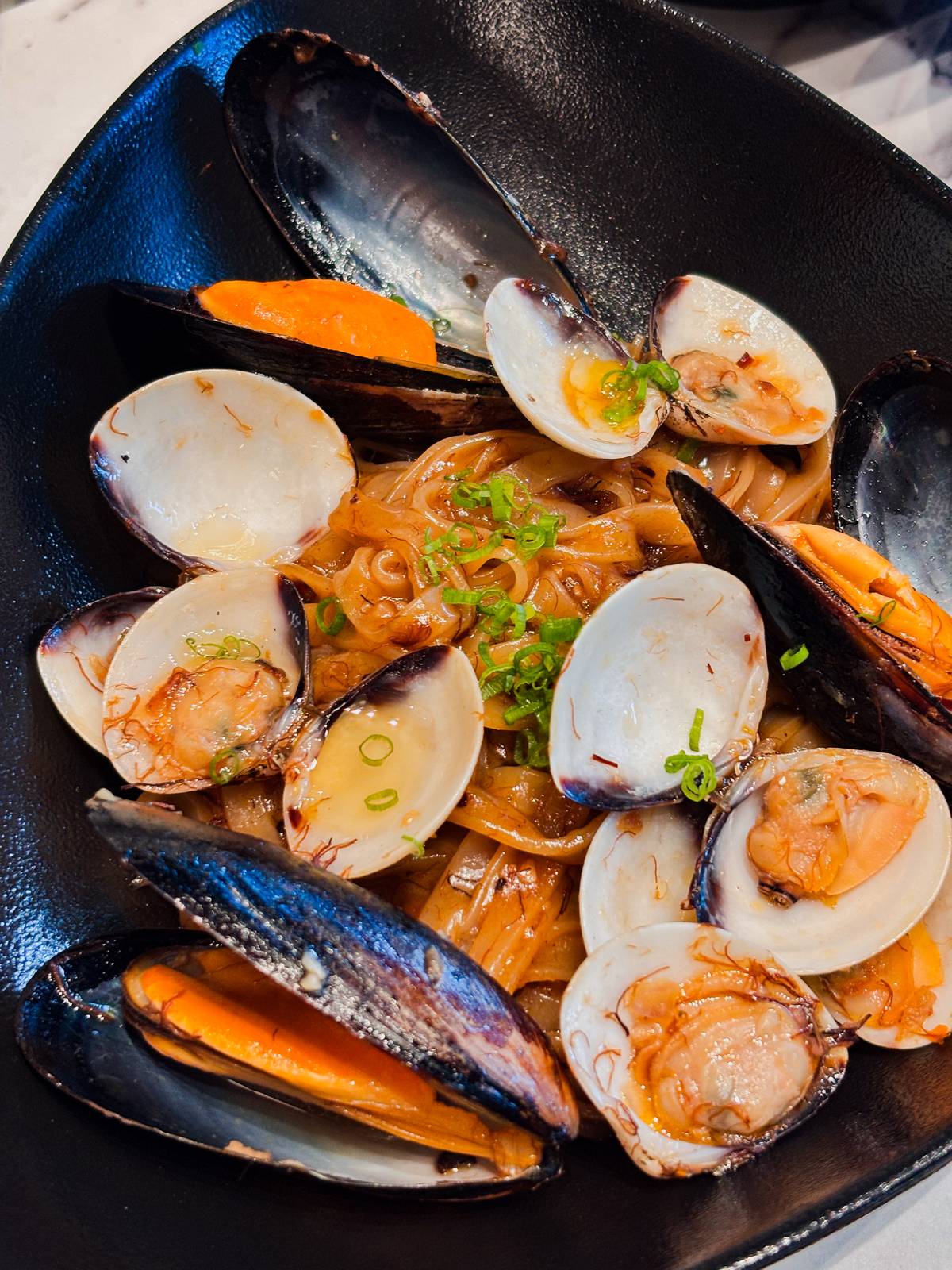
Hofan, with clams, mussels, XO sauce.
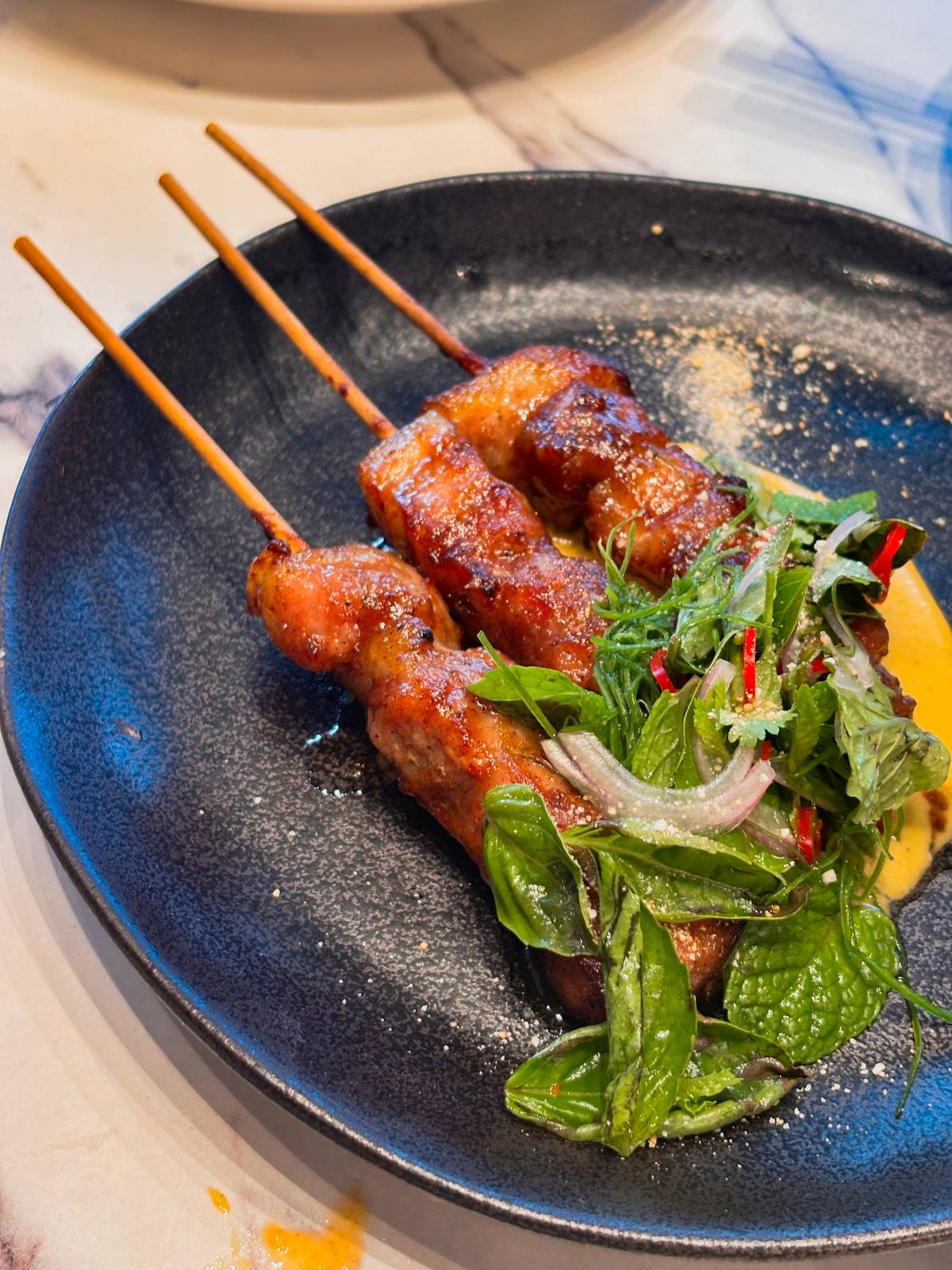
Skewered tamarind-glazed pork belly, salted egg curry sauce.
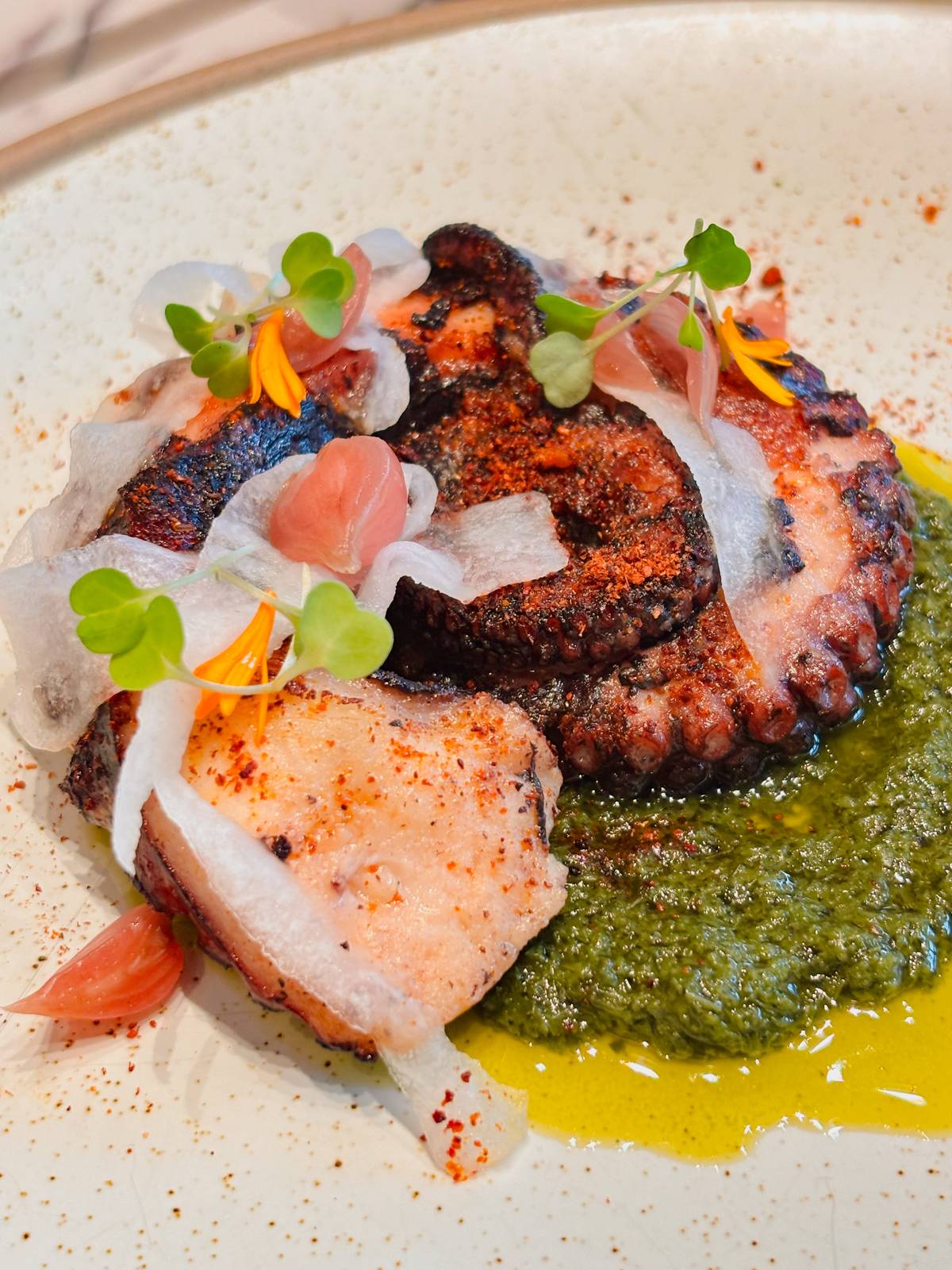
Succulent pulpo, with shisho gremolata
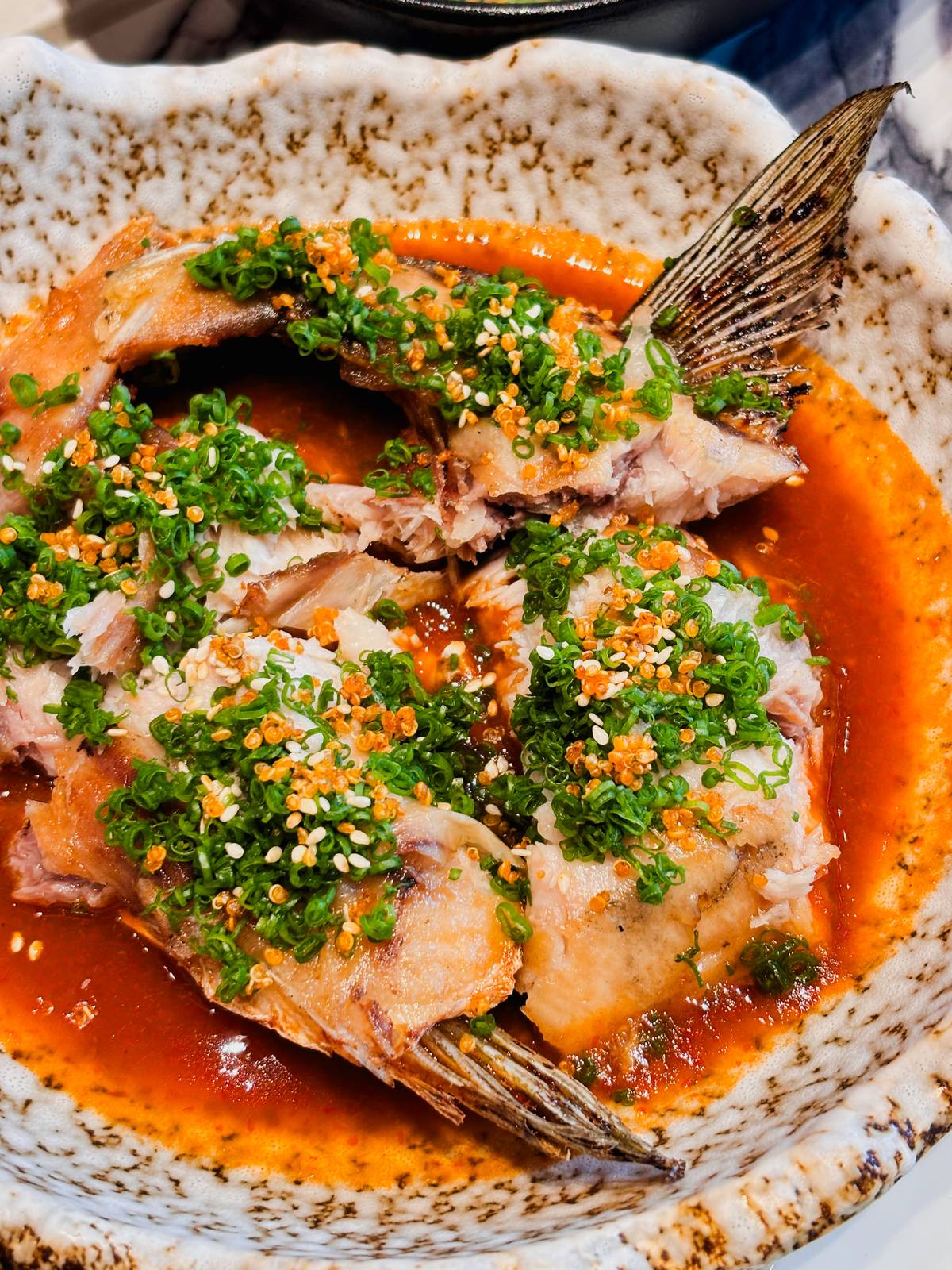
Hamachi kama, deep-fried, grill-smoked, oven-finished, yuzu kabayaki glaze, sanbaizu.
Taking in the aroma
We took in the aroma as the lid was lifted and a wisp of smoke escaped from the bowl, carrying fragrant flavor from the cured salmon which added to the umami and richness of the donburi.
As if those dishes weren’t already enough, a server came from the kitchen, bearing Hamachi kama on platter.
The Hamachi had been cured with umeboshi (salt-preserved plum) prior to being deep-fried, then smoked in a griller. A yuzu kabayaki glaze was then applied before the hamachi was finished in an oven. Taken out of the oven, the fish was sprinkled with spring onions, puffed quinoa, then served with a dipping sauce of sanbaizu (soy sauce, rice vinegar, mirin) and sambal.
While I thought the number of ingredients used to enhance the taste of the Hamachi was a little too extraneous, that is, one or two ingredients less could not possibly have added or subtracted from its flavor, there was no mistaking the unctuousness of the dish, which we thoroughly enjoyed.
Tour de force lunch
Two more dishes were brought out before the last one that would cap this tour de force of a lunch: first, a succulent misomarinated pulpo with shisho gremolata and pickled radish and shallots on the side, followed by a bowl of XO sauce-tossed hofan with clams and mussels. Delicious! And I thought I couldn’t take in any more food, until the piece de resistance came out.
To ooohhs and aaahhs from around the table, a large platter containing a large, bone-in ribeye Australian Tomahawk steak was laid on the table. It was a beautiful hunk of prime meat, perfectly seared, done medium, with a rich, juicy, buttery taste.
This was premium Okan Wagyu from Pardoo’s purebred Wagyu breeders based in Western Australia where cattle are raised on a vegetarian grain diet sans growth hormones.
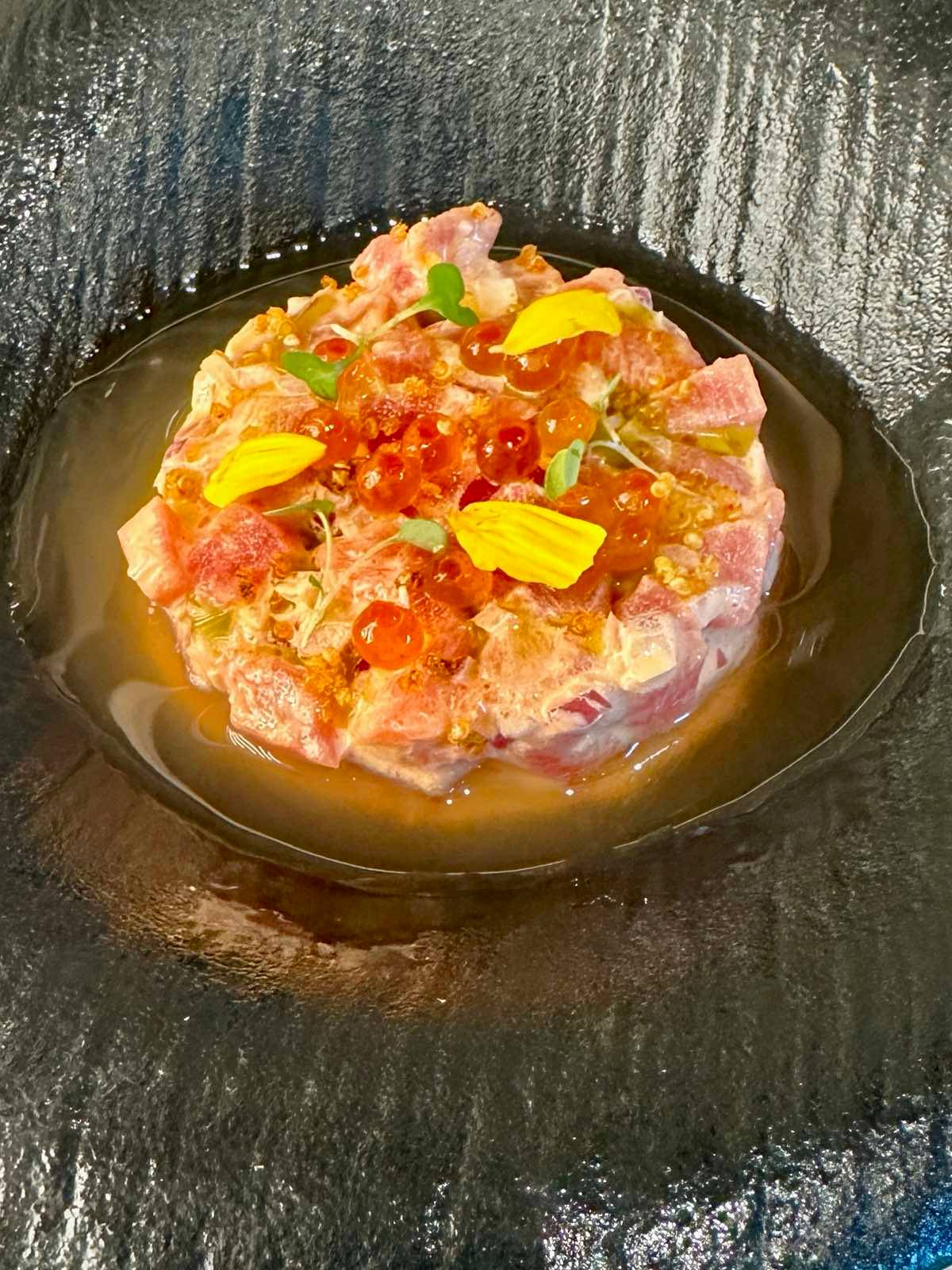
Ikura-topped GenSan tuna, kimchi aiolo, quinoa furikake, fermented blood orange dressing, house-made rice crisps.
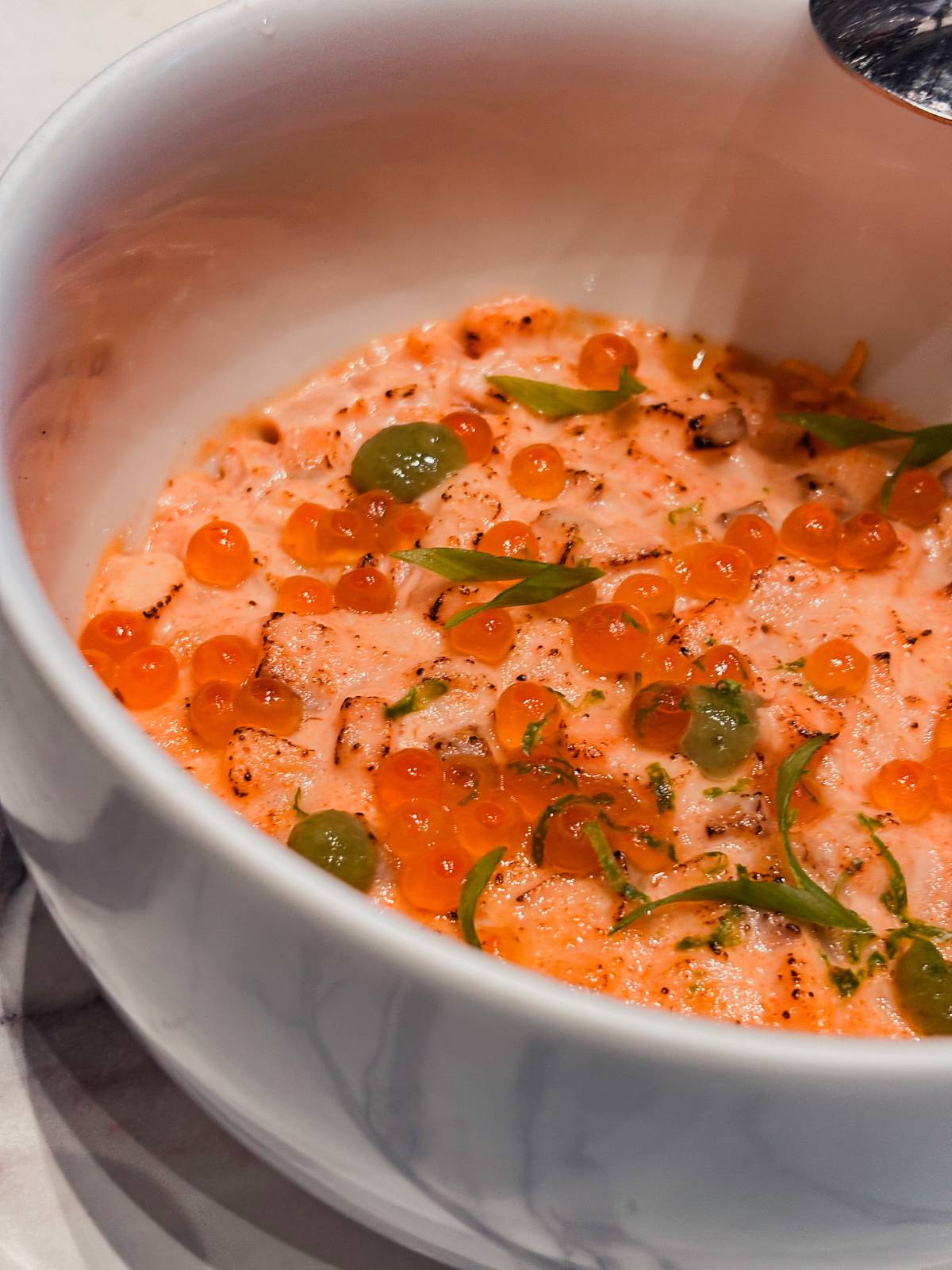
Apple wood-smoked salmon donburi, mentaiko, on a bed of barley, black rice, Japanese rice.
Melt-in-your-mouth delectable
Beef from that particular source is a consistent gold medalist at the Australian Wagyu Association Branded Beef Competitions, and quality in provenance was evident in what we tasted at that recent lunch at Bistro Aurora: fork-tender, juicy, melt-in-your-mouth scrumptious, and the perfect finish to a repast delectable to the last bite.
We take our hats off to executive chef Mark Sanchez for his culinary prowess and to Aurora owner, top-tier lawyer Nilo Divina, whose passion project has given Metro Manila a particularly remarkable place for exceptional dining.
In a metropolis full of establishments vying for plaudits for top-notch dining, Bistro Aurora stands out in a classy place all its own, where it shines, luminous.
Aurora Bistro is at Level 6, The Podium, ADB Avenue, Ortigas Center, Mandaluyong City. Call 0917.135.3110. or 0917.102.9868 for reservations.Wagyu beef dumplings, Szechuan oil, Gaeng Gati yellow curry sauce.
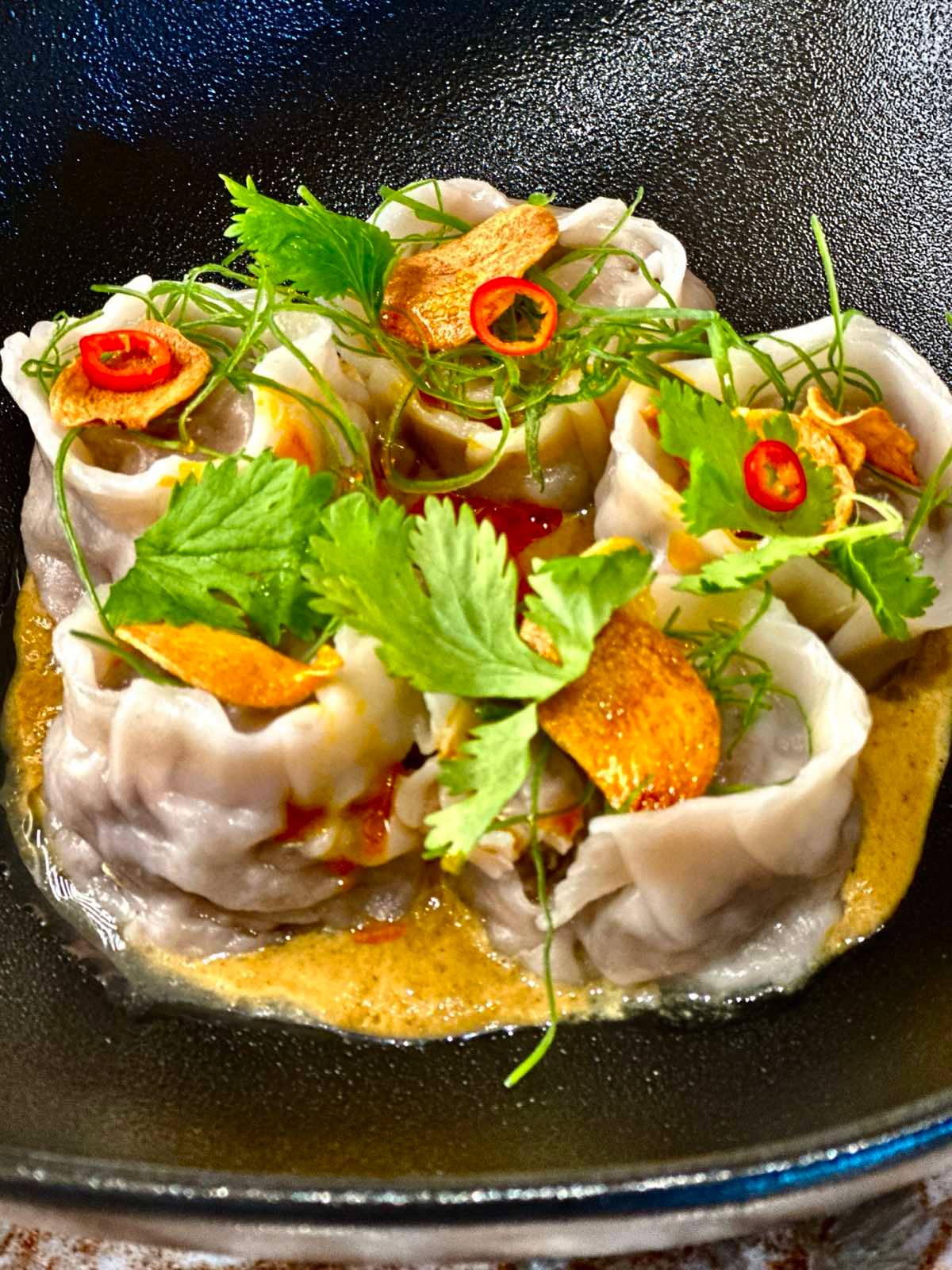
Wagyu beef dumplings, Szechuan oil, Gaeng Gati yellow curry sauce.
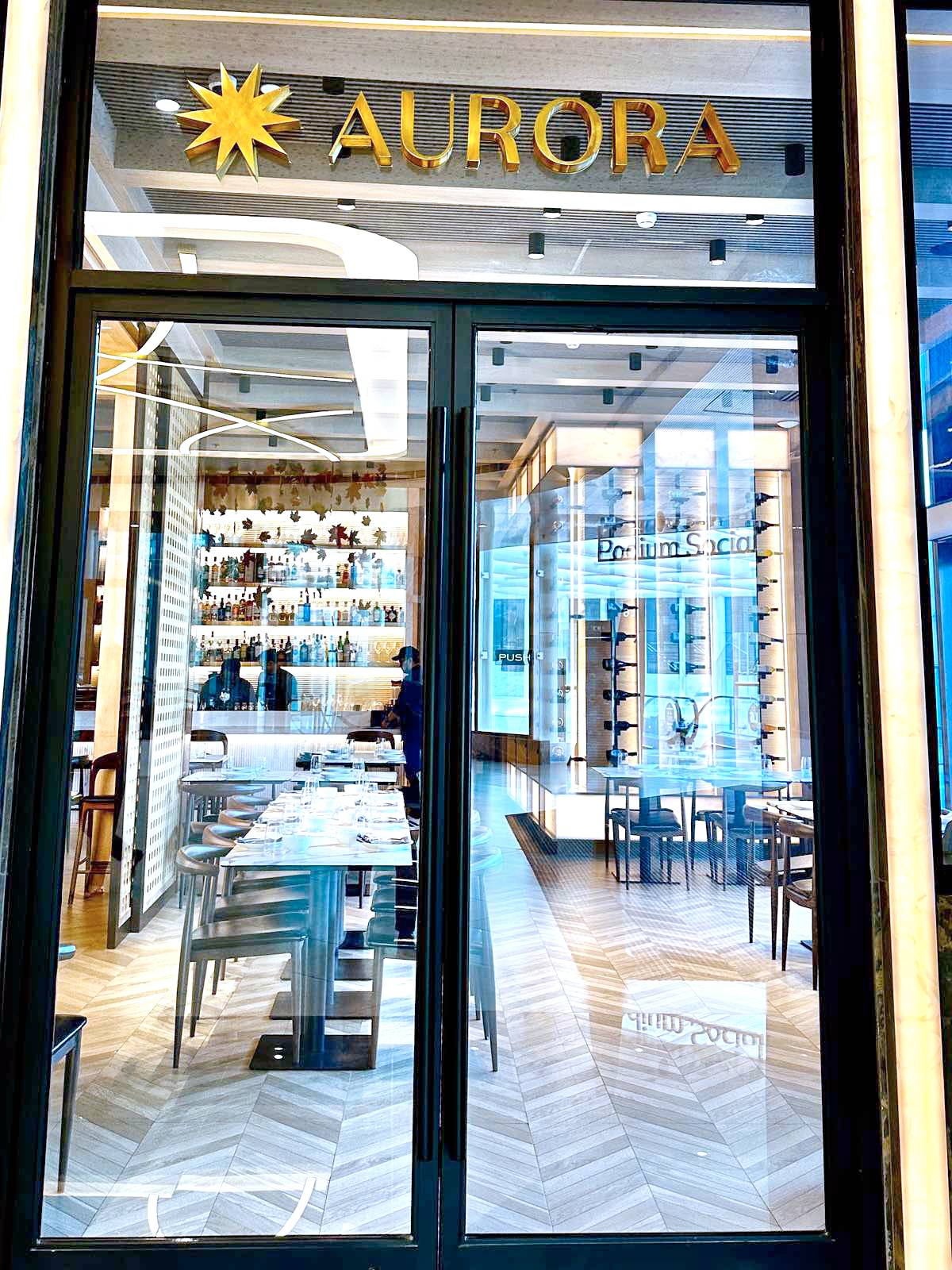
Bistro Aurora was among the handful of select restaurants invited to open at Social Podium, Level 6 of The Podium along ADB Avenue, Ortigas Center, Mandaluyong City.