




SCUTTLEBUTT


Text size
VP denies Gracioso’s cash-delivery allegations
Early-stage cancer can be more easily treated than in the later stages. That is why doctors recommend regular cancer…
‘As far as I recall and based on the record, there is no showing.’
President Ferdinand Marcos Jr. is flying to Singapore for a five-day working visit upon the invitation of Singaporean…
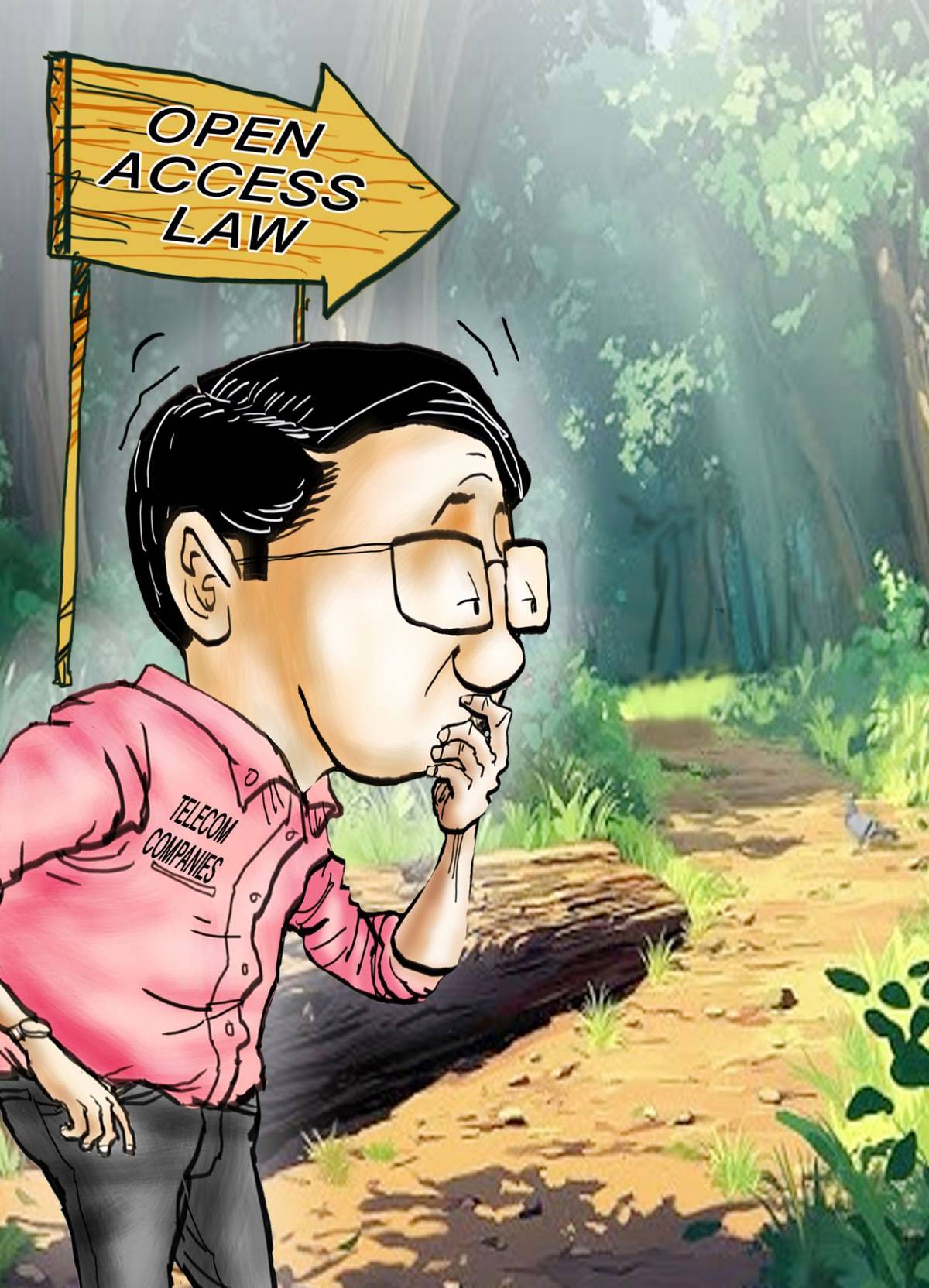
Telecommunications firms are experiencing jitters over the uncharted territory created by the Open Access law, which aims to remove barriers for new entrants, increase competition, and improve overall connectivity and network infrastructure.
The most significant change is the removal of the franchise requirement, long seen as the biggest barrier to entry. Telcos have pointed to the tedious and costly process of acquiring a congressional franchise as a major hurdle for smaller players.
Under the new law, instead of securing a franchise, new players will undergo a streamlined administrative registration process, similar to that of the National Telecommunications Commission (NTC). The NTC will also handle spectrum allocation.
The risk for telcos lies in the possible reassignment of frequencies they are currently using, as the law promotes joint or co-use of frequencies. This provision is expected to have the biggest impact on mobile operators.
Converge, the largest broadband internet operator outside the duopoly, is among those navigating the new landscape.
Maybank IBG Research noted in a report that, in a worst-case scenario where Converge is forced to share its network with new and smaller players for free, its potential growth would likely be affected.
For existing players, forcing improvements in the country’s lagging Internet service will initially come at a steep cost.
