
And they became the news
It’s the fault of the networks. They turned these broadcasters into superstars.

The 1960s television landscape required newscasters to have the personality of a dead spot. Off-cam, they were, of course, allowed to be colorful — language, included.
But on camera, they had to read the news — typed on bond paper (no teleprompters yet) — exactly the way it was handed to them by the editorial team. No additional commas, periods and, especially, no exclamation points. No ad-lib, in other words.
Faces of the news
In the 1970s, Harry Gasser was the face of the news. He was the lone anchor of Newswatch on Channel 9, which was state-controlled. TV viewers didn’t know his background. (He was a radio talent from Cebu who tried his luck in Manila.)
The only time the public became interested in his life was when his wife — the former radio talent Flora Gasser — started appearing as a comical domestic servant in sitcoms and on film. Very few knew that they were husband and wife because that was how Flora wanted it.
When people asked her how she was related to Harry, she routinely told them that she was his housemaid. That stopped them from asking further questions. But she was a devoted wife. Flora attended to Harry like a geisha.
After about half a decade, Harry no longer monopolized the news. Newswatch eventually needed other talents for its several other editions. For a while, there was Newswatch Junior Edition that had a nine-year old Janice de Belen as one of the anchors. She was already Flor de Luna then, but she wanted to try another branch of television.
Loren Legarda also started her TV career in Newswatch. Prior to that, she was a Closeup toothpaste girl. Later, she also appeared in a shampoo ad.
Another Newswatch alumnus was Jose Manuel “Babe” Romualdez. He is now the country’s ambassador to the US.
On Channel 7, there was Tina Palma who became the first major female news anchor on television. In 1979, moviegoers were surprised that she agreed to be the dubber of Deborah Sun in the film Bedspacers. Can you reconcile the image of a naked Deborah Sun with Tina Palma’s speaking voice?
The other female newscasters who immediately followed the trail of Tina Palma were Lee Andres, Ninez Cacho Olivares, Betsy Enriquez and former Binibining Pilipinas semi-finalist Cathy Veloso (now Santillan). Even Helen Vela tried her hand as a newscaster when she was already at the peak of her career as a TV counselor.
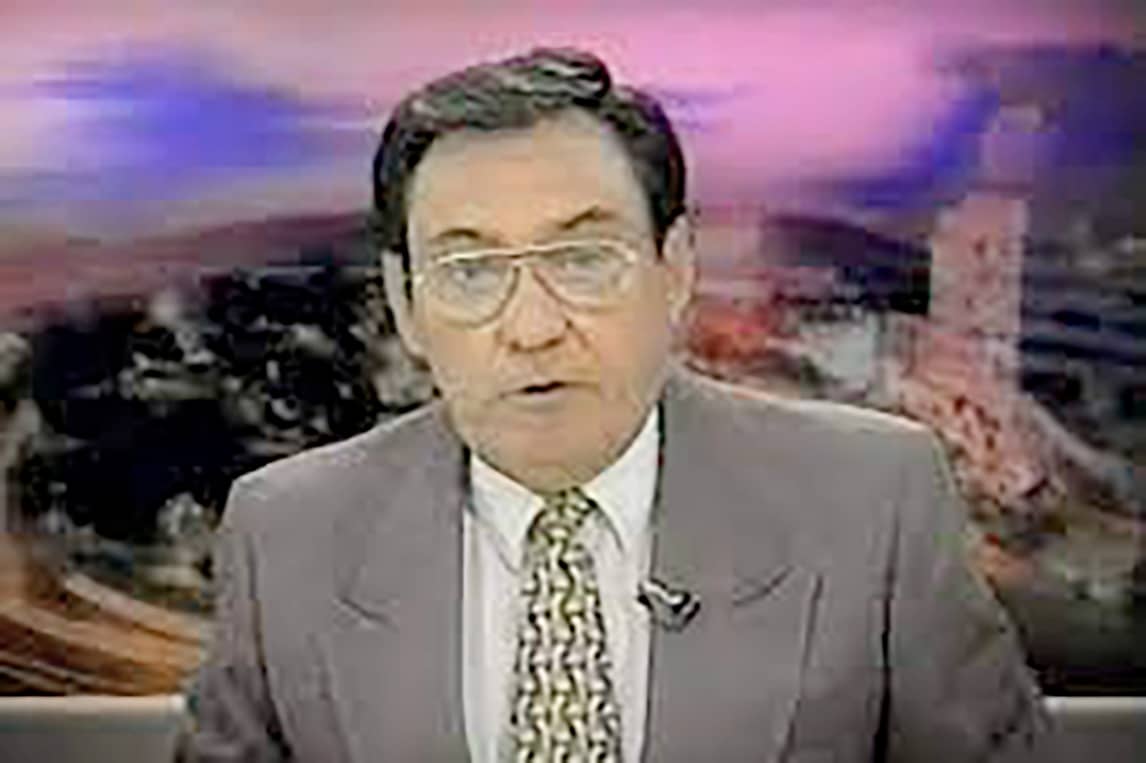
HARRY Gasser
Photograph courtesy of PILIPINAS TODAY
Changing times
The broadcast scenario changed drastically after EDSA I. When ABS-CBN launched TV Patrol in March 1987, Channel 2 gave its newscasters — Noli de Castro, Frankie Evangelista and Mel Tiangco — the chance to banter and exchange views toward the end of the program. That segment worked and, soon, even GMA broadcasters were swapping opinions in the network’s series of morning shows.
When ABS-CBN was trying to put together its stable of talents, the station gave its newscasters additional programs. Loren Legarda, who did The World Tonight, had her PEP Talk. Noli de Castro (the former voice-over talent of Inday Badiday’s See-True) was given Magandang Gabi, Bayan. Noli also co-hosted Magandang Umaga Po with Korina Sanchez — until the two quarreled. Noli eventually left the program.
Again, GMA followed suit. Its newscasters started having multiple shows. Until Arnold Clavio began having health issues in 2024, he opened the gate of GMA in the morning and closed it at night.
ABS-CBN and GMA also gave their newscasters their own radio shows. Now, this is the tricky part. Radio anchors are paid very little — if at all. As compensation, they are allowed to sell spots during commercial breaks. They get to keep the proceeds from the ads they sell.
But why bother sell when some politicians are just willing to sponsor the broadcasters’ lifestyles? This is NOT a generalization, but it’s no secret how some — repeat, SOME — anchors are under the payroll of politicos.
When Harry Gasser was still doing Newswatch, he and Flora would be seen doing their groceries at Hi-Top, a low-end supermarket along Quezon Avenue. When he got ill, Flora became a familiar sight at Loren Legarda’s Senate office — asking for financial help to cover Harry’s medical expenses. No one among the newscasters of old died rich.
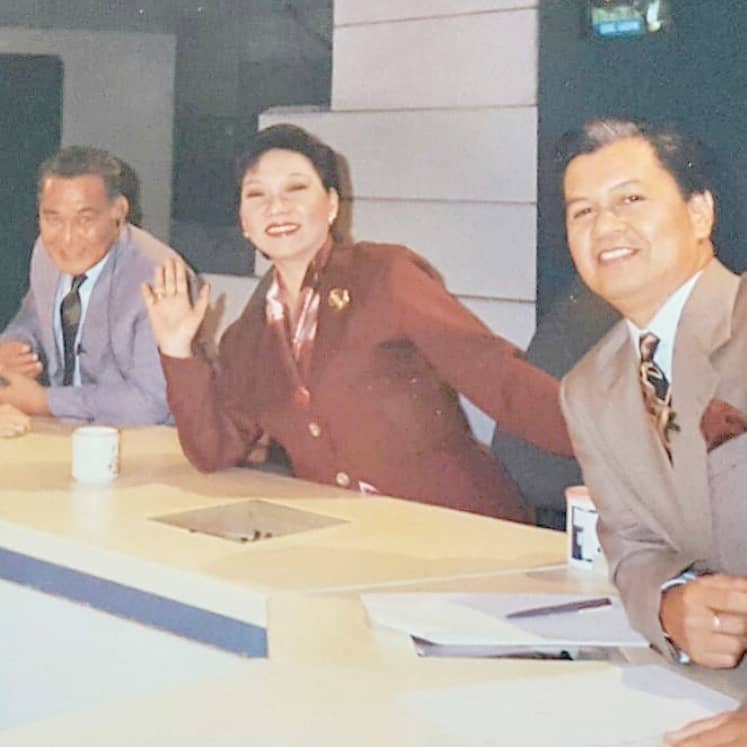
BROADCASTERS Frankie Evangelista, Mel Tiangco and Noli de Castro.
Photograph courtesy of Kapamilya Insider
Some people
In sharp contrast, a lot of broadcasters today are ferried in luxury cars. Not necessarily with umbrellas and wine glasses. But expensive vehicles nevertheless.
In the beginning, most broadcasters bought houses in those small subdivisions that line Commonwealth Avenue. Today, there is supposed to be one broadcaster who stays in posh Ayala Heights in Quezon City. To think, he’s a relative newcomer in the broadcast industry.
There’s also this interesting tale about a broadcaster who started out as a reporter for a newspaper. His editors would rather hang themselves in the newsroom than go over his badly-written articles.
Ninoy Aquino also had bad copies when he worked as a reporter for the old Manila Times. But Ninoy, at least, turned in explosive stories that could be re-written by desk men — for as long as the facts were there. Ninoy provided all the necessary information that were mostly page one-worthy.
But this broadcaster once wrote a story about a sauna bath. No, it wasn’t even an expose about the alleged sex trade inside sauna baths. Why write a story — a la lifestyle — about a sauna bath? Because he got a free massage. That early, he was already corrupt.
Now, where is the fairness in this world? It didn’t take long for him to be absorbed by television and radio where he shared all his warped values. And then, he ran for a government position and won. Today, he maintains a house in an exclusive subdivision where lot prices go for P350,000 per square meter!
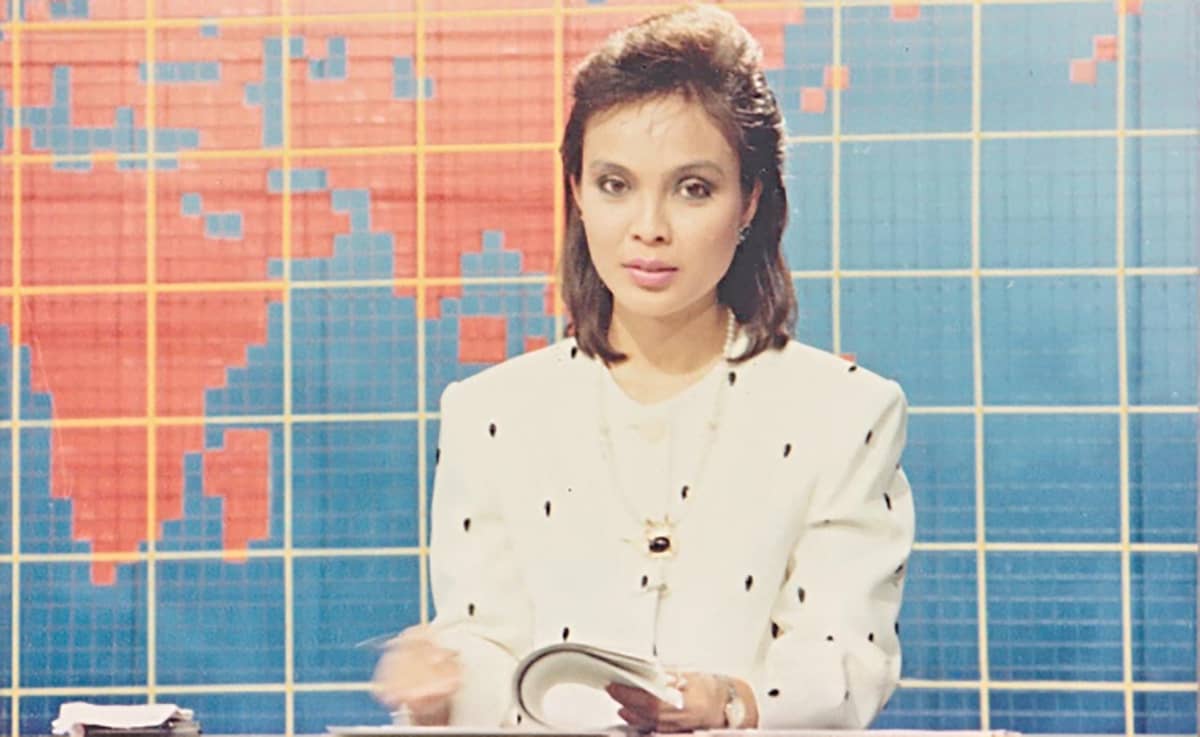
LOREN Legarda
Photograph courtesy of Newswatch/RPN 9
Merchandise
Thankfully, majority of the broadcasters today still hang on to the code of ethics they were taught in school. They subsist on their paychecks.
Observing these broadcasters closely, the truly gifted are those who play it clean. They are intelligent enough to know that by playing footsie with politicians, they’ll be accepting blood money. And blood money is cursed.
But some of those broadcasters who acquired wealth through questionable means can’t even pronounce tricky English words correctly. Southern to them is “saw-dern,” instead of the correct “suh-thrn.” One even pronounced belfry as “bel-fry” — as in “frito” — instead of “bel-free.” Oh, she is also a successful politician now, by the way.
So, why did some of our broadcasters go wayward? It’s the fault of the networks. They turned these broadcasters into superstars. Instead of simply delivering the news, THEY became the news.
As major celebrities, they have a certain lifestyle to maintain. And the networks that built them up can’t provide them that. So, they have to look elsewhere for funds. Given their positions in media, they don’t have to look far. Corrupt politicians and greedy businessmen are just there — waving and willing to pay for positive exposure.
Oh, these network executives. Their biggest mistake was to turn broadcasters into merchandise. And what is the end purpose of a merchandise?
To be sold.