
The Listening Revolution: How one secretary’s first 100 days broke 30 years of housing gridlock
His tenure may be young, but the impact is already visible: revitalized partnerships, streamlined processes, and most importantly, renewed faith that decent, affordable housing can become a reality for Filipino families across the archipelago.

To deliver good news among the resident-members of Villa Soledad HOA Inc. in Barangay Pinagbuhatan, Pasig, DHSUD Secretary Jose Ramon Aliling leads the site visit with Social Housing Finance Corporation president and CEO Federico Laxa, informing residents about President Ferdinand R. Marcos Jr.’s desire to assist them in improving their community through the Enhanced Community Mortgage Program (ECMP) under the flagship Expanded Pambansang Pabahay para sa Pilipino (4PH) Program, 13 August,
PHOTOGRAPHS COURTESY OF DHSUD
When Secretary Jose Ramon P. Aliling walked into the Department of Human Settlements and Urban Development (DHSUD) headquarters as its new lead, he carried with him the hopes of millions of Filipino families still dreaming of a place to call home. The Philippines' housing crisis — characterized by sprawling informal settlements and a backlog of over six million units — had long seemed intractable. Yet within his first 100 days, Secretary Aliling has begun rewriting that narrative with a blend of decisive action, inclusive leadership, and unwavering commitment to reform.
His tenure may be young, but the impact is already visible: revitalized partnerships, streamlined processes, and most importantly, renewed faith that decent, affordable housing can become a reality for Filipino families across the archipelago.
A Secretary Who Listens Before He Leads
Secretary Aliling’s leadership style stands out in a government landscape frequently criticized for its top-down approach. Rather than arriving with predetermined solutions, he began with something revolutionary in Philippine bureaucracy: Listening tours. Within days of his appointment, he brought together an unprecedented coalition —government agencies, private developers, urban poor communities, and civil society organizations — not just to announce policies, but to genuinely hear their concerns.
"This is a Secretary who listens first, acts fast, and delivers," observed Charlie Tan, President of the Organization of Socialized and Economic Housing Developers of the Philippines (OSHDP). This assessment reflects the sentiment across the housing sector, where stakeholders have long felt disconnected from policy-making processes.
This collaborative approach gave birth to the DHSUD's 8-Point Agenda, a comprehensive framework that addresses real-world challenges rather than bureaucratic abstractions. The agenda represents something rare in government: a plan crafted with input from those who will implement it and those who will benefit from it.
Zero Tolerance: When Corruption Meets Its Match
Perhaps no reform has resonated more strongly than Secretary Aliling's uncompromising stance on corruption. His declaration that "Even 1 percent corruption is unacceptable" may sound like typical political rhetoric, but the follow-through has been genuine. Ongoing investigations into anomalies involving flood control projects and other government initiatives signal that this isn't just talk — it's policy in action.
For an industry historically plagued by kickbacks, ghost projects, and inflated costs, this zero-tolerance approach represents a fundamental shift. Housing developers, who have long included “facilitation fees” in their project costs, are now adapting to a new reality where transparency is non-negotiable.
The message has rippled throughout the department and beyond: the days of treating public housing funds as personal ATMs are over.
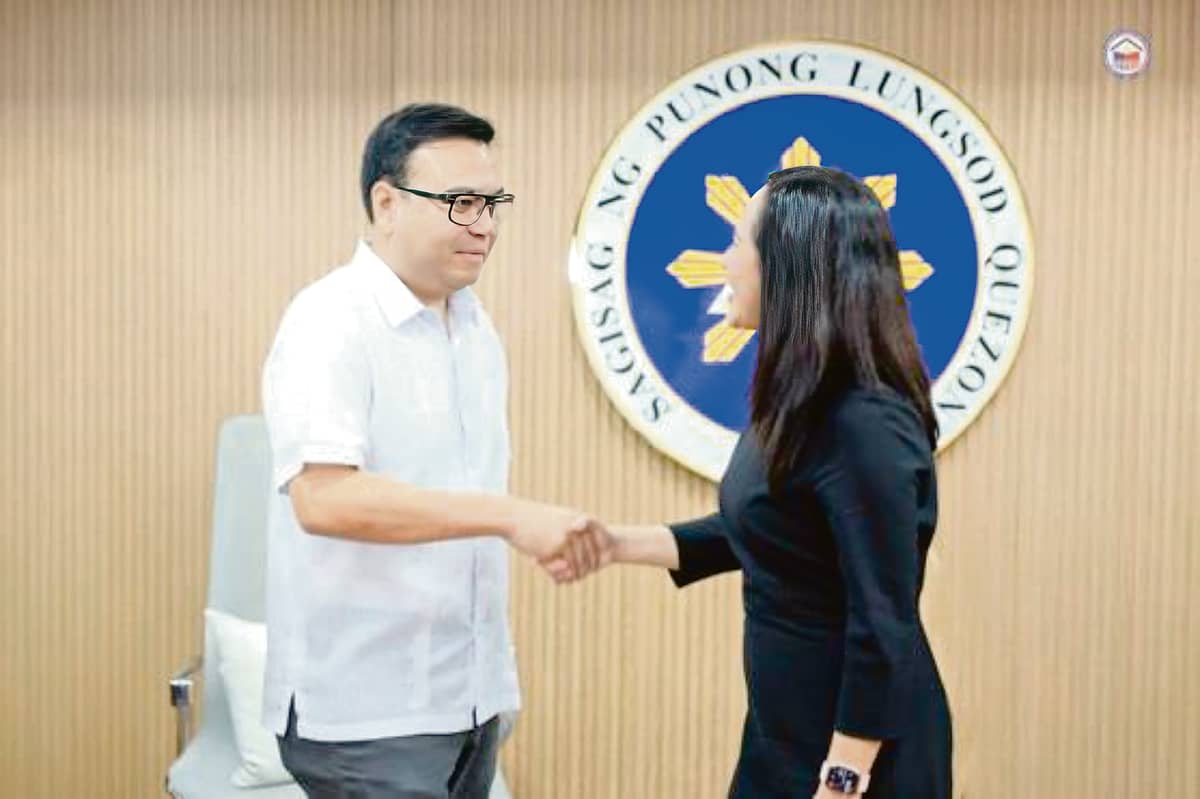
DHSUD Secretary Jose Ramon Aliling and Quezon City Mayor Joy Belmonte align housing plans under rental housing scheme — a new modality under the PBBM’s flagship Expanded Pambansang Pabahay para sa Pilipino (4PH) Program during a meeting on 7 August.
Expanding Dreams: The Evolution of 4PH
The Pambansang Pabahay para sa Pilipino (4PH) program — President Ferdinand Marcos Jr.'s flagship housing initiative — received a significant upgrade under Secretary Aliling's leadership. Recognizing that Filipino families have diverse housing needs beyond vertical condominium living, the expanded program now includes horizontal developments and rental schemes.
This isn't merely a policy tweak; it's a recognition of how real families live. Single parents working multiple jobs, elderly couples on fixed incomes, young professionals just starting their careers — each group has different housing needs and financial capabilities. The expanded 4PH acknowledges this diversity.
Under Department Order No. 2025-021, the application process has been completely overhauled. Families can now apply directly through DHSUD, Pag-IBIG Fund, or their preferred developers, eliminating layers of bureaucracy that previously made homeownership feel like navigating a maze blindfolded.
The private sector has responded with remarkable enthusiasm, as over 42 developers have pledged to deliver more than 250,000 socialized housing units just months after the program’s expansion. This isn't corporate altruism — it's the market responding to clear policies, streamlined regulations, and a government partner they can trust to keep its word.
Building Bridges, Not Just Houses
Secretary Aliling understands that housing doesn't exist in isolation. A house without proper land titles becomes a source of anxiety rather than security. A home without nearby schools forces parents to choose between shelter and their children's education. Recognizing these interconnections, his administration has forged strategic partnerships that address housing holistically.
The collaboration with the Land Registration Authority tackles one of the industry's most persistent bottlenecks: land titling. Anyone who has tried to secure a land title in the Philippines knows the frustration of endless queues, missing documents, and processing delays that can stretch for years. Streamlined titling processes don't just accelerate development — they provide families with the security that comes from legally owning their piece of the Philippines.
Meanwhile, coordination with Pag-IBIG Fund has produced special loan rates as low as 3 percent, making homeownership accessible to families previously priced out of the market. The revival of the Community Mortgage Program through the Social Housing Finance Corporation offers another path to ownership, particularly for informal settler families who can achieve homeownership through collective financing.
Perhaps most significantly, the Memorandum of Understanding with the Department of Education ensures that government housing projects aren't just collections of houses, but genuine communities where children can walk to quality schools. This integration of housing with education creates sustainable communities rather than isolated housing projects.
The Digital Revolution Comes to Housing
Secretary Aliling's commitment to fully digitalize DHSUD services by 2028 represents more than technological modernization — it's about dignity. Anyone who has spent hours in government queues, clutching folders of documents and hoping the right official shows up to work, understands why digitalization matters.
The updated Citizens' Charter reflects this transformation: reduced processing times, electronic transactions, and transparent procedures that treat citizens as customers rather than supplicants. These changes cut corruption vulnerabilities while making government services accessible to families who can't afford to take multiple days off work to process housing applications.
For developers, streamlined digital processes mean predictable timelines and reduced regulatory uncertainty — factors that directly translate to lower housing costs and faster delivery.