
Nazi official's daughter under house arrest in Argentina over missing WWII painting

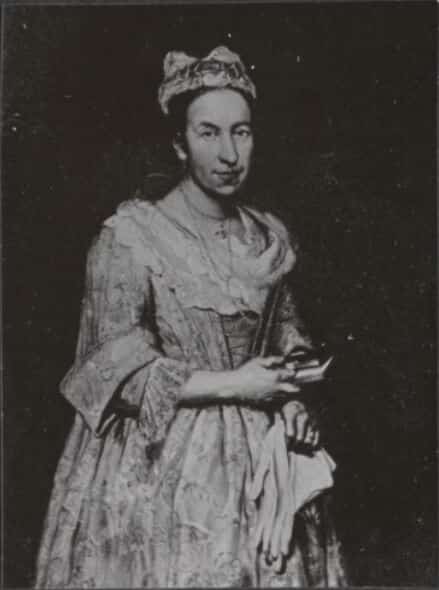
An Argentine federal court has ordered the immediate house arrest of the daughter of a former Nazi official and her husband, accusing them of concealing an artwork as authorities search for a missing 18th-century painting looted during World War II.
The 18th-century Italian painting, "Portrait of a Lady" (Contessa Colleoni) by Giuseppe Ghislandi, was among the 1,100 works looted by the Nazis from Dutch-Jewish art dealer Jacques Goudstikker in his gallery in Amsterdam.
It was identified by a Dutch journalist after appearing above a green sofa in a real estate advertisement for a home in Mar del Plata believed to belong to Patricia Kadgien.
Authorities failed to find the piece, but they reported a hook and marks on the wall, suggesting something was recently removed.
The Cultural Heritage Agency of the Netherlands, which safeguards valued historical artifacts, said the painting in the advertisement was likely to be the missing portrait.
“Although we have not physically examined the painting and cannot verify the back of the canvas, it is reasonably likely that this is indeed the 18th-century portrait of Countess Colleoni by Ghislandi.”
Friedrich Kadgien, the father of Patricia, was a former Nazi official and financial adviser to Hermann Göring, one of Adolf Hitler’s top lieutenants and a central figure in the plunder of Jewish-owned art during World War II.
After Germany’s defeat in the war, Kadgien fled to Switzerland and later to Argentina, according to the Central Intelligence Agency. He died in Buenos Aires in 1978.