
Inside National Electrification Awareness Month 2025
This year’s theme, ‘Powering the Future,’ reflects more than aspiration — it signals the government’s concrete pledge to achieve total household electrification by 2028.

Total electrification Department of Energy Secretary Sharon Garin (left) and Administrator Antonio Mariano Almeda at the opening of the 56th founding anniversary of the National Electrification Administration and 16th National Electrification Awareness Month at SMX Convention Center in Bacolod City on 7 August. Garin challenged electric cooperatives to achieve total electrification by 2028.
Photograph courtesy of NEA
This August marks a turning point for the Philippines. As the nation observes National Electrification Awareness Month, the archipelago stands at the threshold of an energy revolution — one powered by decisive government action, surging renewable development and an unwavering commitment to sustainable growth that reaches every corner of the country.
The Marcos administration has set an ambitious course: a safer, more affordable and self-reliant energy future. The blueprint calls for expanded clean energy infrastructure, enhanced rural electrification and a more resilient power grid that will energize communities from the remotest island provinces to the busiest urban centers.

Philippine President Ferdinand Marcos Jr. at the 4th State of the Nation Address (SoNA), where he stressed the increased use of renewable energy in the Philippine energy mix.
Photograph courtesy of pco
Beyond the switch: Electrification as economic engine
This year's theme, "Powering the Future," reflects more than aspiration — it signals the government's concrete pledge to achieve total household electrification by 2028. The numbers tell a remarkable story of progress: nearly 98.7 percent of Philippine barangays now have electricity access, a dramatic leap from just 65 percent in 2008. Yet the final mile remains challenging, particularly in remote areas where grid infrastructure is costly and logistically complex.
The impact extends far beyond illuminated homes. In agricultural communities, electrification has boosted productivity by approximately 22 percent on average, thanks to electric irrigation pumps, cold storage and processing equipment. These improvements translate directly into higher incomes and new livelihood opportunities in farming and agri-based enterprises.
Energy Secretary Sharon Garin has emphasized that the mission goes beyond infrastructure — it's about connecting every Filipino to opportunity through education, healthcare, telecommunications and economic participation. The electrification of schools and health centers has already shown dramatic improvements in service delivery and community well-being.
The National Electrification Administration (NEA) works closely with electric cooperatives and local governments to pursue both urban and off-grid projects. Solar mini-grids are gaining particular momentum in island barangays and mountainous regions, offering sustainable solutions where traditional grid extension proves impractical.
The renewable energy surge
Under President Ferdinand Marcos Jr., the Philippines' clean energy drive has hit unprecedented speeds. In 2024 alone, the country installed approximately 797 MW of renewable energy capacity — the highest annual addition on record, surpassing the combined totals from 2021, 2022 and 2023.
Solar photovoltaic leads this remarkable surge. Installed solar capacity nearly doubled from roughly 1,530 MW in 2022 to over 3,003 MW by mid-2025, according to Department of Energy (DoE) data. The boom stems from declining technology costs, government incentives including feed-in tariffs and net metering, as well as growing investor confidence driven by clear policy direction.
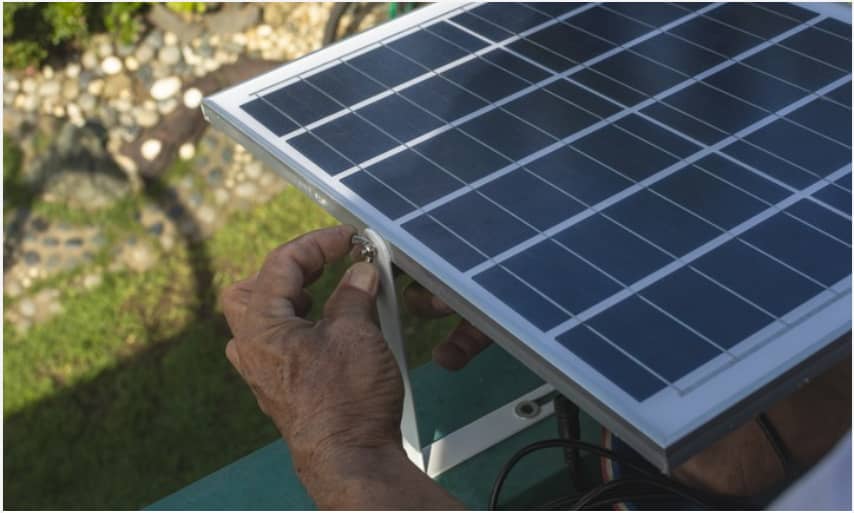
Solar capacity grew from 1,530 megawatts (MW) in 2022 to over 3,003 MW last June.
Photograph courtesy of COOP
The Philippines maintains its position as a geothermal powerhouse — ranking third globally in installed capacity — with robust expansion projects underway. Geothermal capacity is expected to increase by nearly 75 percent in 2025, providing clean, reliable baseload power generation.
Hydropower and biomass add significant contributions, with the government projecting a 161 percent increase in hydropower capacity by 2030. Biomass projects convert agricultural waste into electricity, creating circular economy benefits while generating rural employment.
Despite these advances, renewables still represent only about 25 percent of the country's total energy mix as of 2025, with coal plants supplying more than 60 percent. Coal facilities continue meeting baseload demand due to their established infrastructure and grid stability, though the government actively pursues phase-downs aligned with environmental targets.
Emerging sectors outlined in the National Renewable Energy Program (NREP) 2020-2040 include green hydrogen and ocean energy, pointing toward diversification into transformative new sources. These technologies, combined with advances in battery storage and grid modernization, prove essential for integrating variable renewable sources at scale.
Policy revolution drives investment
Achieving the government's ambitious renewable targets requires a supportive regulatory environment. The DoE has overhauled its framework to accelerate project approvals, reduce bureaucratic obstacles and provide fiscal incentives for clean energy investments.
Recent amendments to the Renewable Energy Act promote distributed generation and energy storage while creating clearer frameworks for power purchase agreements and encouraging microgrid development in rural and island communities. These moves have attracted both local and foreign direct investments, with total project commitments reaching billions of pesos in 2024-2025.
The government fosters innovation through international partnerships and energy firm collaborations. Technology transfer agreements signed during Abu Dhabi Sustainability Week 2025 aim to introduce floating solar innovations and advanced battery storage to Philippine waters, enhancing energy reliability and climate resilience.
Empowering the frontline champions
Sustainable electrification depends on grassroots partnerships. The Marcos administration continues empowering the country's 121 electric cooperatives, which oversee distribution across much of the nation's rural expanse.
These cooperatives serve as primary energy providers in far-flung provinces like Quezon, Palawan, and Zamboanga del Sur, leading the charge to extend power to underserved communities. Enhanced capacity-building programs funded by the NEA and DoE provide cooperatives with training on renewable integration, system upgrades, and disaster risk management.
Rural electrification represents more than infrastructure — it embodies equity, restoring dignity by giving communities tools to learn, earn, and progress without abandoning their homes. Electric cooperatives pioneer hybrid power systems combining solar, biomass and battery storage to stabilize supply in weather-vulnerable areas. Grid upgrades and digital metering initiatives improve service quality, reduce losses and empower consumers with transparent data and billing.
Navigating the transition challenges
The Philippines' energy transition faces significant obstacles despite promising momentum. Fossil fuels dominate the power generation mix, with coal-fired plants providing more than 60 percent of electricity as of 2023 and natural gas supplying roughly 20 percent. These facilities offer dispatchable power critical for grid stability but conflict with decarbonization goals.