
The power of Pitoy
There is a sparkling terno with an obi skirt, its patterns defined with beadwork added by the designer. Even more intriguing is a Maria Clara ensemble featuring a traditional embroidered top that contrasts with the bold colors and graphics of an obi apron.


Jose ‘Pitoy’ Moreno
Illustration by glen tolo
Last 29 June, Manila’s most prominent and stylish gathered at the Metropolitan Museum of Manila, now also known by its condensed handle, The M. The event was a charity dinner that also marked the closing of “Ti888888meless: J. Moreno,” a survey of Jose “Pitoy” Moreno’s works that coincided with the fashion designer’s birth centennial. It was a well-attended evening despite the traffic and rains, which is a testament to the designer’s drawing power. It is also a reminder of Pitoy’s rightful place in the pantheon of Philippine fashion’s legendary icons.
That night, guests had one last chance to view samples from the designer’s body of work, which was staged for the exhibition’s 5-month run. On show were some of Pitoy’s most iconic pieces, which articulated the stylistic paths he had taken as a nationalistic designer confronting the changes of the times.
There were, of course, various iterations of the traditional Filipino attire, from the baro’t saya and terno to reimaginations of Mindanao’s regal clothing tradition, along with Pitoy’s take on Western dress modes. Intricate accent pieces, such as bejeweled headdresses and voluptuously embroidered veils, were also prominently displayed.
Taken as a whole, the exhibition reveals an adventurous spirit who rigorously exploited materials and synthesized Filipino culture with foreign influences to create his sartorial code. Among the standouts is a terno covered in delicate capiz shells, more commonly seen in the ubiquitous circa 1960s-1970s chandeliers. Another of his bold gestures is revealed in a series of traditional clothing layered with Japanese obi textiles.
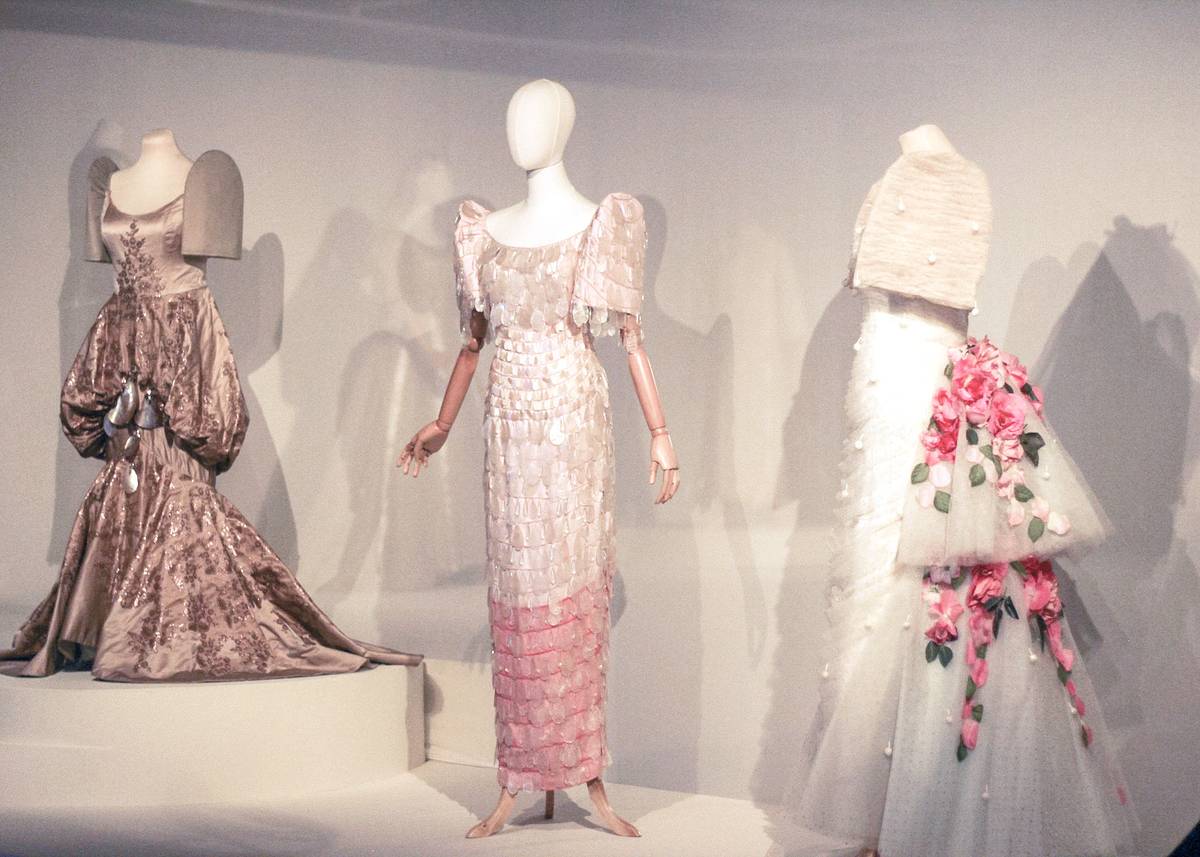
Various iterations of the terno, including one adorned with capiz shells
There is a sparkling terno with an obi skirt, its patterns defined with beadwork added by the designer. Even more intriguing is a Maria Clara ensemble featuring a traditional embroidered top that contrasts with the bold colors and graphics of an obi apron. Pitoy added a bustle with geometric patterns, its edges lined with playful pompoms — a design that certainly wasn’t intended for a demure muse but for a Filipina who dares to step out of conventional modes, much like Pitoy himself.
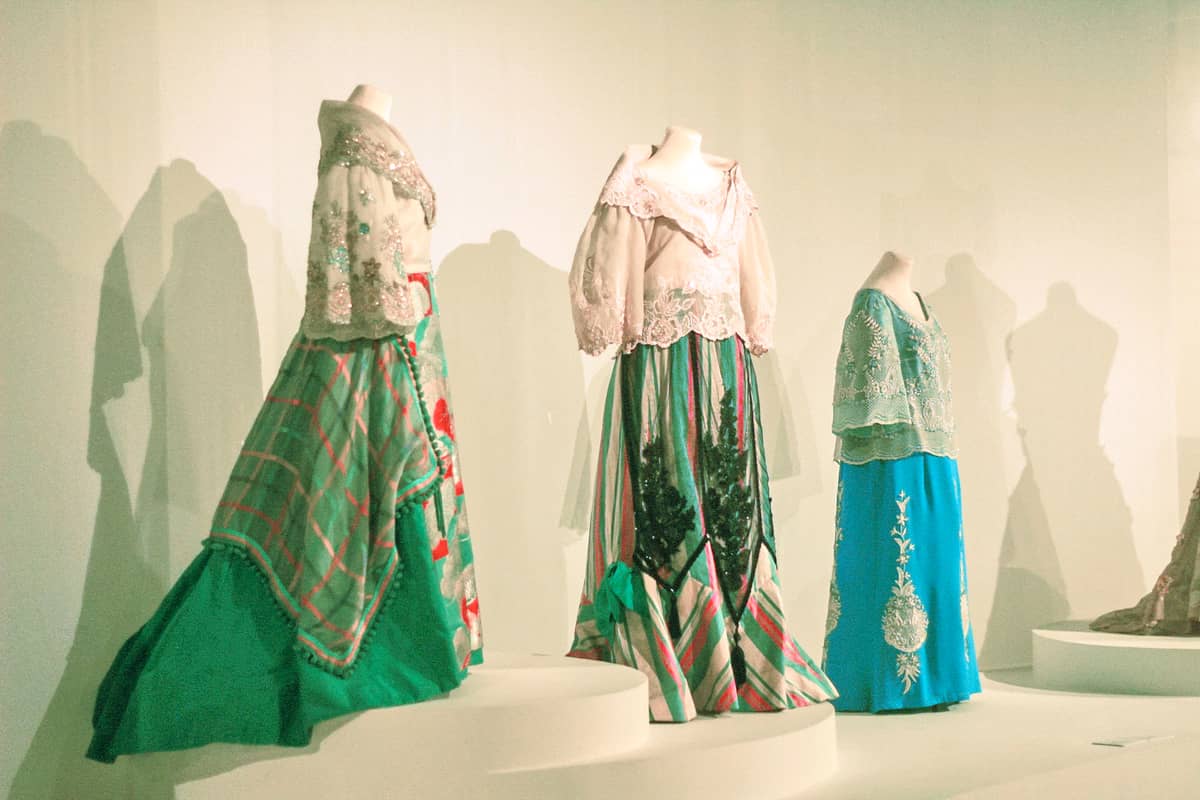
A section showcasing variations of the Maria Clara.
Although the show has closed, the designer’s legacy is immortalized in sonic and tangible monuments. There are several self-published books, along with the posthumous tome that carry the exhibition’s title. In the lyrics of the Hotdog Band’s 1979 megahit, Bongga ka ‘Day, Pitoy embodied a generation’s aspirations: “Suot mo’y gawa ni Pitoy, di nanggaling kay Eloy.”
More recently, Pitoy reemerged in the realm of pop culture with the launch of the Rita Moreno Barbie Doll in 2024. It immortalized the Hollywood actress’s look when she accepted the Best Supporting Actress Oscar in 1962, wearing a Pitoy gown. Her attire gained unprecedented media mileage when Moreno wore it again as a presenter at the 2018 Oscars. On the red carpet, the Latina actress clarified that the gown wasn’t updated as an interviewer had assumed but rather expanded to fit a fuller physique. “No, this doesn’t need updating,” she said proudly. “I think this is a classic.”
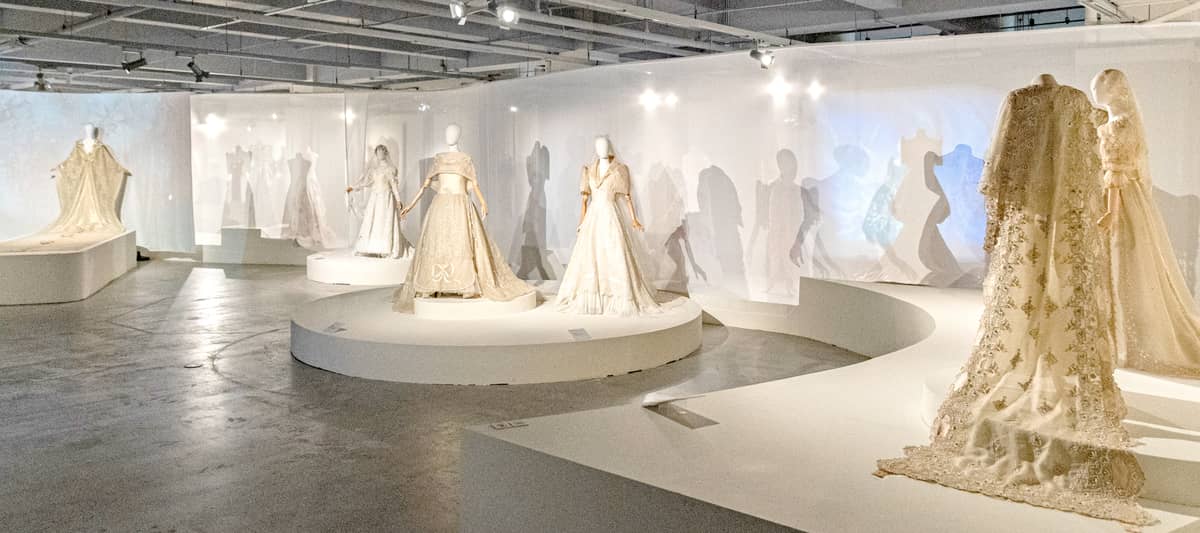
The bridal gallery at the exhibition, Timeless: J. Moreno, at The M, BGC.
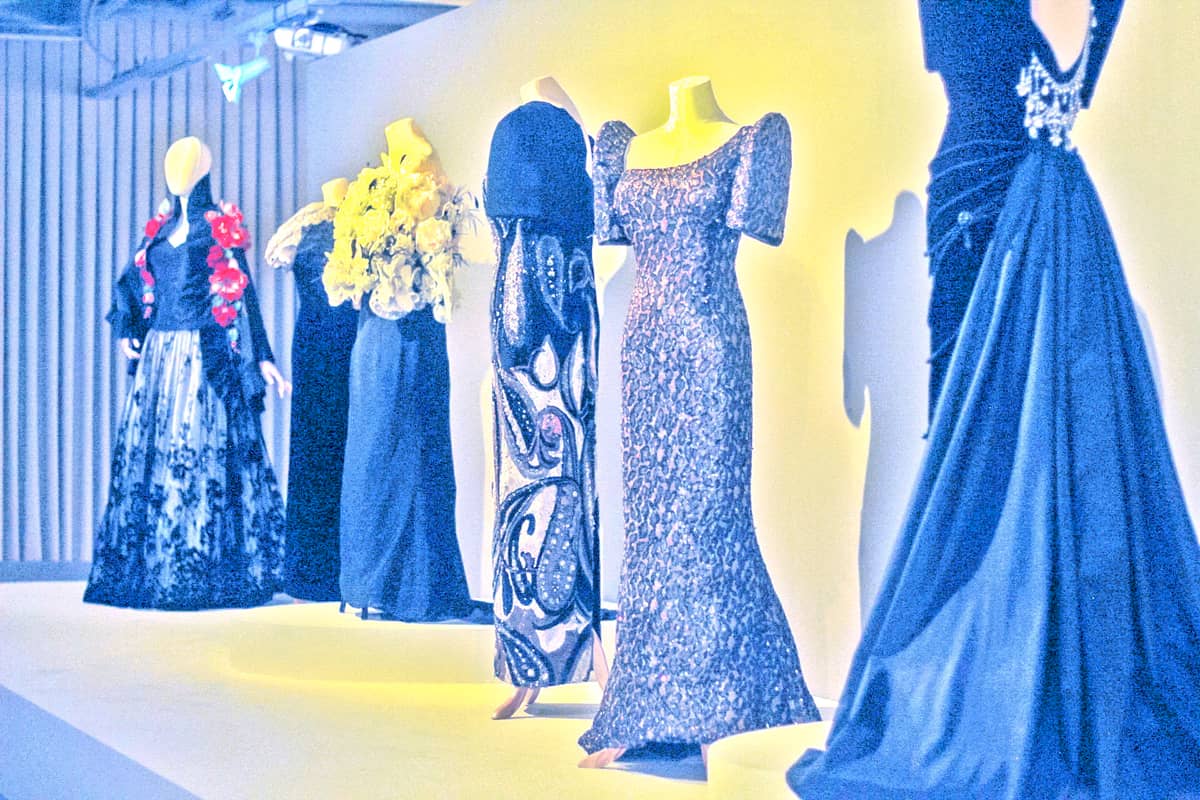
The exhibition featured clothes from Pitoy Moreno’s collection, alongside those lent by his clients.