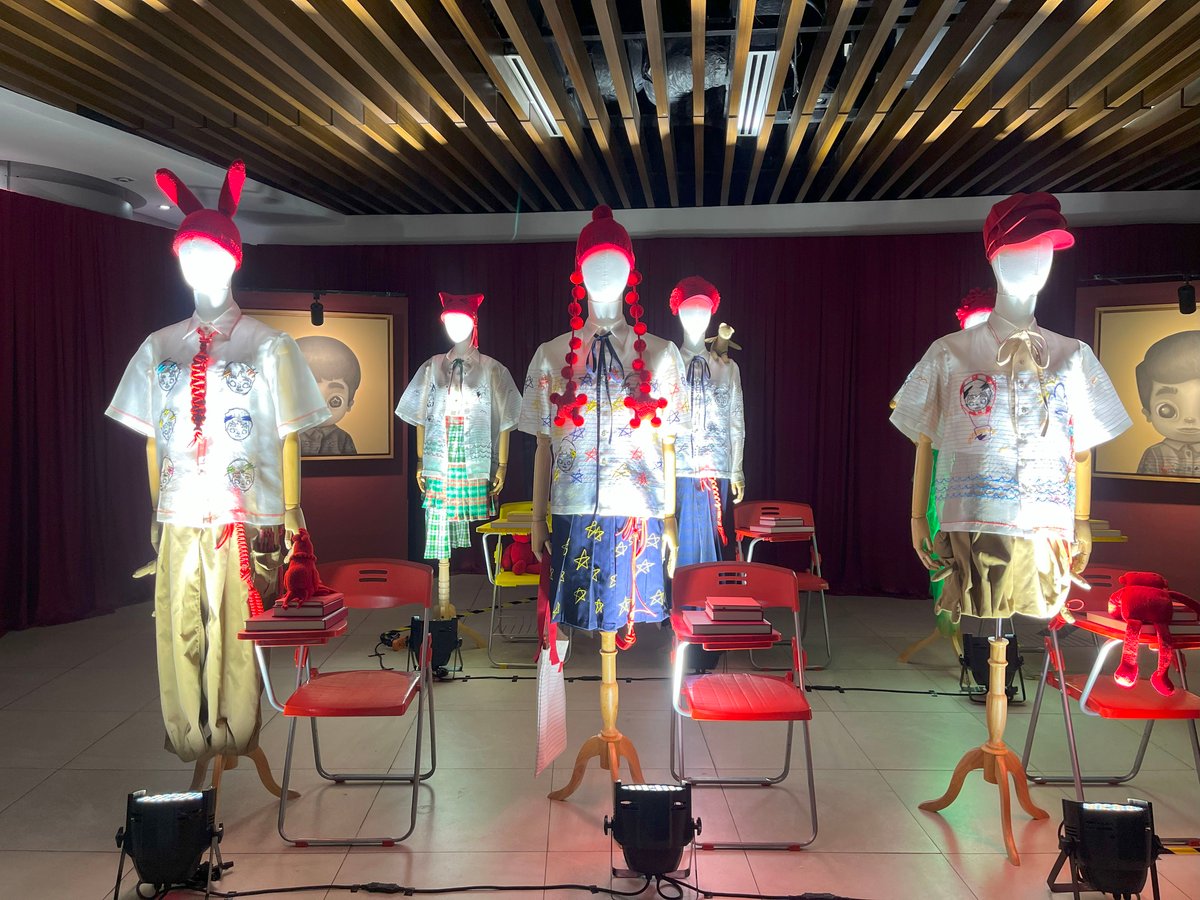
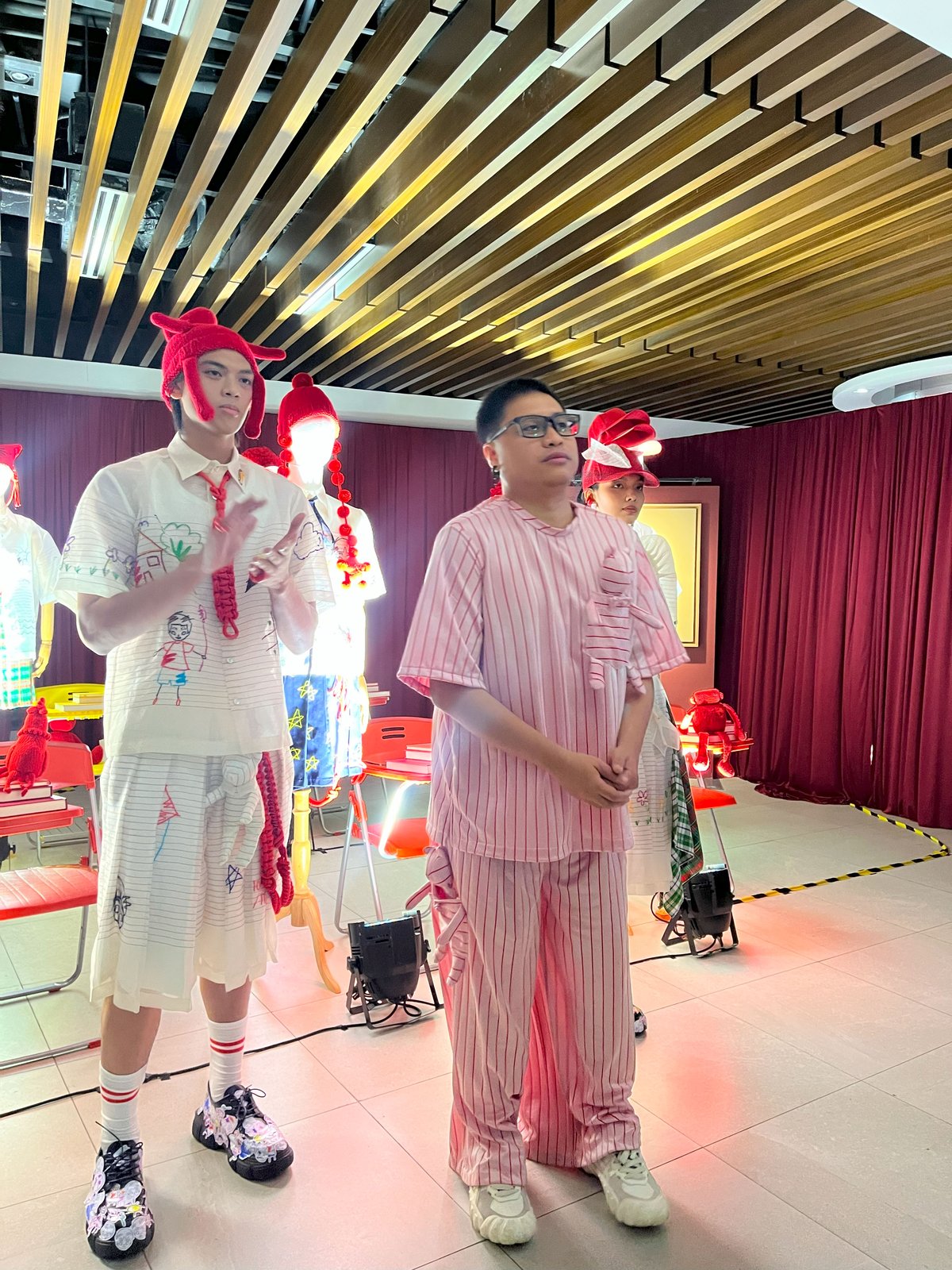
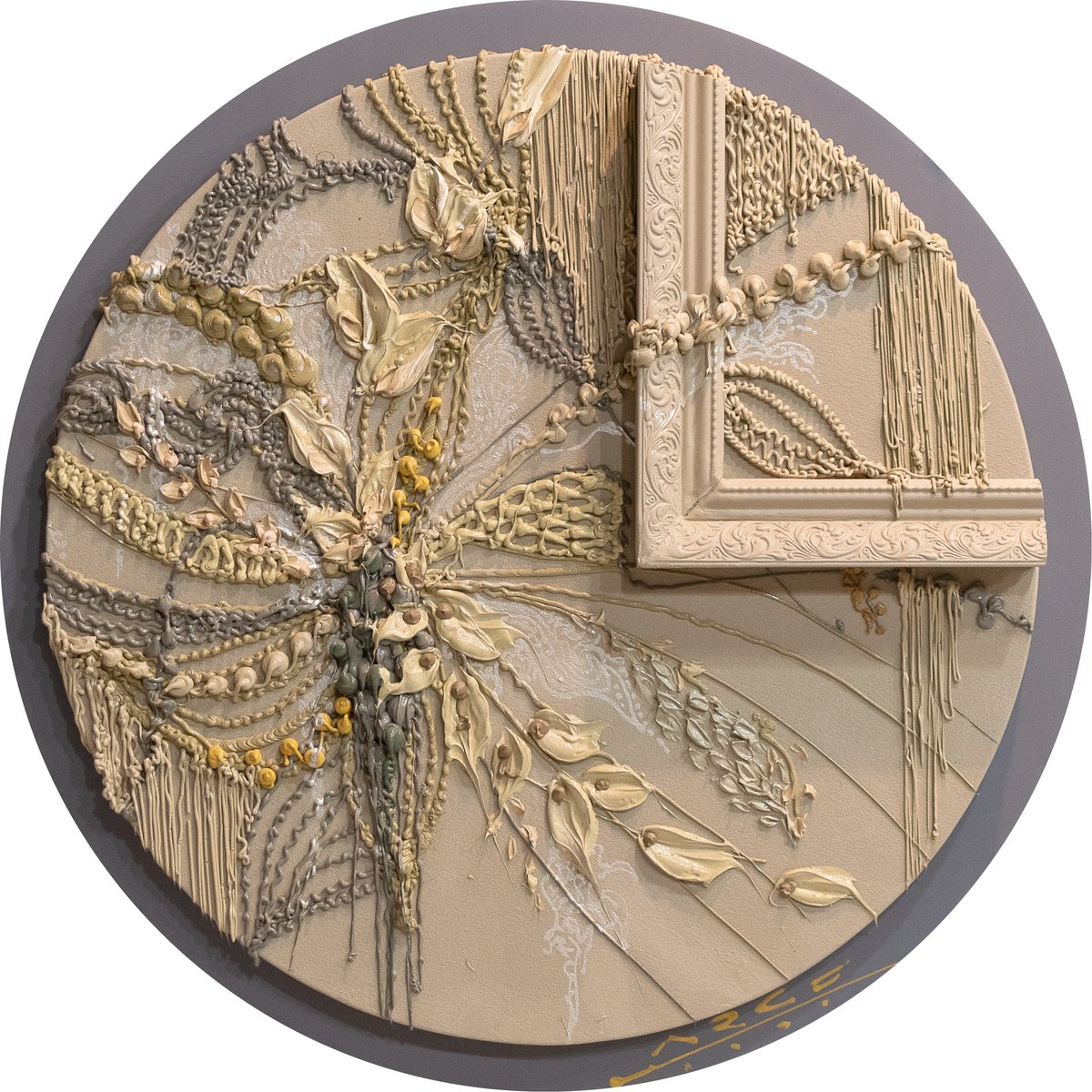
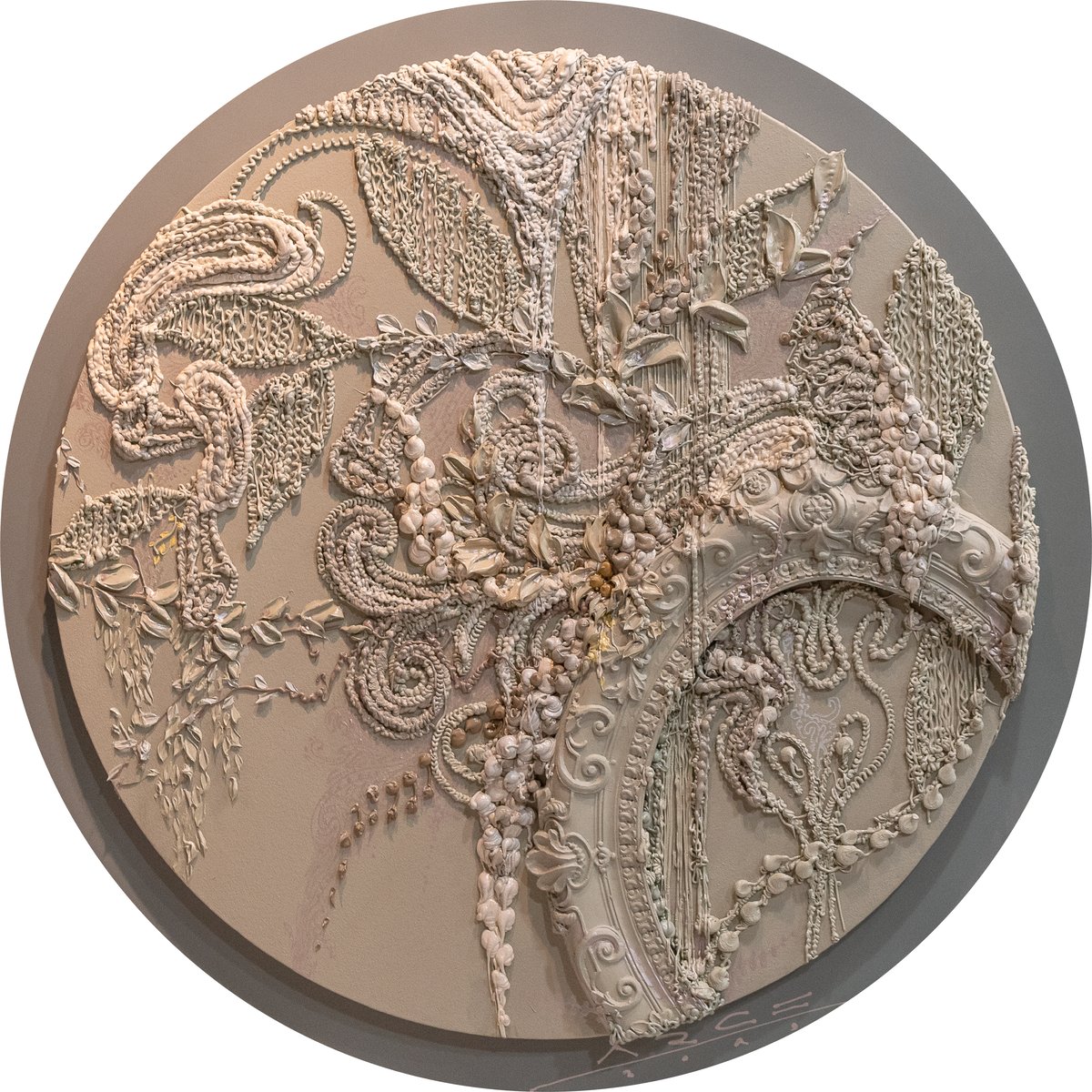
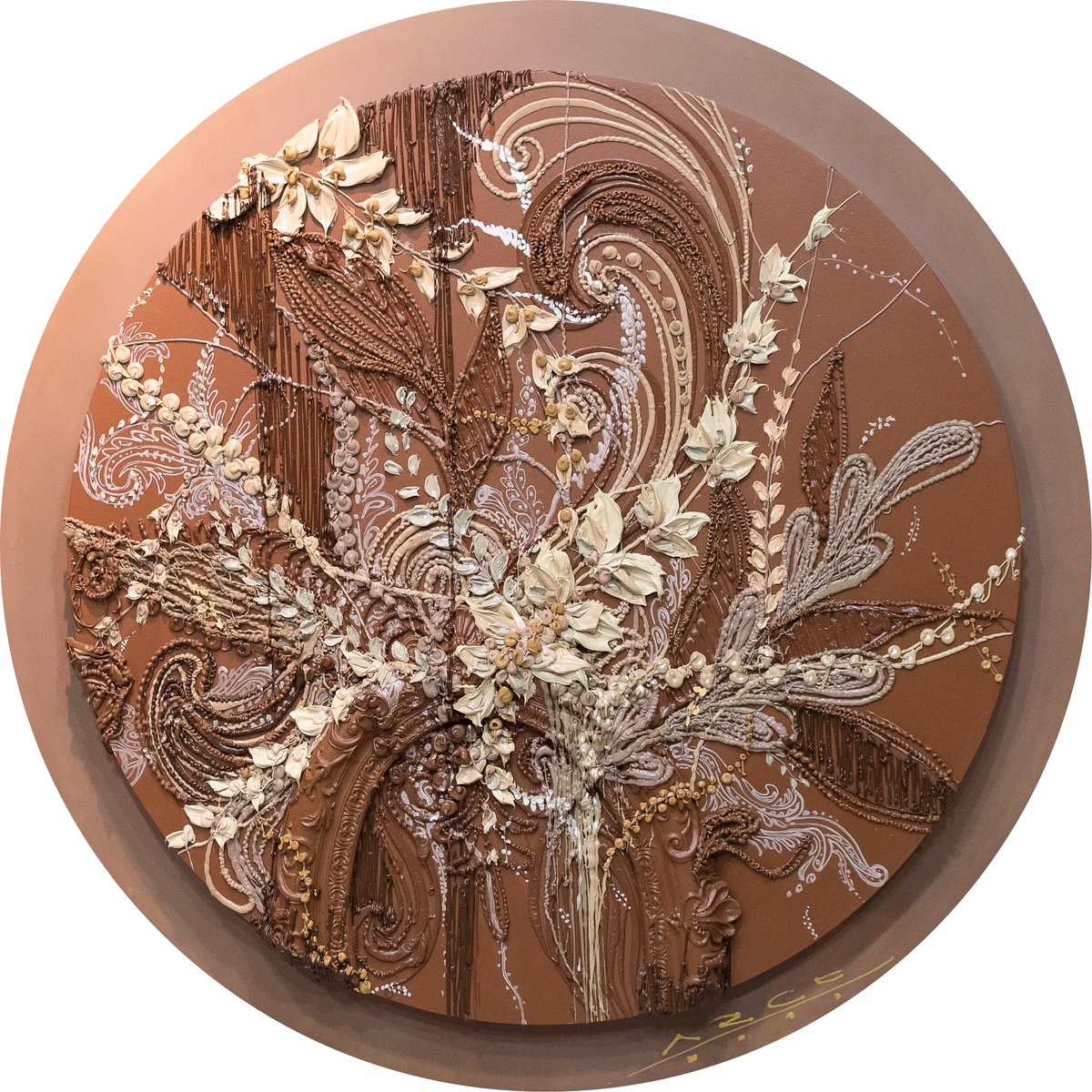
“The previous work of SAIS is very black and white. I’m black, white, and beige, but I’m also very colorful. So it’s kind of hard for me to create something that respectfully reflects SAIS, but also keeps the identity of Daryl Maat. That’s one of the challenges I faced,” he told DAILY TRIBUNE.
“The second challenge was sourcing fabrics. I had different fabrics in mind — especially the Inabel. It’s really hard to source Inabel, but thankfully I was able to find some. Specifically, I used kantarines (a specific type of Inabel). Kantarines is hard to produce because most weavers don’t want to replicate it; it consists of checkered weaving, which takes longer to do compared to normal Inabel. When I discovered this fabric, it reminded me of a school uniform — that’s when I felt happy that I got it. At least that was one challenge I was able to overcome,” he added.
For SAIS, the resonance between their work came naturally.
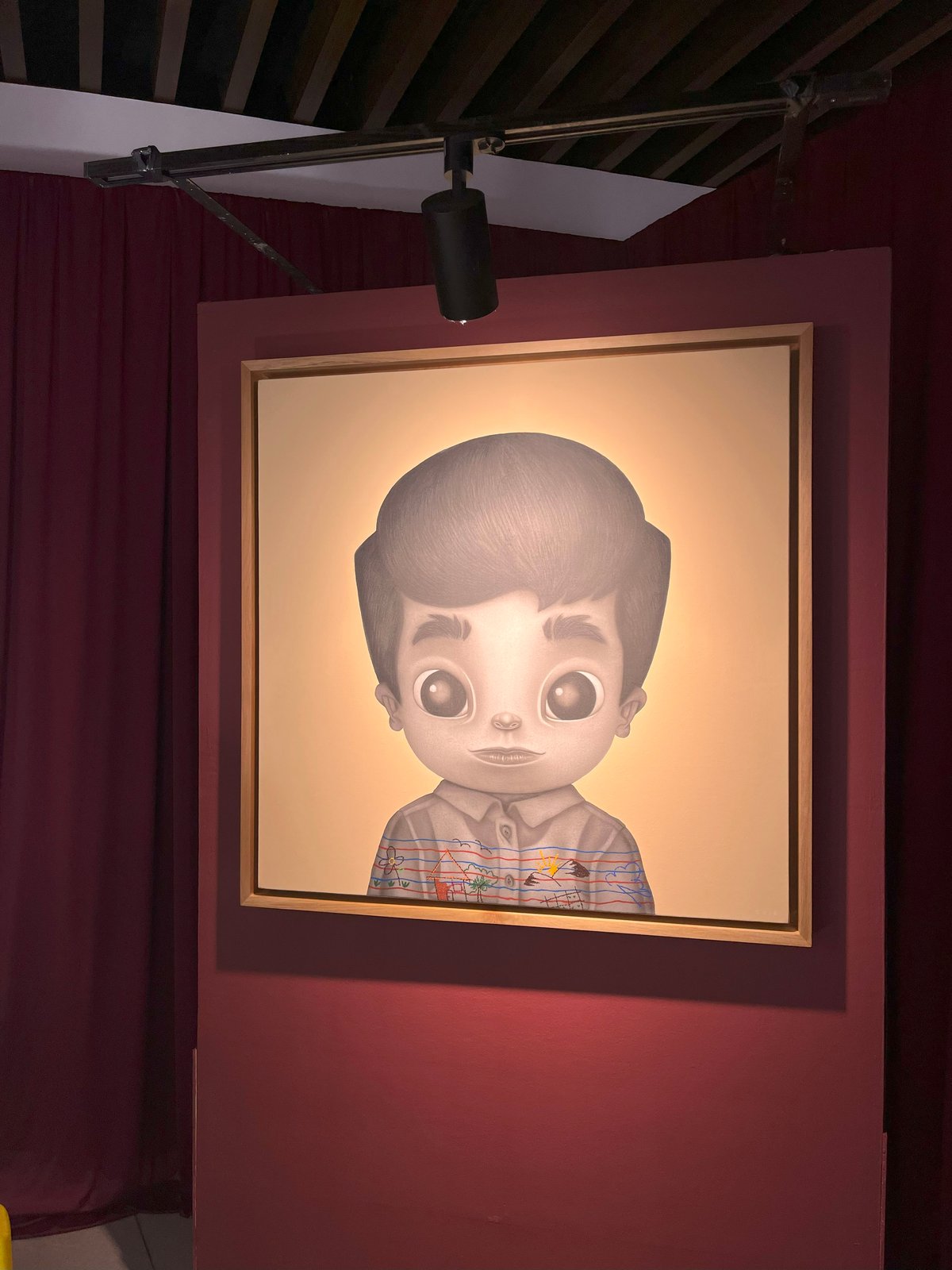
“I think it was the shared sense of nostalgia. Even before we had spoken or met, that was already the idea that naturally complemented both our works. Mine was purely black and white, while Sir Daryl’s, when seen by the audience, really carried a nostalgic feeling. That connection was very meaningful to me,” SAIS told DAILY TRIBUNE.
Gallery manager Deseree Mapandi explained that the exhibits were meant to expand how viewers engage with contemporary art.
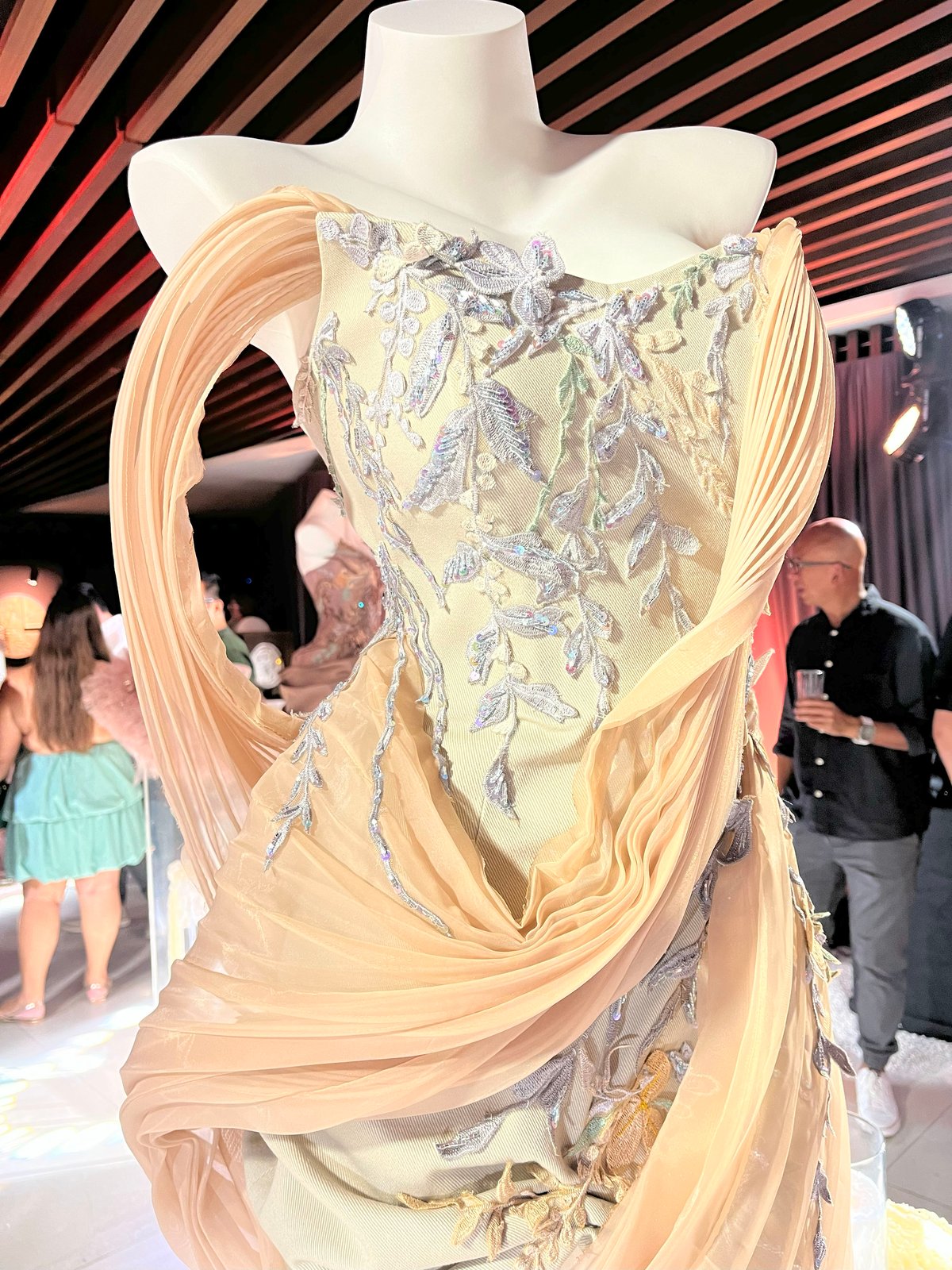
“This is to immerse ourselves in contemporary art and a new perspective, like bridging fashion and art, or maybe canvas works. It’s very dynamic to see something in 2D being translated into something 3D, into human form. It’s really delightful to see that transition itself. And then, perhaps we also want to let the public and our collectors know that we will always strive to keep elevating our exhibitions. If doing so requires collaborations like this, we’re always excited to create something — something very interesting. And I feel like this is only the beginning for us to do even more.”
“You acknowledge the power of art, and you also acknowledge the power of fashion — how influential it is to something so elegant, and then something so young. Especially the younger generations today — they can now see artworks being transformed into garments that might not necessarily be worn, but could stand alone as display pieces. Yet the treatment remains: all of these are artworks. Something you wear on a daily basis can also carry that mindset — that what I’m wearing today is, in itself, a work of art,” she added.
Asked how these exhibits reflect the identity Art Underground has shaped over the past decade, Mapandi said: “Very contemporary. As a contemporary gallery, we would love our projects and collaborations to be in that line — that route, of course. And then collaborating with contemporary fashion designers as well. I think that would be a beautiful description of how this is described. It’s so contemporary.”
She then shared how the gallery continues to champion Art Underground artists that they exclusively work with.
“We give them the opportunity to have exhibitions at our space. We give them the opportunity to actually be showcased not only at a national level but also at an international level. We give them that moment to showcase Filipino art and really tell the people out there that Filipino art is something that is global.”