
Rice reserves up as NFA readies more local buys

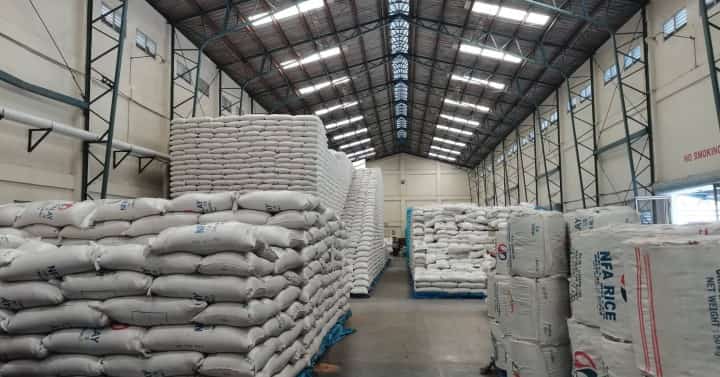
Consumers are assured of a stable rice supply as the National Food Authority (NFA) builds up its buffer stock to 7.17 million 50-kilogram bags of milled rice, enough to feed the entire population for nine days.
Agriculture Secretary Francisco P. Tiu Laurel Jr. said on Tuesday that the stockpile allows the government to support vulnerable communities, possibly at prices lower than the P29-per-kilo subsidized rice sold through government-run programs.
“We continue to explore ways to better manage the NFA’s aging rice stocks while ensuring that the most disadvantaged Filipinos receive the assistance they need,” Tiu Laurel said.
Despite the expanded inventory, NFA Administrator Larry Lacson assured local farmers that the agency remains ready to procure more paddy rice or palay.
“So far this year, we’ve spent only P2.6 billion of the P14.6 billion available to us for palay procurement. This includes unspent funds of P5.6 billion carried over from the 2024 budget,” Lacson said.
The NFA estimates it can still buy around 500,000 metric tons of palay, equivalent to roughly 6.3 million bags of milled rice. Last year, the agency bought palay at an average of P27 per kilo, while this year’s average stands at about P24.
The increase in buffer stock follows the amended Rice Tariffication Law (RTL), which raised the required reserve from nine days to 15 days. All rice under this buffer must be sourced exclusively from local farmers.
To support the higher stockpile, the NFA is upgrading its warehouses and handling facilities to accommodate up to 555,000 metric tons of rice or 880,000 metric tons of palay. When the RTL was first implemented in 2019, the agency held just over 492,000 metric tons, most of it imported rice.
Under the current law, the NFA can no longer sell rice directly to the public. It is limited to releasing “aging stocks,” or milled rice stored for at least two months after processing.
As of 11 April, the agency held 1.1 million bags of milled rice, a mix of newly processed and aging stocks.