
Solar energy powers Jollibee M&Ls, restaurants
As of 2024, a total of 119 Jollibee Group restaurants in the Philippines are equipped with solar panels.

Jollibee Food Corporation (JFC) is intensifying the integration of solar energy into its businesses by installing 16,800 solar panels across four of its largest manufacturing & logistics (M&L) sites and 119 restaurants nationwide in 2024.
The M&L in Canlubang, Laguna generates a total of 9.1 megawatts of clean energy, contributing 31.9 percent reduction in energy use ratio by such facilities compared to a 2020 baseline, according to Elise D. Veloso, JFC sustainability director, in an email to the DAILY TRIBUNE.
The Jollibee Group, through its subsidiary Zenith Foods Corporation, collaborated with First Gen Corporation, through Pi Energy Inc. for the installation of the solar panels on the roofs of the Canlubang commissary. The project began with one site in 2023 and expanded to complete three more in 2024, totaling four sites. The four manufacturing facilities supply a variety of products for JFC food brands namely Jollibee, Mang Inasal, Chowking, Red Ribbon, Greenwhich, Yoshinoya, Burger King, Panda Express and Common Man Coffee Roasters, Veloso says.
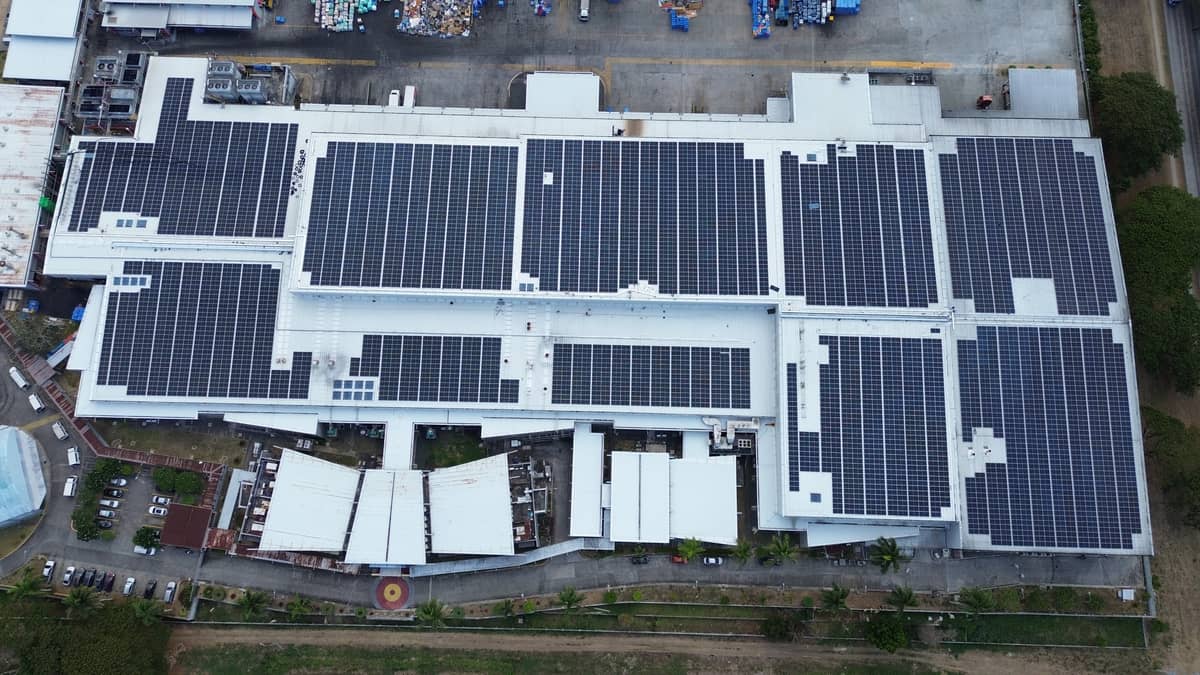
JFC’s manufacturing site in Canlubang, Laguna has over 16,800 solar panels that generate 9.1 megawatts of electricity.
JFC is also solarizing its dining stores. Last year, a Jollibee outlet in Tuguegarao City was opened featuring multiple green technologies designed to reduce waste and maximize renewable energy sources, Veloso shares. The store has solar panels that reduces energy consumption by up to 30 percent.
It also has a solar water heater for kitchen use, solar window films that generate and regulate temperature to repel outside heat, high-efficiency motors for better exhaust management and improved fresh air supply in the kitchen, LED-converted pylon lights to reduce energy use by 80 percent, restroom light motion sensors and automatic low-flow faucets to prevent unnecessary energy and water consumption, and a state-of-the-art wastewater treatment facility and a water recycling system that repurposes rainwater for general upkeep.
As of 2024, a total of 119 Jollibee Group restaurants in the Philippines are equipped with solar panels, including 64 Jollibee outlets, 17 Chowking restaurants, 13 Burger King stores, 5 Mang Inasal branches, 4 Panda Express diners and 1 Red Ribbon store.
All efforts to run manufacturing facilities and restaurants using renewable energy contribute to the Jollibee Group’s global sustainability agenda, called Joy For Tomorrow, which aligns with JFC’s vision, mission and business growth strategies.