
Farewell to a friend and rival: Vilma Santos pays tribute

In the wake of Nora Aunor’s passing, fellow screen legend and longtime showbiz rival Vilma Santos took to social media to express her heartfelt condolences, closing a chapter in Philippine entertainment defined by one of its most iconic and enduring rivalries.
“Our sincerest condolences and prayers… Rest in peace, Mare. Ms. Nora Aunor! Our Superstar and National Artist… Maraming Salamat!” Santos wrote in a solemn tribute.
Known as “Ate Vi” to fans and peers alike, Vilma Santos was more than just a colleague to Aunor. The two women, both powerhouses in their own right, defined an era of Philippine cinema. Their on-screen competition was fierce, but behind the headlines and fan-fueled showbiz “intriga,” there was mutual respect — and even friendship.
“Intriga lang ‘yan. The rivalry that we have with Nora Aunor, my kumare, non-stop na ‘yan. And I think nagbebenepisyo kaming dalawa d’yan,” Santos candidly said. “I mean, 60 years in the business and yet nandito pa rin kaming dalawa. And for that, we should be thankful already.”
Their legacy was cemented not just by box-office hits but also by unforgettable collaborations such as "T-Bird at Ako" and "Ikaw Ay Akin" — films that showcased the two queens of Philippine cinema going head-to-head in gripping performances that captivated audiences and critics alike.
Beyond the rivalry, it was a shared passion for storytelling, a mutual journey through decades of evolving showbiz landscapes, and a quiet bond as women who rose to superstardom against all odds.
With Nora Aunor’s passing, Vilma Santos — herself a screen icon — pays tribute not just to a competitor but to a fellow artist who helped shape the golden age of Philippine cinema.
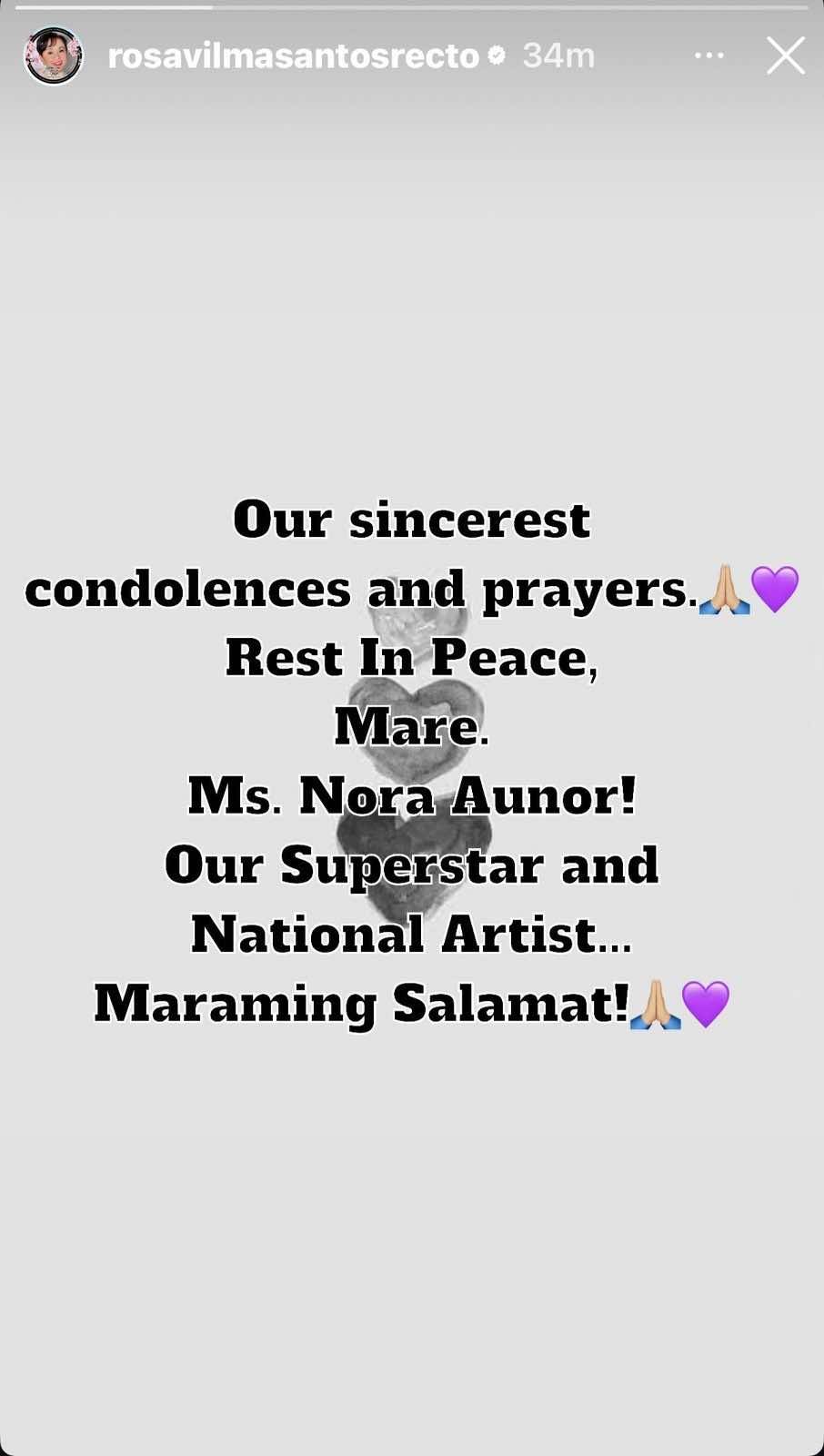
Screenshot of Vilma Santos' Instagram, paying tribute to friend Nora Aunor