
Will American jeans still be made in Africa?
United Aryan ships up to eight million pairs of jeans to the US each year
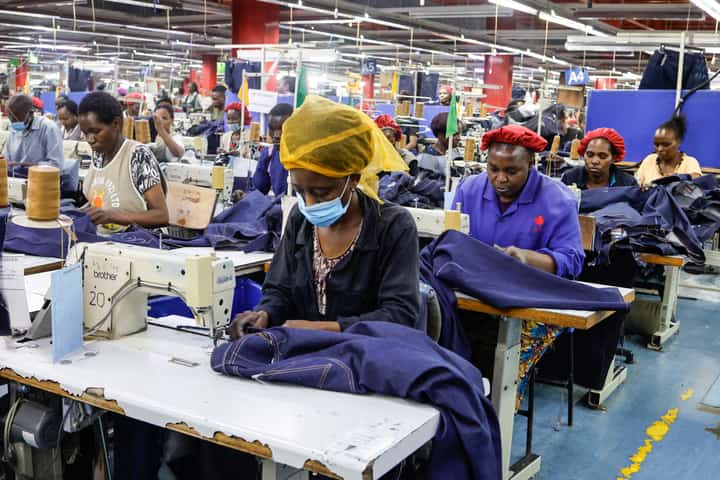
NAIROBI, Kenya (AFP) — The factory may be in East Africa, but the Wrangler and Levi’s jeans rolling off the production line are pure Americana, destined for United States (US) stores like Walmart and JCPenney.
The United Aryan factory, on the outskirts of Kenya’s capital Nairobi, exists for one reason: the African Growth and Opportunity Act (AGOA), a 25-year-old US law that gives duty-free access to thousands of goods made on the continent, particularly clothes.
But AGOA will expire in September unless US President Donald Trump agrees to extend it — a decision putting hundreds of thousands of African livelihoods on a knife-edge.
Though the program has bipartisan support, it’s going up against a president known for his free-trade scepticism. Adding to the pressure is a time crunch: to prepare for the year ahead, the United Aryan factory’s clients need to know by next month if AGOA will survive.
United Aryan ships up to eight million pairs of jeans to the US each year, and millions more shirts and other items.
It has also transformed a once dangerous area of the city, said CEO Pankaj Bedi, who said local gangs would often “steal everything down to the copper cable” when they first set up in 2002.
“Today, you can see, it’s a well-developed community,” he told Agence France-Presse. “We have 150,000 people who directly or indirectly depend on us. It has stabilized the whole socio-economics of the area.”
Each day, thousands gather outside the gates, hoping to fill in for absences among the 10,000 staff. An average assembly line worker earns around $200 a month, a decent wage in Kenya.
“Our families are happy, our children go to school, crime has gone down,” said Norah Nasimiyu, 48, a worker representative on the shop floor, surrounded by colleagues stitching pockets and slicing huge piles of denim.
Without its duty-free benefits, US buyers will likely turn to cheaper factories in Asia.
Both Republicans and Democrats in Congress support an extension for at least 12 years, giving companies the long-term security to thrive.