
Soybean farmers get mobile irrigation from OMF
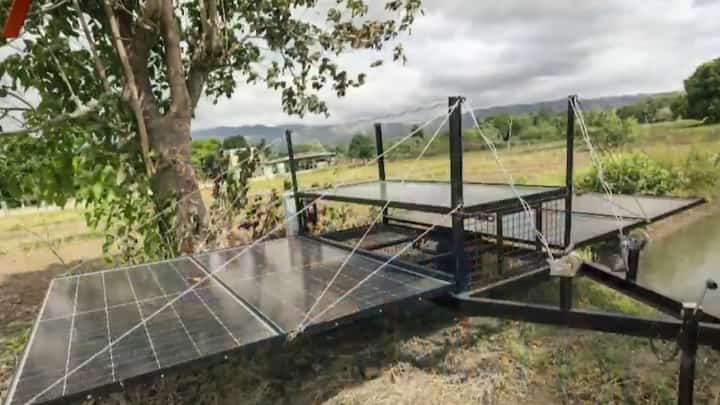
The Manila Electric Company (Meralco) realizes its advocacy on affordable and clean energy through its Meralco Electrification Program (MEP), which provides low-income families from underserved communities, including informal settlements and relocation sites, access to electricity.
The same support is given to farmers through its Agriculture and Livelihood Electrification Program (ALEP) launched in 2022. ALEP integrates solar energy into post-harvest facilities to improve agricultural productivity.
Ronald Patrick Famisaran, program manager of One Meralco Foundation, the social arm of Meralco, revealed in a televised interview on 28 January one example of such pre- and post-harvest technologies given to farmers.
Famisaran said a solar-powered mobile irrigation system being pilot tested starting this year aims to address a group of farmers’ challenge in water sourcing, which is the high cost of diesel required for conventional pumps.
“This is where the solar irrigation system comes in. It’s mobile, meaning it can be used with any water source, whether from an irrigation system, a deep well or a water reservoir. The technology can be moved wherever farmers need it,” Famisaran explained.
Although Nueva Ecija is outside Meralco’s area of operations, local farmers have benefited from its ALEP: The Lupao Pag-Ahon Agriculture Cooperative (LPAC), which cultivates rice, vegetables, and soybeans, and the Nueva Ecija Rice, Corn, Vegetable and Livestock Raisers Multi-Purpose Cooperative in Rizal.
For LPAC chairman Henry Ramos, the system is a game-changer for cooperative members as it allows a flexible water distribution, especially now that they ventured into cultivating soybeans.
“Currently, soybean crops don’t require frequent irrigation. This system is perfect because once we finish watering one area, we can simply move it to the next location that needs irrigation,” Ramos said.
To date, LPAC has 68 members, 14 of those ventured into soybean farming. Ramos stated that they are already in coordination with a guaranteed buyer of their produce, and are optimistic about having more.
The solar-powered mobile irrigation system marks the first technology for pilot testing under Meralco’s ALEP. According to Famisaran, they are in continuous search for beneficiaries, particularly farmer and agriculture cooperatives.