
SCUTTLEBUTT
Like wrong-way driving, without just transition and inclusive mobility, the PTMP or PUVMP is working against the interest of its stakeholders, causing perils and unintended consequences.

Quo Vadis, PUVMP?
The much-delayed Public Transport Modernization Program, formerly the Public Utility Vehicle Modernization Program (PUVMP), is under the microscope for being “on the wrong side of the road.”
A policy discussion paper — written by lawyer Zelda Soriano, former senator Orly Mercado, and Professor Ted Mendoza — discussed the program as a necessity for the Philippines’ climate action and as a major part of its Nationally Determined Contribution (NDC), a commitment under the Paris Agreement in 2010.
“Like wrong-way driving, without just transition and inclusive mobility, the PTMP or PUVMP is working against the interest of its stakeholders, causing perils and unintended consequences,” the authors said.
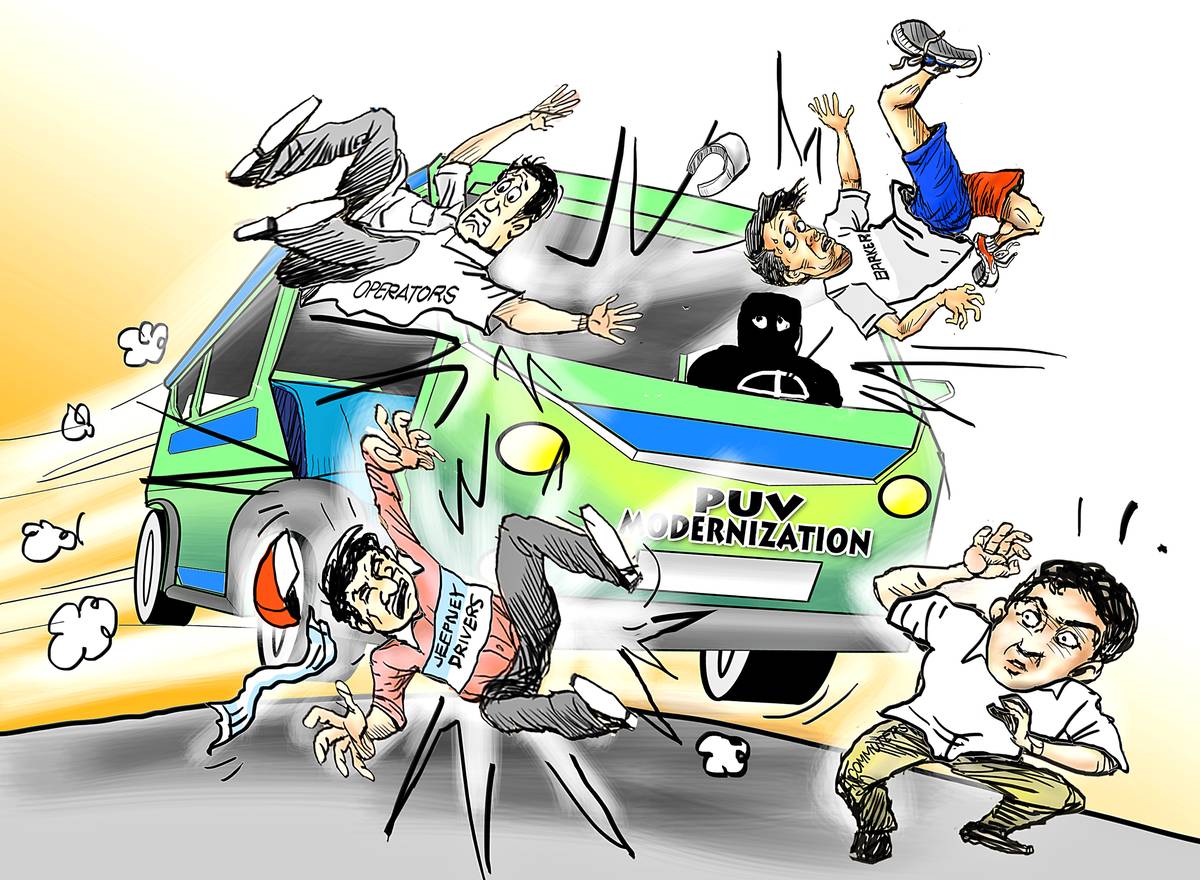
The policy paper delved into the issue of just transition and inclusive mobility, and attacked the program for its wrong concept of transportation — that “transportation is about moving people, not vehicles.”
“As a climate action, the goal of the PTMP is notable and necessary. However, how the policy problem was defined in the government program may be problematic as its noble end does not justify its oppressive means.”
The policy paper also tackled the legal flaws on which the program stands, the setting aside and possible human rights violations, and its economic, social, and cultural impact on affected would-be stakeholders, including jeepney drivers and operators, and people in the support service of the transport industry.
With unaffordable e-vehicles and a lack of available public transportation, private individuals may eventually be compelled to acquire second-hand vehicles, which means more greenhouse gas emissions, they said.
The authors concluded that the program, in not taking into account just transition and inclusive mobility, causes perils and potentially more greenhouse gas emissions.