
Warm ocean waters fueled typhoons
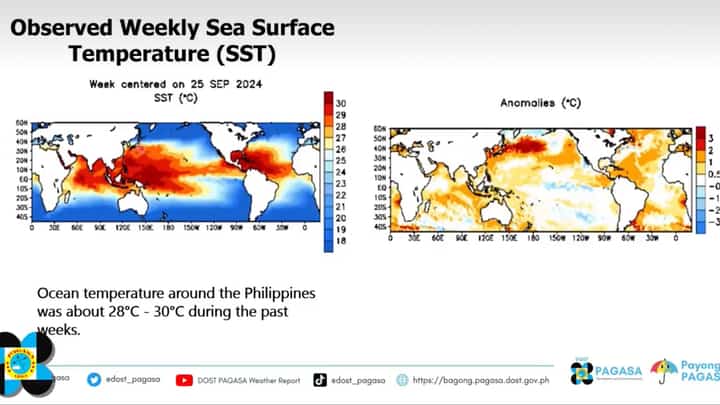
The Philippine Atmospheric, Geophysical and Astronomical Services Administration pointed out the warm temperatures of the Pacific Ocean, which served as a haven for successive typhoons that caused widespread damage in the Philippines.
In nearly a month, six cyclones were formed inside the Philippine Area of Responsibility, five making direct landfall in Luzon’s landmass.
To recap, severe tropical storm “Kristine” stayed inside the Philippine Area of Responsibility from 21 October to 25 October, super typhoon “Leon” from 26 October to 31 October, typhoon “Marce” from 4 November to 8 November, typhoon “Nika” from 9 November to 12 November, super typhoon “Ofel” from 12 November to 15 November, and the most recent super typhoon “Pepito” from 14 November to 18 November.
Typhoon “Kristine” made landfall in Isabela, while “Leon” passed near Batanes. “Marce” struck Northern Cagayan, and “Nika” hit Aurora. “Ofel” impacted mainland Cagayan, and “Pepito” made landfall over both Catanduanes and Aurora.