
Ultimate university town: Laboral Ciudad de la Cultura
Brilliantly designed by the famed architect Luis Moya, the cluster of spectacular buildings is spread on a 100-hectare farm fitted out to train various generations of working-class children as highly qualified professionals.


It was originally conceived as a safe house for orphaned children of miners. However, during its long drawn-out construction, it was surprisingly transformed into a Universidad Laboral, a grand self-sufficient utopian city closed in on itself.
Brilliantly designed by the famed architect Luis Moya, the cluster of spectacular buildings is spread on a 100-hectare farm fitted out to train various generations of working-class children as highly qualified professionals.
Today, the colossal Laboral Ciudad de la Cultura is a destination to seek, where visitors step into a different dimension.
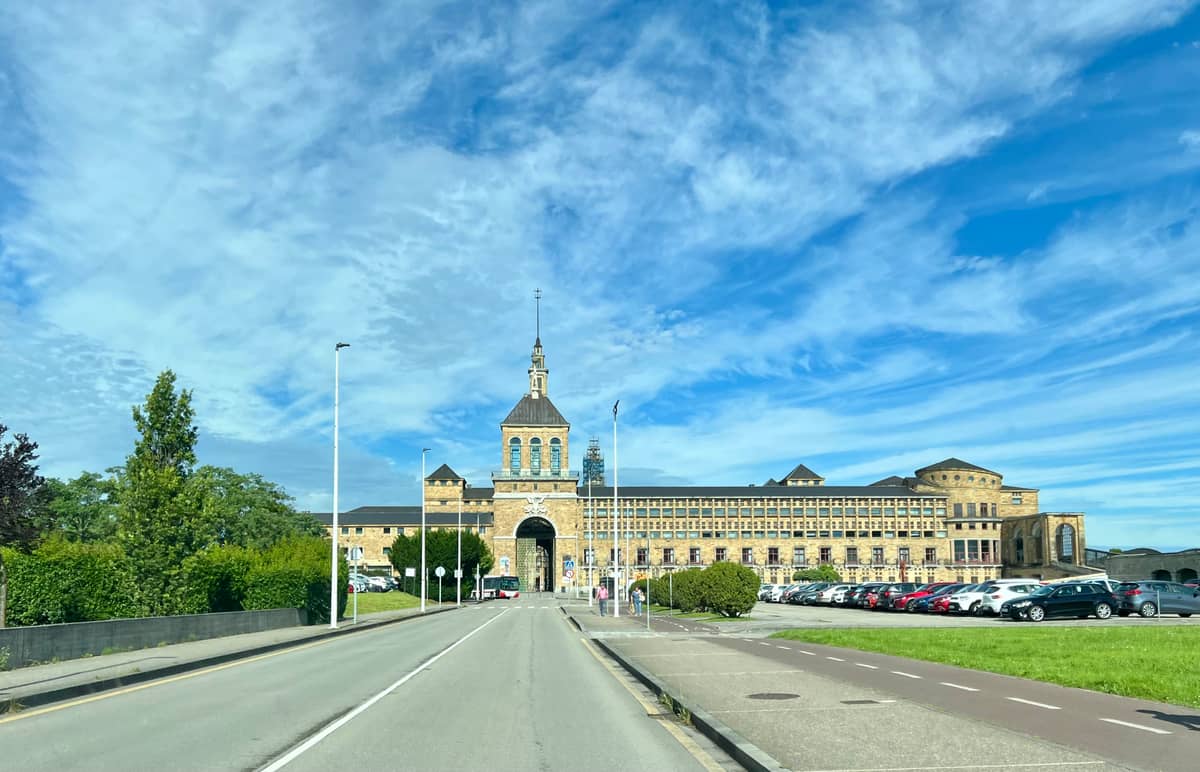
The driveway towards Laboral.
PHOTOGRAPHS COURTESY OF NES JARDIN
But beyond this tragic yet noble tale of its early beginnings, this center by periphery of Gijón, Asturias, is a modern-day envy of others, for it is a university town, bursting with arts culture, creativity, talent and skills. As we visited during early summer, there were a few professors and students. The missing usual individuals only served to magnify the grandeur of the buildings even more.
We soon learned, had we chosen to follow the school calendar, we would have encountered students reviewing their lessons on the spread-around park benches, artsy individuals carrying huge canvasses of their latest obras, other apprentices in shabby suits rushing to their presentations, while there were some in nurses’ uniforms, businessmen lugging around their briefcases, and even executives leading their teams.
Our first stop was the Recepcion de la Laboral, or The Laboral Reception. Here, we were treated to a historical overview of the City of Culture and how it continuously aims to unite artisanal craftsmanship with modern technology. Guests may likewise purchase tickets to the guided tours — though we did not opt for it, as we had an experienced individual in our travelling group.
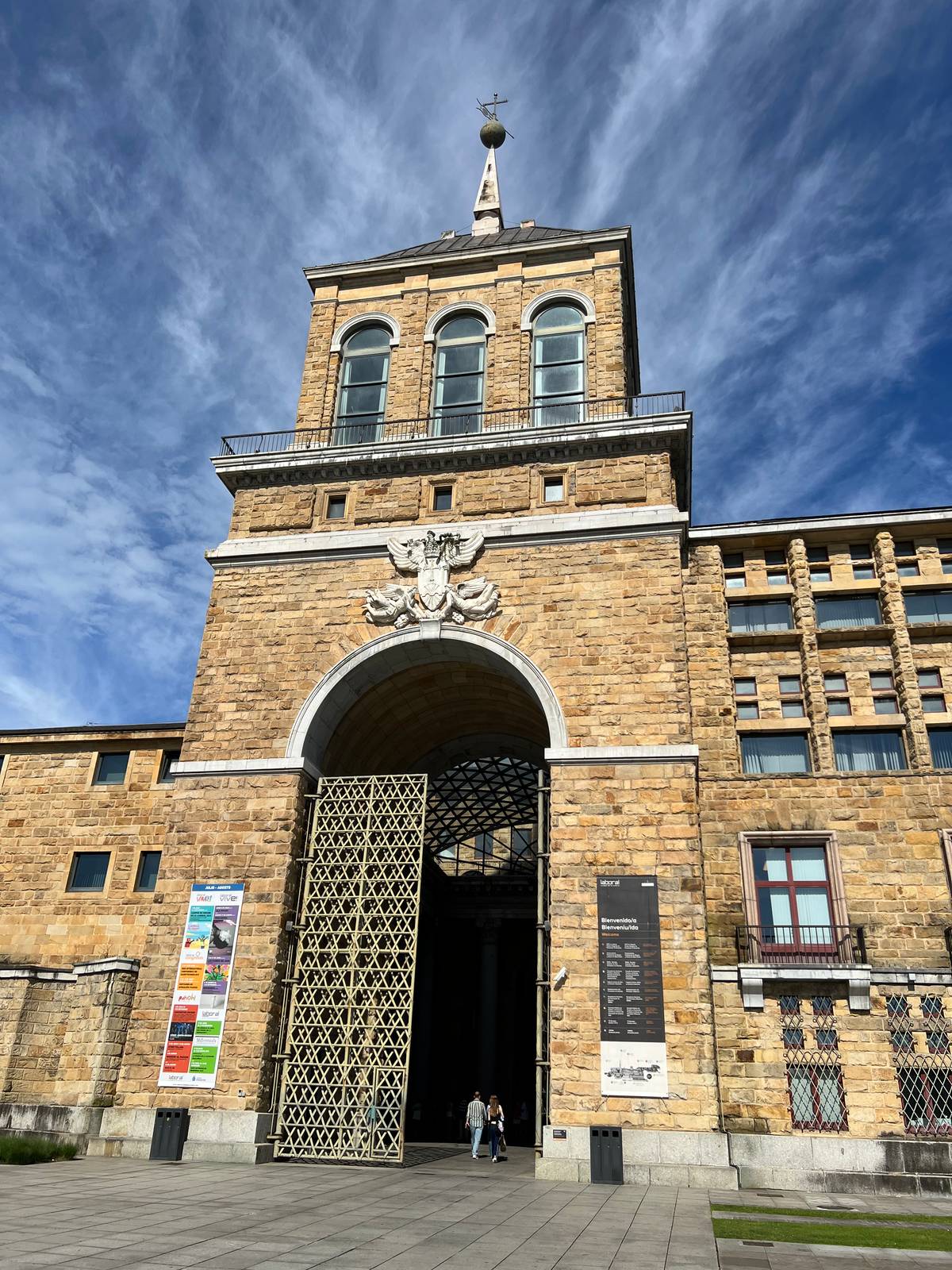
La entrada.
La Plaza, or The Square, 150 meters long and 50 meters wide, served as its beating heart. Here, we imagined educators and pupils gathered at this preferred meeting spot, as a gateway for easy access. It reminded us of the Saint Mark’s Square in Venice, one of its obvious inspirations, we were later informed.
One of the most popular sights is the Teatro de la Laboral, or La Laboral Theater, originally planned to be the assembly hall for students. It has since become the first autonomously-owned theater in the region and now carries over 1,300 seats — and that’s not considering the meeting and conference rooms, or even a dedicated rehearsal space. We could just imagine listening to all the various musicians and performers, all under one roof, eager to showcase to the world their prowess. If visiting in-season, definitely catch a show.
This brought about a query: what is a university town without its learning facilities? And there are plenty! Let’s circle back.
The Centro Integrado de Formación Profesional, or Integrated Profesional Training Center harkens back to their age-old mantra and commitment to train students from the working class. Now, families in the mechanical, wood and furniture manufacturing industries keep this institute in high regard.
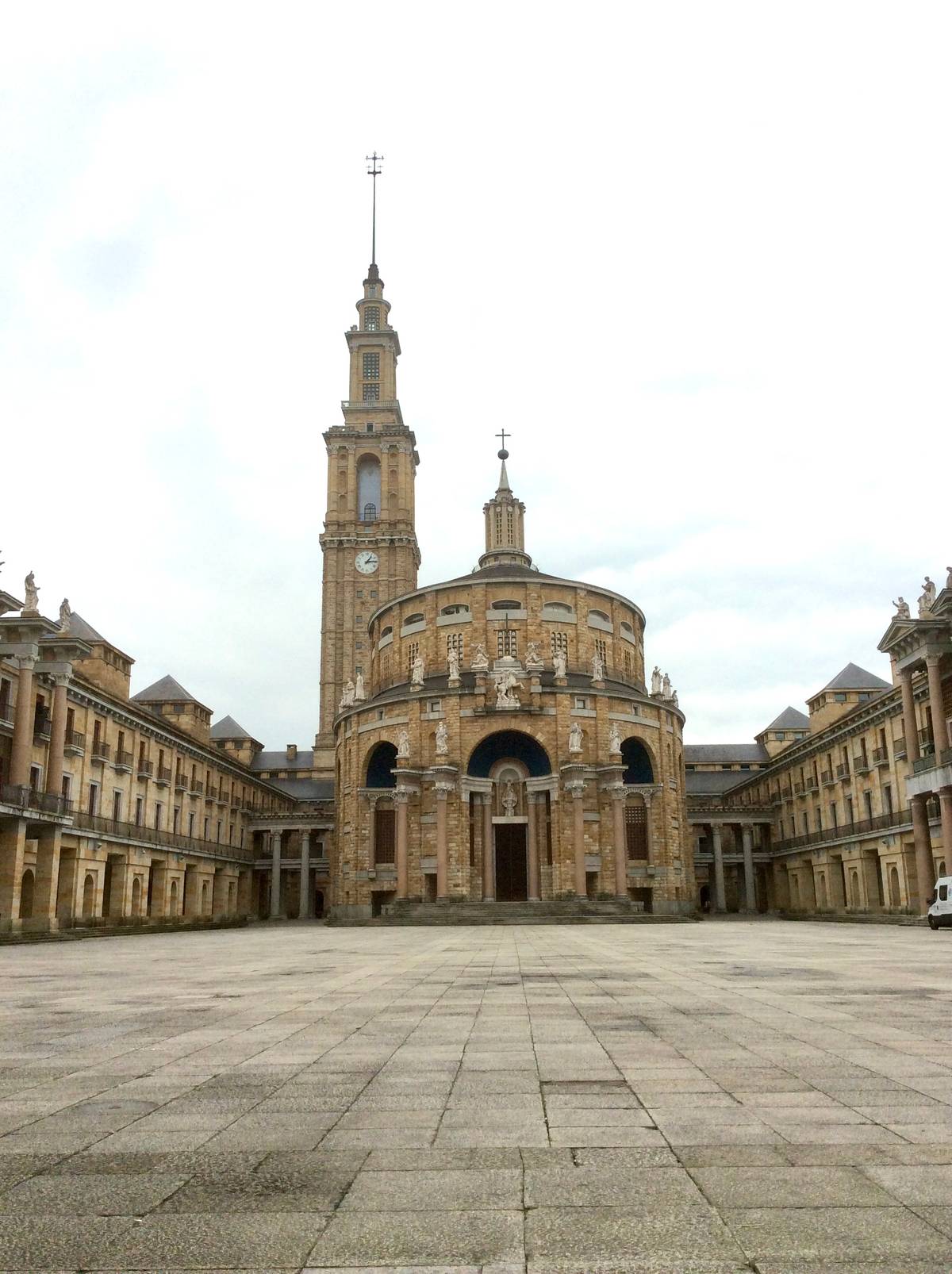
La Plaza, la Iglesia de la Laboral.
The Escuela Superior de Arte Dramático del Principado de Asturias, College of Dramatic Art, which stands out from the rest due to its architectural features, showcases tiles from the Talavera de la Reina, renowned for their ceramic heritage. Each hallway is a visual treat!
Another jewel is the Laboral Centro de Arte y Creación Industrial, or the Laboral Art and Industrial Creation Centre, a multidisciplinary area meant for exchange and relations between art and science, creativity and technology. The public is encouraged to join in on the discussion.
The old convent of the Clarissa nuns, popularly known as the Poor Clares, is today’s Radiotelevisión del Principado de Asturias, or the Principality of Asturias Broadcasting Corporation. Newsrooms, television setups complete with lights and cameras all find their place here. It is reminiscent of the newscasts we always see on television — that’s how professional these look like! This is where broadcast celebrities are born.
The Sociedad de Servicios del Principado de Asturias, otherwise called the Principality of Asturias Service Society building houses a public company which acts as the administration of the Principalidad de Asturias. Here, they engage in rural, agricultural, and environmental development, aquatic and fishing interests, and even cultural and sports activities.
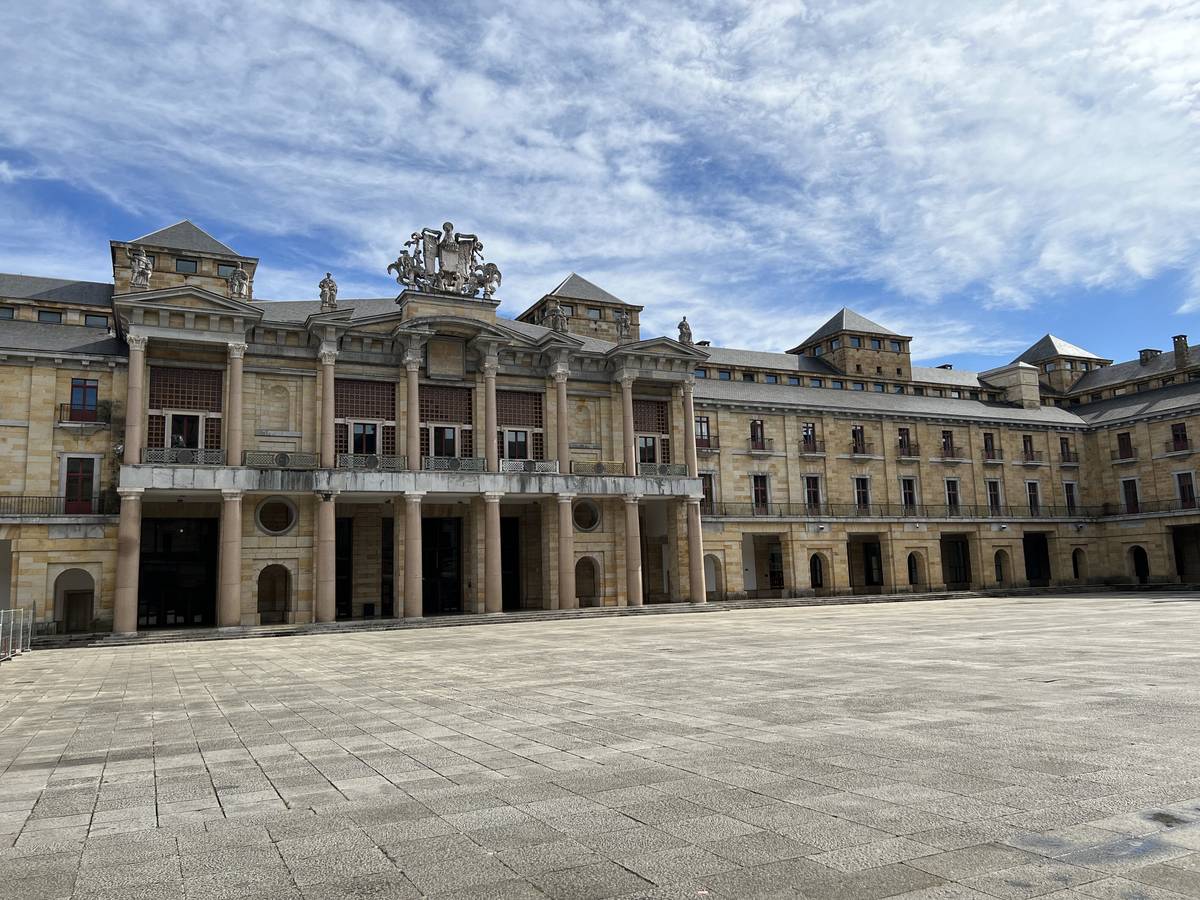
The Laboral faculty buildings.
PHOTOGRAPH BY EDU JARQUE FOR THE DAILY TRIBUNE
And if you think we were done — think again. The Facultad de Comercio, Turismo y Ciencias Sociales “Jovellanos,” or the “Jovellanos” Faculty of Commerce, Tourism and Social Sciences of the University of Oviedo is one of the largest. Within, business science, tourism, public administration, social work, commerce and marketing students call this their second abode.
Meanwhile, the El Conservatorio Profesional de Música y Danza de Gijón, or the Gijón Professional Conservatory of Music and Dance is the latest offering of the complex — where aspiring musicians and dancers are always in non-stop improvement mode, all with the dream for the spotlight to shine on them one day. The dome also hosts three concert halls — ideal for the staged performances for these neophytes.
A highly-guarded locked down Laboratorio de Prototipos, or the Prototype Laboratory is inside the campus! Here, the most brilliant minds gather to create and invent advancements such as mechanical staircases, convenient walkways and even jet bridges for aircrafts.
Another sight was a u-shaped edifice called the Laboral Casa Joven, La Laboral Youth Home, essentially mini-flats in-campus accommodations for students. It likewise offers common areas for study and to conduct meetings.
Let’s not forget the all-important Biblioteca — library to you and me — a vaulted area, which holds thousands of reading materials for research and development — a blessing as books can enhance homework, inspire projects and diversify theses.
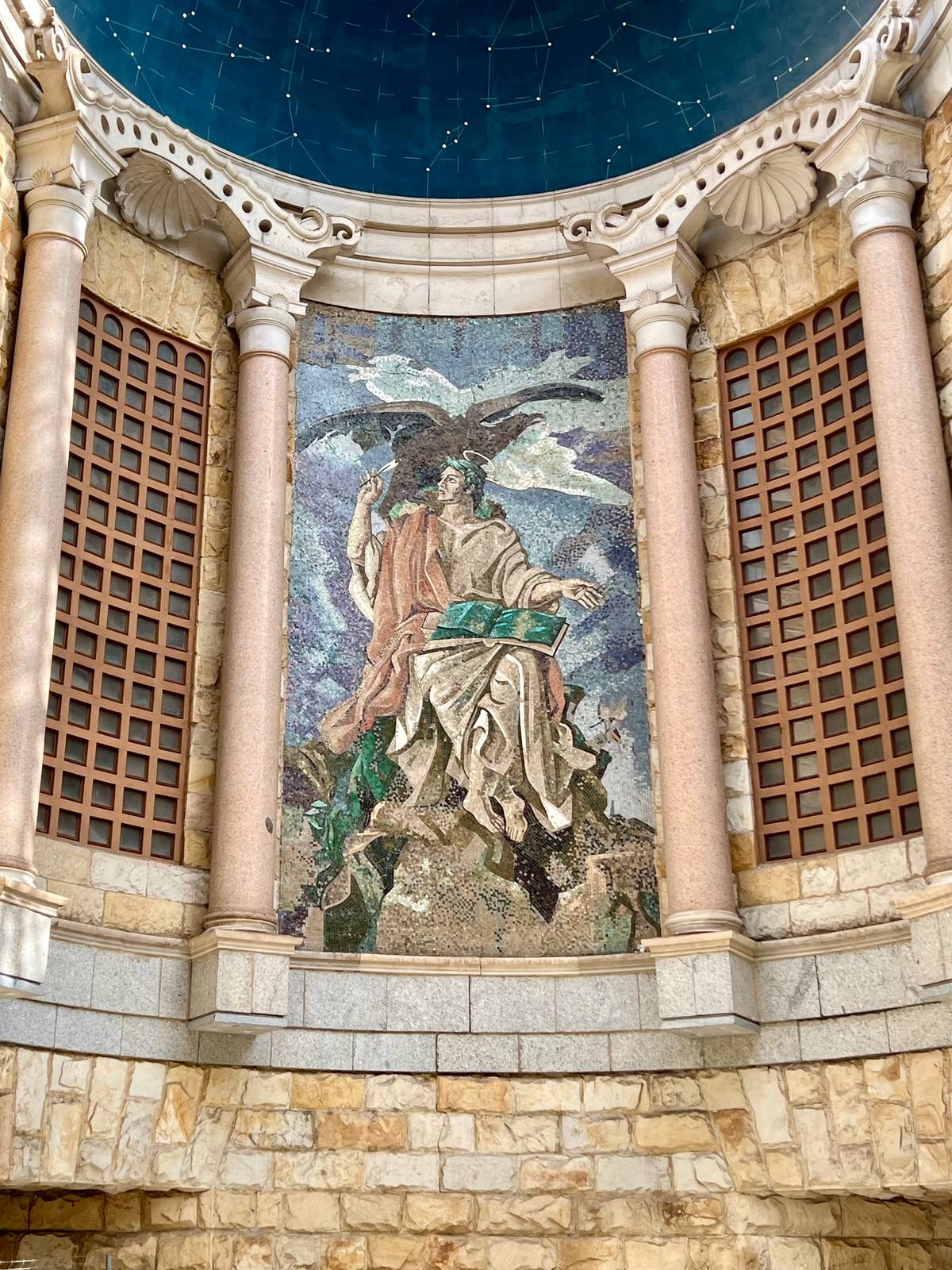
One of the mosaics inside the campus.
The Iglesia de la Laboral, the Laboral Cathedral, an imposing church with a floor of over 800 square meters, is reminiscent of Istanbul’s impressive Hagia Sophia. This Spanish house of prayer remains one of the tallest elliptical domes in all of Europe!
Homeward bound, we took a paseo to the nearby garden, an ideal spot for rest and relaxation, which beckoned us to stay and linger for just a little while more. Designed with two Andalusian-style channels, it is a sustainable project on itself, where recycled water from the nearby aqueducts waters all the plants. Talk about efficiency — we were just astounded.
Despite its shaky start — being abandoned in the 1980s — Laboral Ciudad de la Cultura has since risen up and established itself as a place of importance not only for students, but for the lifeblood of Gijón.
In fact, the university has been listed as a Bien de Interés Cultural heritage site, a distinction bestowed upon valuable gems of culture — tangible or otherwise. Today, there still remains a subset of individuals who campaign it to be classified a UNESCO World Heritage Site — but only time will tell.