
Tribune NextGen: Seunghan's RIIZE and sudden controversy

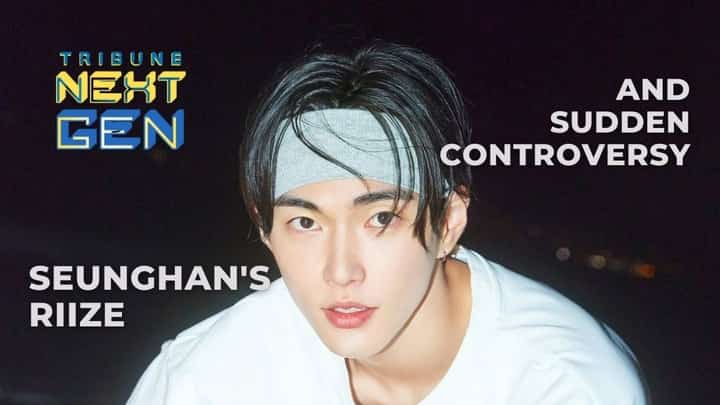
Tribune NextGen is a fresh series from DAILY TRIBUNE dedicated to exploring key issues relevant to Millennials, Gen Z, and Generation Alpha. From cancel culture and artificial intelligence to "adulting" topics like finance and responsible pet ownership, we’re here to cover what matters most to the next generation of Filipinos.
Content Warning: This article contains a discussion of depression and its complications, including suicide.
The K-pop group RIIZE burst onto the scene with their debut album, Get A Guitar, on 4 September, 2023. The record quickly made history, reaching 1.03 million pre-orders — the highest for any debut from agency SM Entertainment. The septet followed it up with a successful single, Talk Saxy, on 27 October.
Despite being in the industry for just over a year, RIIZE has already received significant recognition, winning multiple South-Korea-based awards in 2023 like the MAMA Awards Favorite New Artist, Melon Music Awards Rookie of the Year, Seoul Music Awards Main Award (Bonsang) and Rookie of the Year, The Fact Music Awards Next Leader Award, and the Hanteo Music Award for Next Worldwide Artist.
RIIZE also made a strong impression in Japan, where their first single there, Lucky, dropped on 5 September and reached the top of the Oricon Weekly Single and Billboard Japan Top Single Sales charts.
However, just as RIIZE started gaining widespread recognition, controversies involving its members sparked online discussions that approached a level of scrutiny and harsh criticism that many social media users would label "cancel culture."
What is cancel culture?
Cancel culture refers to the efforts of communities — often on social media — to hold public figures accountable for their past or present actions that are seen as conflicting with societal values. This phenomenon affects celebrities globally, including Filipino stars like SB19, who, despite their growing local and international popularity, have faced public scrutiny over personal relationships, as well as pressure make their opinions on social and political issues known.
Proponents argue that it can be a powerful tool for holding individuals accountable when institutions like corporations or the law fail to do so. They believe it empowers victims, such as those who may have suffered abuse but are too fearful to press charges or report to the police, by bringing attention to alleged wrongdoers and fostering a sense of accountability.
Critics say that cancel culture resembles a modern-day witch-hunt, where online mobs wielding figurative pitchforks target individuals — often internet personalities — for perceived or unproven offenses. They contend that it leads to bullying and punishes people for actions that may be exaggerated or even unfounded.
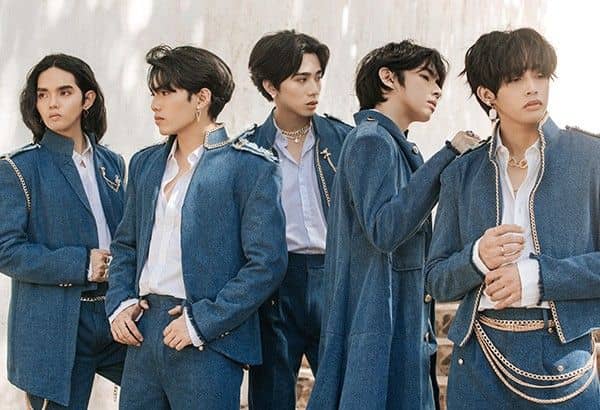
SB19
SB19 on Instagram
Members of SB19 — Pablo, Josh, Stell, Ken, and Justin — have encountered instances where their private lives and beliefs were subject to this brand of intense public interest, highlighting how cancel culture can extend beyond professional conduct into personal matters.
However, the group has managed to address these challenges strategically by releasing timely statements and clarifications when necessary. Their management plays a critical role in addressing controversies and maintaining the group’s reputation.
In the Philippines, while cancel culture does exist, it is often less pervasive than in the Korean pop industry, where fans and media can impose stringent expectations on idols’ personal conduct and image. As both RIIZE and SB19 continue to rise, they remain symbols of the pressures public figures face in balancing personal authenticity with the demands of public life.
Seunghan, a case study in cancel culture
Seunghan, a member of RIIZE, halted his musical activities with the team in 2023 following controversies sparked by online rumors about his private life before his debut. These rumors emerged after years-old photos of him smoking as a minor and kissing his then-partner circulated on the internet. These leaks enraged a segment of fans who believe that members of their favorite musical groups should steer clear of vices and even dating altogether.
This belief pervades from the idea these "idols" are stand-ins for the significant others of fans — that the average supporter of this or that K-pop group may have a shot at love with their "main" if they just met under the right circumstances.
There's nothing wrong with a healthy imagination, but Seunghan would by no means be the Korean or Japanese first pop star to land in hot water and fall victim to cyberbullying over any inkling that his heart may belong to someone other than to one lucky, swooning fan.
SM Entertainment announced on 22 November that Seunghan would step back from group activities, citing his desire to "take time off for his team," as the rumors could be so harmful as to potentially compromise RIIZE’s rise as a rookie group.
Seunghan posted a handwritten apology on Weverse, a fan communication platform, expressing remorse for his past actions.
"I'm really sorry… I know very well that my rash actions in the past have hurt so many people. I'll sincerely reflect on myself and strive harder to become a better person," he wrote.
In a statement, the agency mentioned that they had already identified the source of the leaked photos and assured the public that they would take legal action for defamation, cybercrime, and intimidation.
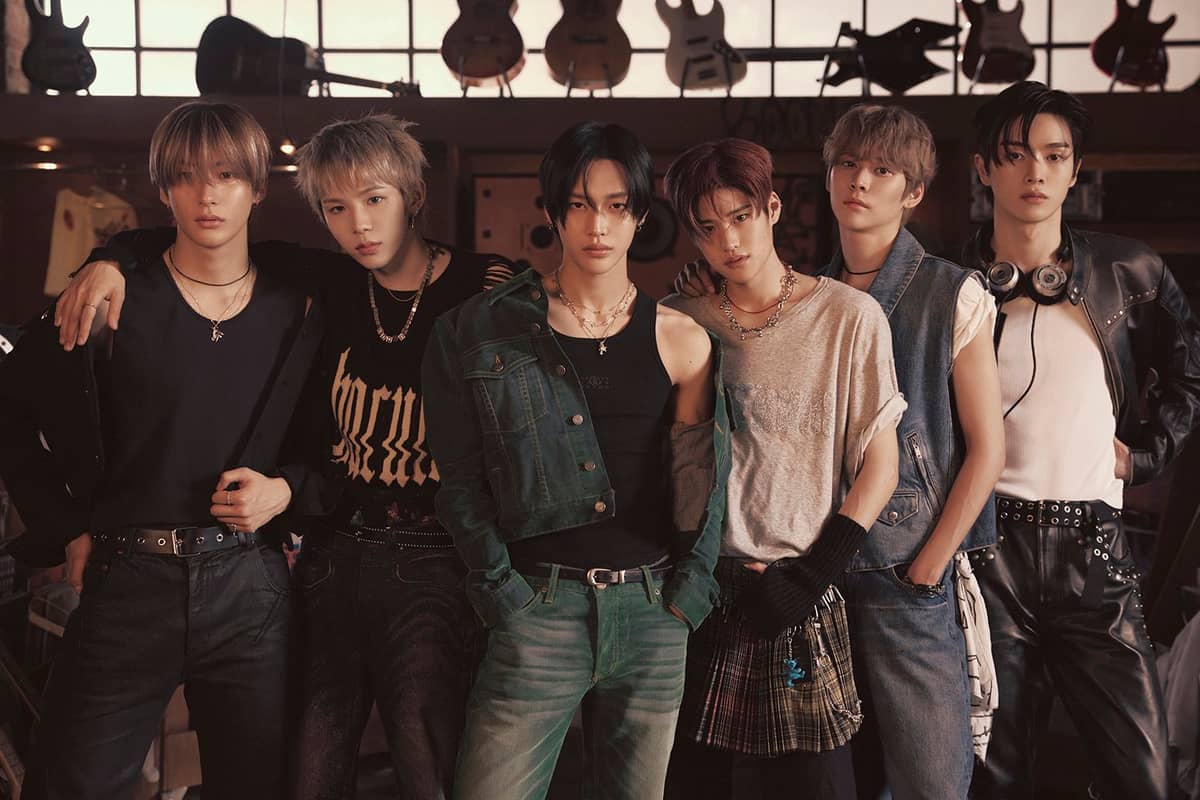
SM Entertainment on X
Since then, RIIZE has continued its activities as a sextet with members Shotaro, Eunseok, Sungchan, Wonbin, Sohee, and Anton.
Fan response: RIIZE is 7
While some fans, collectively known as BRIIZE, were disappointed with Seunghan's past actions, the majority — especially international fans including Filipinos — criticized SM Entertainment for "mistreating" Seunghan. They argued that Seunghan did not deserve to be essentially forced into hiatus for things he did before he was even a public figure. He was — and still is — simply a human being, just like any other, capable of making mistakes.
In an interview with DAILY TRIBUNE, Nikka Lat, a Filipino K-pop fan of 12 years and a supporter of RIIZE since pre-debut, said , "He did not commit a crime, he did not do something disgraceful. Seunghan was just like anyone else— had a relationship and smoked… And that’s because, at the end of the day, he is still human.”
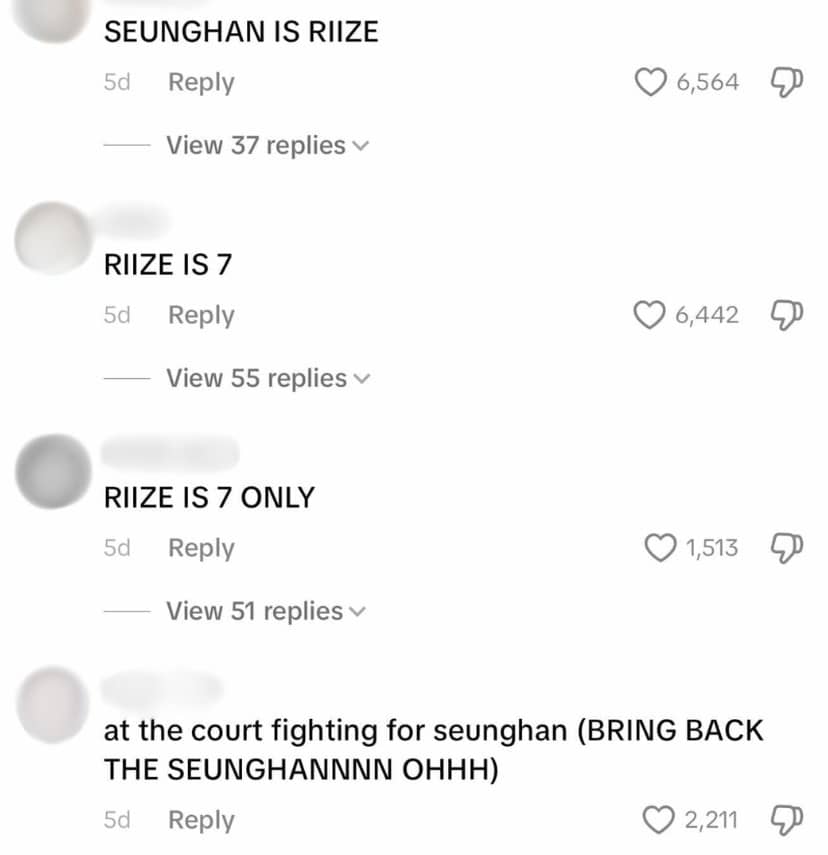
Despite Seunghan’s absence, RIIZE performed in South Korea and abroad, releasing new songs and holding their first-ever fan concert tour. During the 2024 RIIZE Fan-Con Tour event, "RIIZING DAY" in various countries, fans held up banners reading "RIIZE IS 7" and chanted the phrase to call for Seunghan’s return to the group. They sought to remind SM entertainment and more critical fans that Seunghan is the 7th member of the group and as essential to RIIZE's success as any of the others.
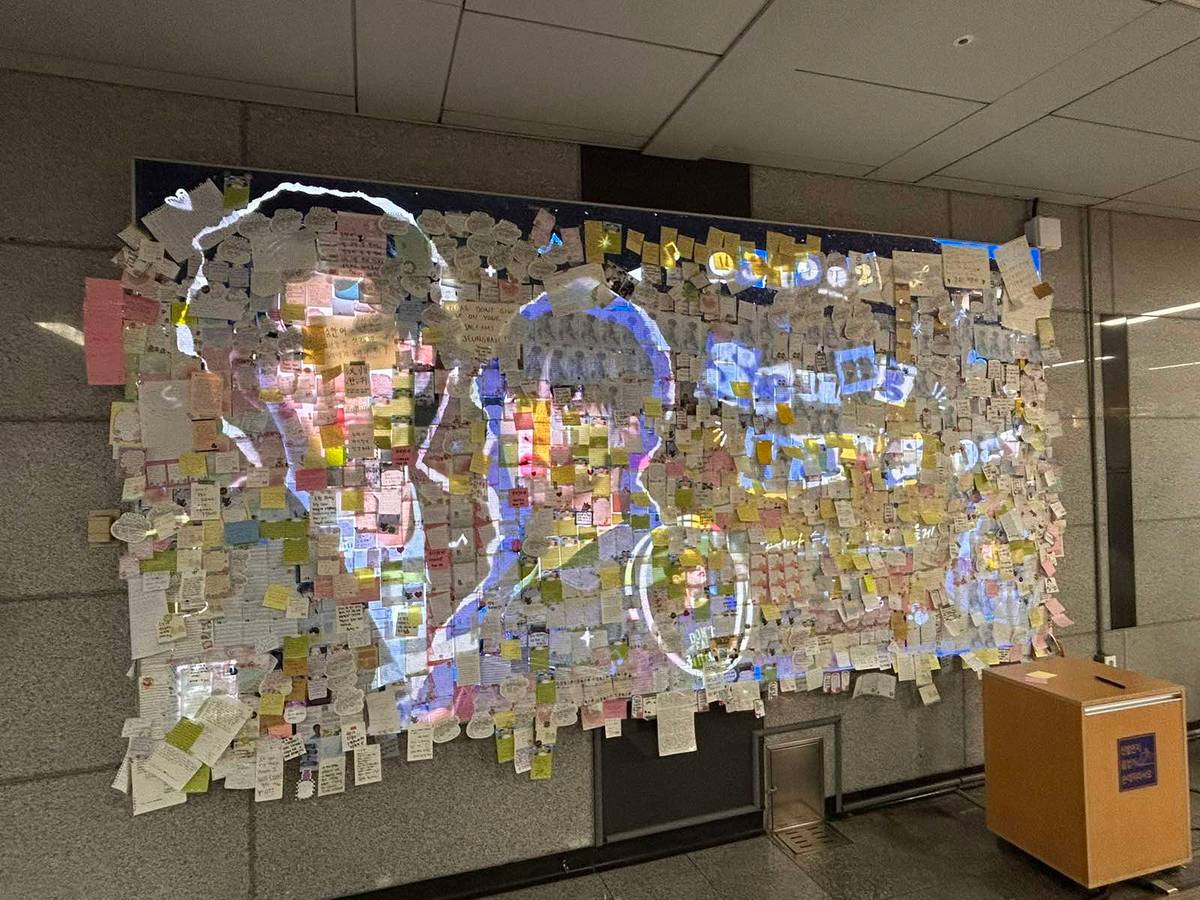
Fans have also written encouraging messages for Seunghan by posting notes on advertisements in train stations, expressing their desire for his comeback.
@undrground_idol on X
Backlash after Seunghan’s brief return
Following a series of events without their exiled member, it was announced that Seunghan would finally return after a 10-month hiatus on 11 October.
The announcement received predictably mixed responses from polarized fan groups. Some fans were thrilled, while others staged boycotts and protests, calling for Seunghan to be permanently removed from the group.
@_jaylice on X
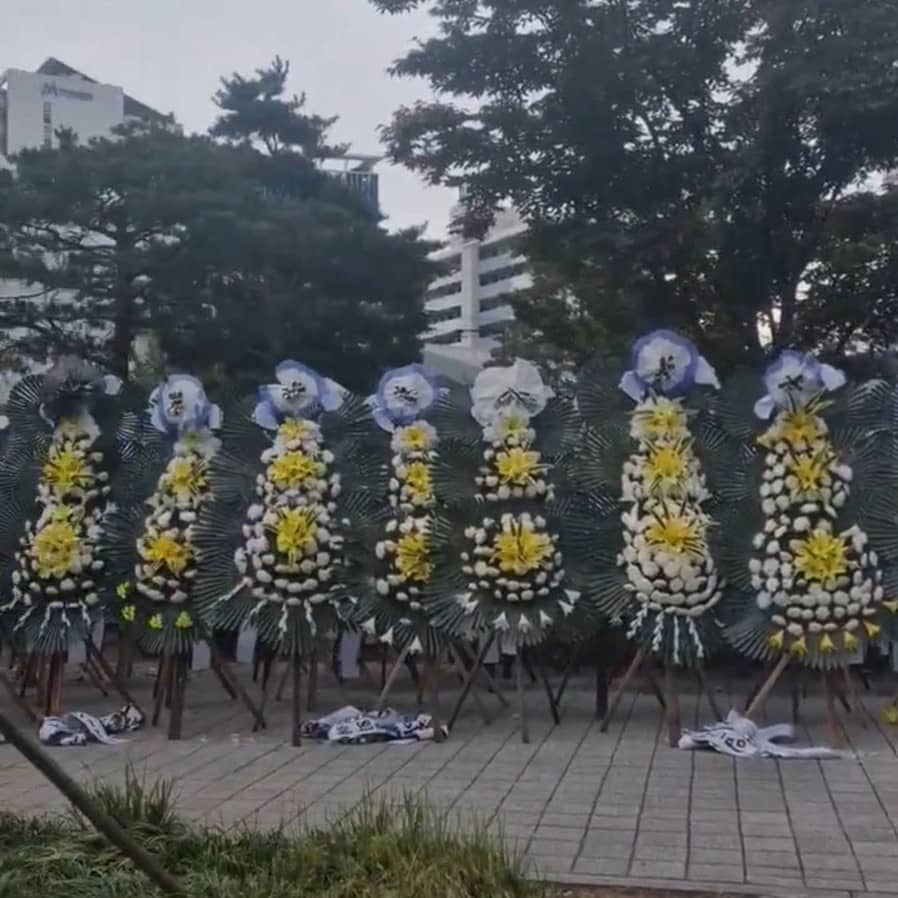
Protests reached a boiling point when a thousand death wreaths, with messages like “RIIZE IS 6” and "Soul of the deceased, rest in peace," were placed outside SM Entertainment’s building, reflecting staunch opposition to Seunghan’s return.
Some BRIIZE on social media claimed that the death wreaths were sent by Seunghan's potential cancelers from Korea. They even posted videos of themselves dancing to RIIZE songs with the wreaths in the background, enjoying themselves while RIIZE and Seunghan experienced distress and uncertainty.
The protests angered international fans like Nikka, who stated, “Knetz [Korean netizens] should stop acting like idols are their dolls who they can control anytime they want. They are not robots who have no feelings.”
Other fans interpreted Wonbin’s Weverse post after the announcement as the members supporting Seunghan’s return, with Wonbin writing, “We’ve had a lot of conversations with the company and Seunghan over a long period of time. I want you to know that all the members thought, thought, and thought about it together.”
Two days later, SM Entertainment reversed its decision, announcing Seunghan’s withdrawal from the group. It would seem that cancel culture had won, punishing a rising start for some harmless photos.
@undrground_idol on X
ALL FOR SEUNGHAN
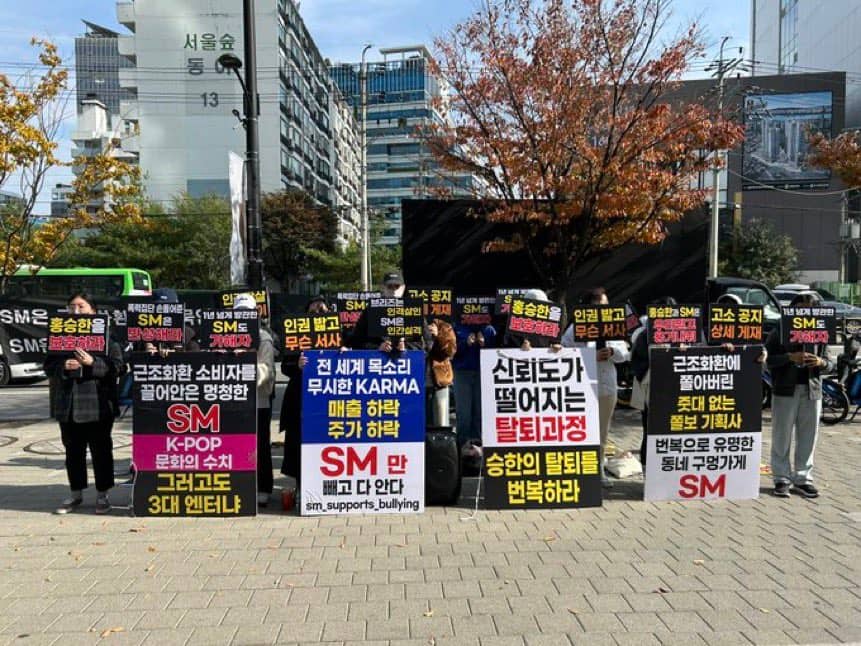
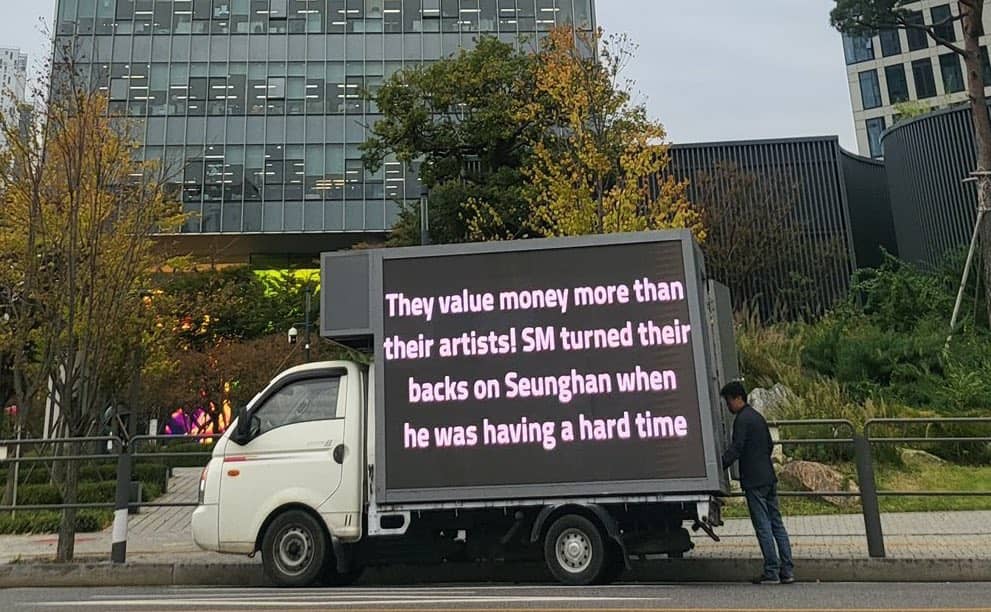
The decision to remove Seunghan prompted the expected immediate backlash from supporters. A majority of BRIIZE were outraged, destroying the protest wreaths and filling Seunghan’s subway support ads with handwritten notes. LED trucks displaying messages of support for Seunghan also appeared in front of SM Entertainment, along with statements condemning the company for allegedly "supporting bullying" by not standing up for their artist.
@wonbinseok on X
Filipino fans, like Nikka and Julius Valenzuela, were quick to rush to Seunghan's support, launching fundraising events to send support trucks, banners, and food to protest in favor of his reinstatement, perhaps illustrating Pinoys know how to stand up in the face of bullying and harassment.
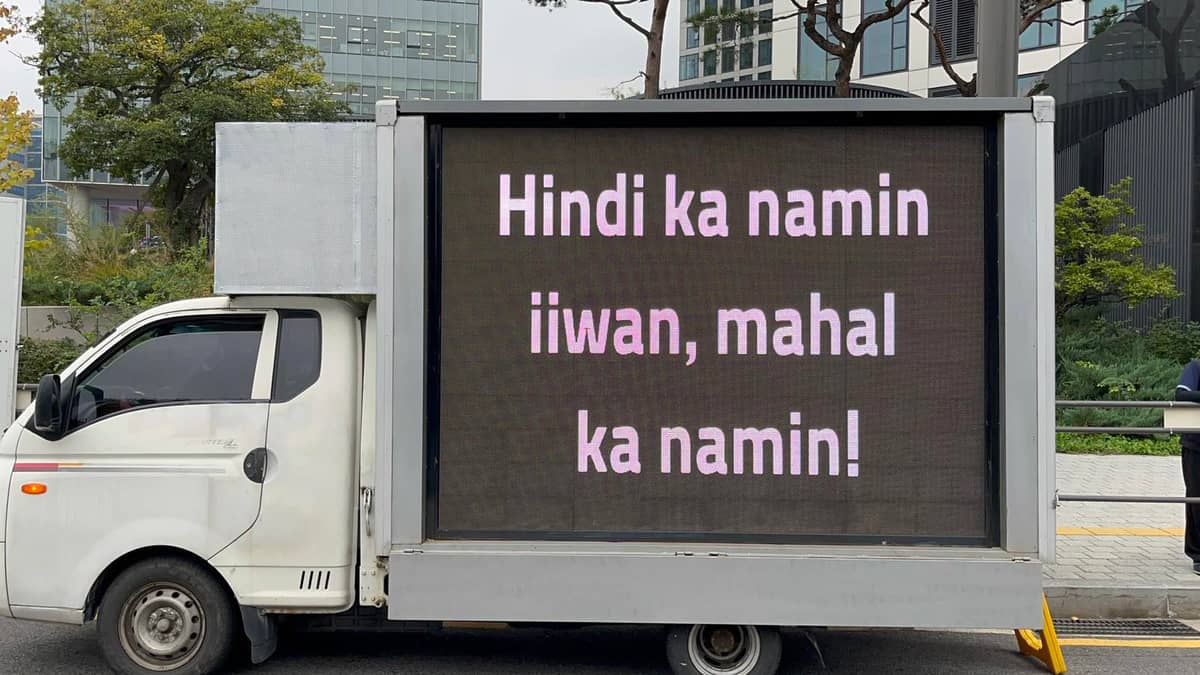
@wonbinseok on X
“In a country where activism is recurring, we have grown to fight against injustices and any inhumane or immoral acts. We cannot stay silent knowing someone was kicked out of the group for the wrong reason,” she added.
Supporters voiced their anger on social media, mourning the squandering of Seunghan's talent and extensive training to become a K-pop idol, all due to images of him smoking and enjoying time with his former girlfriend — typical human behaviors.
Cyberbullying and its consequences
While Seunghan’s case is dominating headlines and causing a close examination of the K-pop industry, he is not the first artist to suffer from mistreatment and cyberbullying, and he would not be the first to experience depression and other mental health concerns because of it. In an industry where fans’ expectations are very high and public attention is intense, K-pop idols often face nonstop criticism that goes beyond their music and targets their personal lives, looks, and choices.
Sulli, a former F(X) member who passed away in 2019, and Jonghyun from SHINee, who died in 2017, are both known to have struggled with depression and reportedly took their own lives, although the official causes of their deaths were not disclosed.
Therefore, for Julius Valenzuela, who's been a K-pop fan for 10 years, it seems fans haven’t learned their lessons despite this sad and tragic history in the industry which is supposed to be centered on music and entertainment.
In an interview, he said that K-pop agencies play a crucial role in what’s ahead of its artists, citing the case of Hanbin, the former leader of K-pop group IKON, who received death threats and hurtful messages due to his past controversies involving drugs. But, rather than becoming another victim of "stan" (diehard fan) cancellation, he is currently thriving as a solo artist after transferring to another agency, which has possibly provided him with a stronger support system.
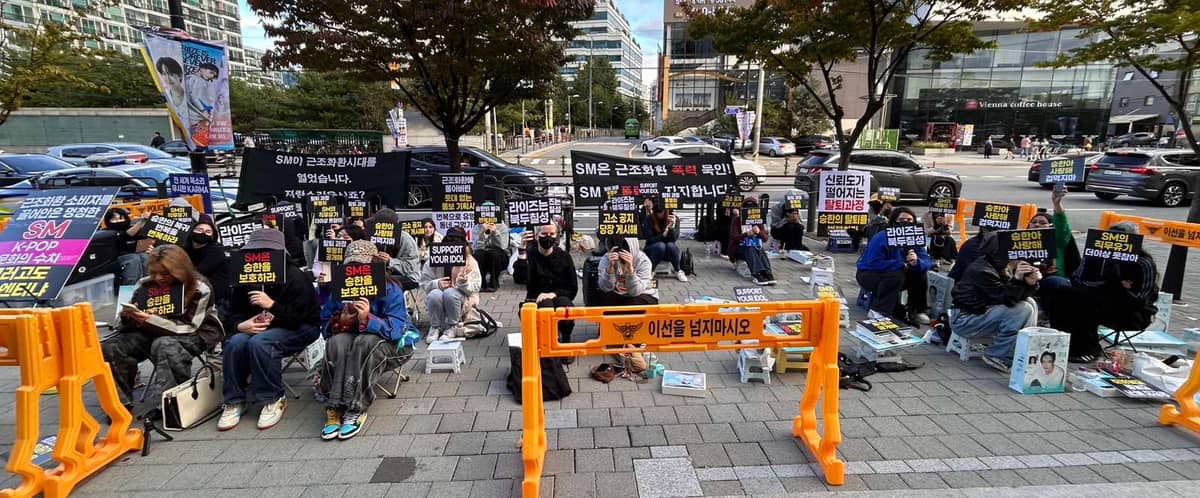
@undrground_idol on X
Continuous call for Seunghan’s return
Over 300,000 supporters signed an online petition calling for Seunghan's return, and approximately 500,000 fans unfollowed RIIZE on social media as a form of protest. More than 200 K-pop stores globally participated in this boycott effort after his exit.
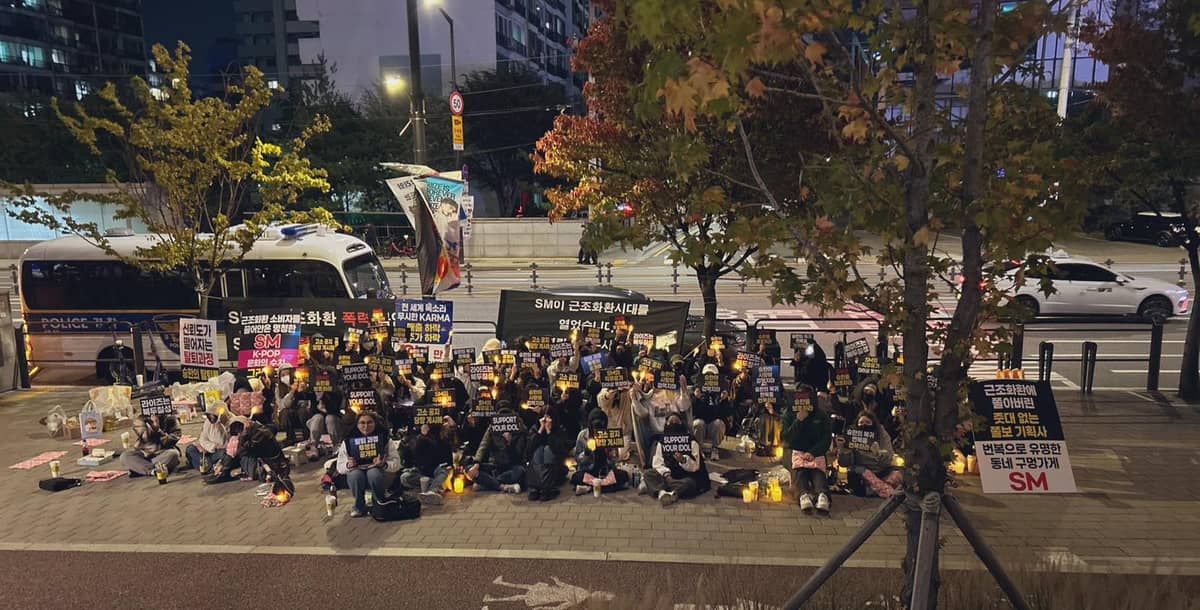
@undrground_idol on X
As of now, protests continue in front of SM Entertainment's building, with fans — sometimes in the pouring rain — calling for Seunghan’s return. Supporters use hashtags like #JUSTICE_FOR_SEUNGHAN, #UnfairExit_Seunghan, #SMSupportsBullying, and #ProtectHumanRightsOfSMArtists in their posts to amplify their demands.
“The longer this situation goes unnoticed by the company, our voices will just keep on getting stronger and our determination to never give up continues,” Nikka said.
As cancel culture continues to gain prominence in the entertainment industry, protests can serve as a hopeful signal, reflecting society's desire to challenge toxic norms and dismantle stigmas surrounding public figures.
In the Philippines, for instance, we see a shift toward fostering constructive conversations, a contrast to the Western-style cancel culture that often leans toward social shaming over open dialogue.
The situation with Seunghan and other celebrities affected by cancel culture reminds us that cultural change can be inclusive and transformative. Rather than erasing or vilifying, it’s possible to advocate for accountability and growth, calling for each of us to play a role in unlearning and challenging the normalization of cancel culture.
It remains to be seen whether Seunghan will return to RIIZE, or whether the #RIIZEis7 movement is just a dream for another lifetime.