
Japan funding builds classrooms, town center
‘Our economic development fund is only 20 percent of our general fund, and we don’t use it solely for education but for all other economic development projects.’
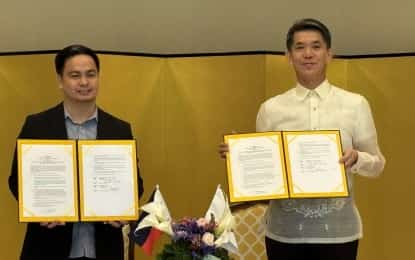
The Japanese government recently granted a total of P12.8 million to the municipal government of Pura in Tarlac, and Bidlisiw Foundation Inc. for the renovation of classrooms and a community center.
Japanese Ambassador to the Philippines Endo Kazuya signed the grant contracts for the two projects under the Grant Assistance for Grass-Roots Human Security Projects during a ceremony at Forbes Park, Makati City. The event was attended by Education Secretary Sonny Angara.
The Japanese government gave P4.5 million to the Municipality of Pura to repair six classrooms at the one-story Maungib Elementary School. The wooden building has been damaged by termites.
Pura Mayor John Paul Balmores expressed gratitude for the foreign aid as government funds remain inadequate, even after the higher allocation to the local government units (LGUs) from the national tax revenue in compliance with the Mandanas Ruling.
“Our economic development fund is only 20 percent of our general fund, and we don’t use it solely for education but for all other economic development projects. The Japanese grant is a big help,” he said.
Balmores added LGUs’ resources are still limited as they now deal with more socioeconomic projects, including agriculture and health, under the Mandanas Ruling. “That’s why we’re forced to build schools only piecemeal,” he said.
National struggle
Angara hopes for more educational funding from various sources, such as Official Development Assistance (ODA) from foreign governments and multilateral lenders, and private firms as the country lacks over 150,000 classrooms amid its growing student population.
“We found that education is down at eight in the priority list for funding through ODA and only 1 percent of the total. The bulk or 76 percent goes to physical infrastructure,” he said.