
Future Filipino architects immerse in Barcelona
The three-week summer workshop spurred the delegates to unravel the historical change in architecture and art of the 20th-century Barcelona.


A group of architecture students from the De La Salle-College of Saint Benilde’s School of Environment and Design (SED) recently participated in the 13th edition of La Salle-URL Architecture Workshop in Barcelona, Spain.
They were accompanied by two of their mentors, architects Noel Nicolas and Ramon Bizares, alongside six alumni.
The three-week summer workshop spurred the delegates to unravel the historical change in architecture and art of the 20th-century Barcelona.
The program involved Catalan modernism, an artistic movement that seamlessly blends tradition with innovation.
Reflecting the identity and culture of this Spanish region, the distinctive architectural style is characterized by nature-inspired elements, organic shapes, curved lines, mosaics, and intricate details. Renowned architect Antoni Gaudí, famed for his masterpiece Sagrada Família, is a prominent figure of this approach.
The immersion included a guided tour around noteworthy city landmarks, awe-inspiring buildings, and urban spaces that highlight the city’s historical significance and architectural design.
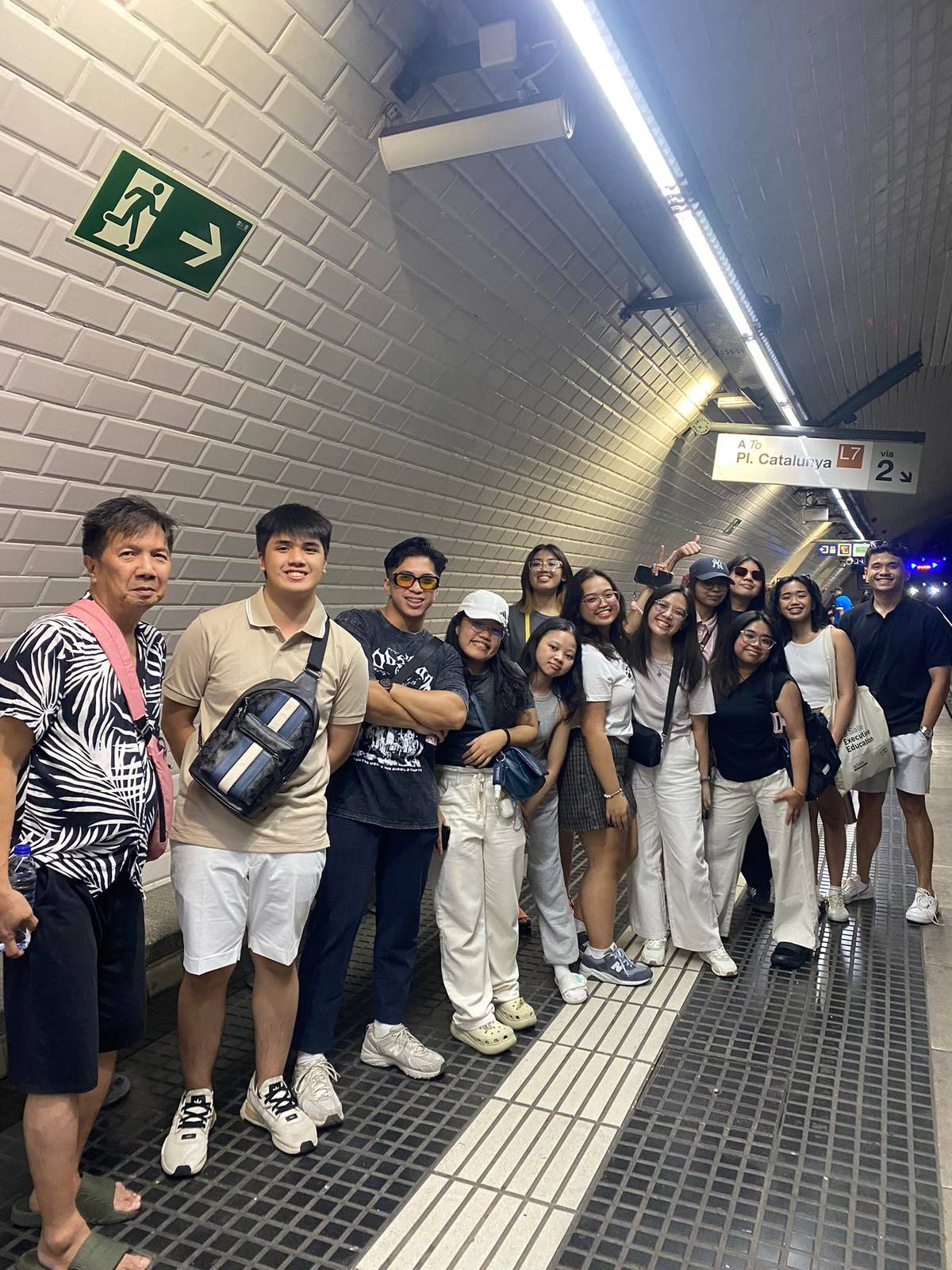
Journey around Barcelona.
They were also expected to discover more about the city’s urban and architectural development, as well as comprehend traditional architectural solutions of conceptual and formal quality based on the site, climate, material and environment.
Palau Güell, one of the world’s first Art Nouveau-style buildings and a designated UNESCO World Heritage Site, was part of the itinerary. The palace was Gaudí’s first major work as a commission from his patron Industrial Revolution entrepreneur Eusebi Güell.
Through the master classes offered in the program, the learners had the chance to polish their design skills. In-depth presentations were also included to train them in communicating their ideas efficiently and articulating important design decisions.
The group applied their theoretical knowledge in a practical project through the signaling design activity. It was aimed to make them realize the importance of signage in effective communication in public architectural environments.
To facilitate the learning of the future architects, a dedicated design studio was used with the supervision of faculty members.
The teaching team is composed of an eclectic mix of experts in the field, such as architects Pedro Garcia, Lorenzo Kárász, Montserrat Villaverde, Adrià Llorens, Joan Olona Casas and Ramon Espelt Huerta.