
'HANGEUL' in the modern era
The name, which translates to ‘a unique script with no equal in the world,’ was invented in 1443 by King Sejong the Great, the fourth monarch of the Joseon Dynasty.

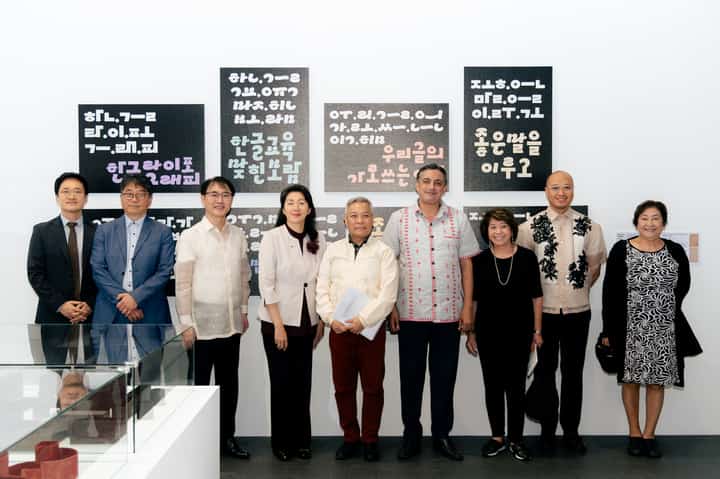
Kim Myeongjin, director, Korean Cultural Center in the Philippines; Kim Il Hwan, director, National Hangeul Museum; Korean Ambassador to the Philippines Lee Sang Hwa; Son Ji Ae, Ambassador for Cultural Cooperation, Ministry of Foreign Affairs; Eric Zerrudo, executive director, National Commission for Culture and the Arts; Jeremy Barns, director-general, National Museum of the Philippines; Tina Colayco, president, The Metropolitan Museum of Manila; Jorell Legaspi, deputy-general, National Museum of the Philippines; and Atty. Elba Cruz, chief curator, Manila Clock Tower.
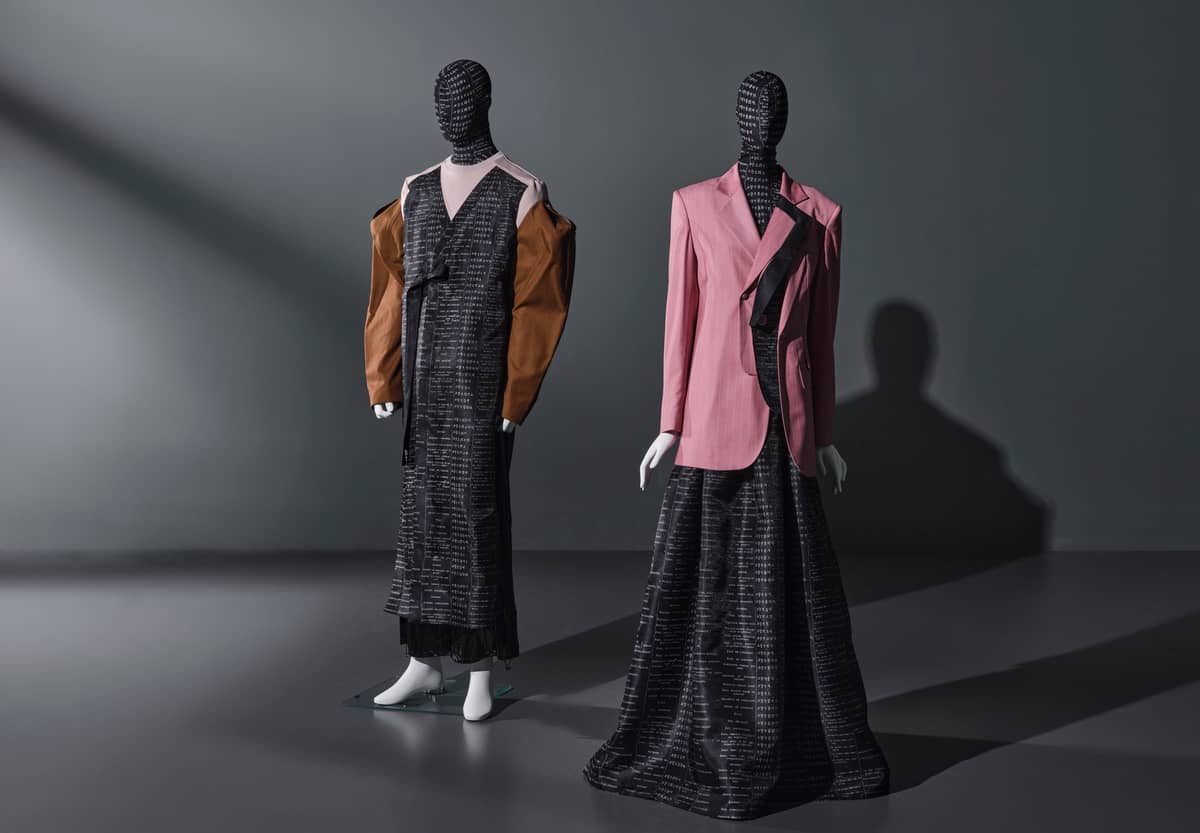
THE interpretation of Hangeul through fashion. ‘Strangeness, Novelty, and Connection’ by Lee Cheong-cheong, 2022.
Hangeul, the Korean phonetic alphabet, is considered the greatest cultural heritage of the nation.
The name, which translates to “a unique script with no equal in the world,” was invented in 1443 by King Sejong the Great, the fourth monarch of the Joseon Dynasty.
According to kccuk.org.uk, there is evidence suggesting that the King’s advisers were opposed to replacing Chinese characters with a new phonetic script. However, King Sejong the Great was determined to create a comprehensive alphabet for the Korean people.
King Sejong the Great, along with the scholars of the Hall of Worthies (Jiphyeonjeon), wrote Hunminjeongeum, the manuscript that formally introduced Hangeul to the world.
Among the 28 characters that make up Hunminjeongeum, also the original name of Hangeul, five are basic consonants: ㄱ, ㄴ, ㅁ, ㅅ, ㅇ. Three are basic vowels: ㆍ, ㅡ, ㅣ. The remaining characters are created by adding strokes or by combining them.
The five basic consonants were designed based on the shape of the human vocal organs. The letter ㄱ is modeled after the shape of the tongue blocking the throat. The letter ㄴ is shaped after the tongue touching the upper gums. The letter ㅁ reflects the shape of the mouth or lips. The letter ㅅ is modeled after the shape of the teeth, and the letter ㅇ is based on the shape of the throat.
By adding strokes to these five basic consonant characters depending on the intensity of the sound, a total of 17 consonant characters were created.
The three basic vowels, meanwhile, were created based on the shapes representing heaven (ㆍ), earth (ㅡ), and human (ㅣ). 11 vowel characters were made by combining these basic vowels.
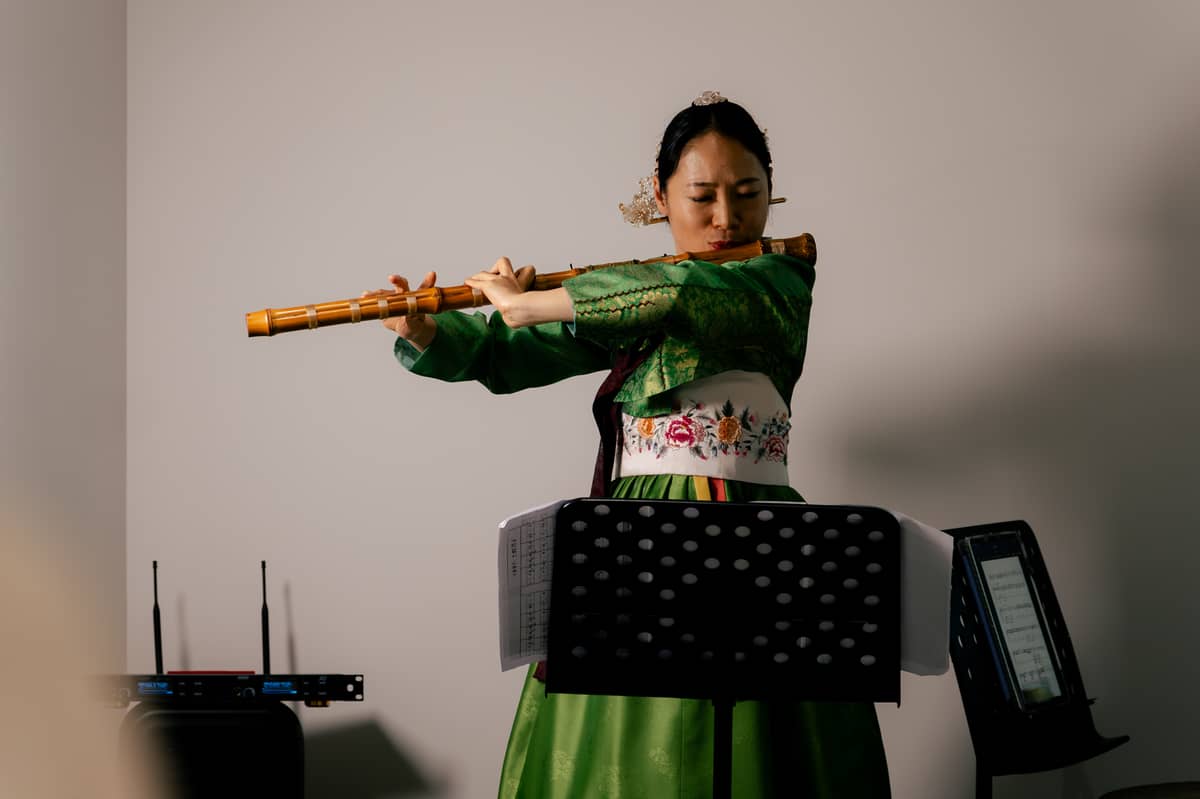
Special performance using daegeum, a Korean large bamboo flute.
PHOTOGRAPHS COURTESY OF THE KOREAN CULTURAL CENTER OF THE PHILIPPINES
Hangeul-themed exhibit
The National Hangeul Museum, in partnership with the Korean Cultural Center in the Philippines, is holding an exhibition titled Hangeul Experiment Project — Reinterpreting Hangeul in the Modern Era until 28 February 2025.
“This event will be a meaningful opportunity for cultural exchange between Korea and the Philippines, and we will lead efforts to spread the value of Hangeul and enhance exchanges through written culture,” Kim Il Hwan, director of the National Hangeul Museum, said.
This exhibition is part of the National Hangeul Museum’s international touring exhibition, organized in collaboration with the Ministry of Culture, Sports and Tourism’s “Overseas Cultural Centers Touring Program.” It reconfigures the fourth edition of the Hangeul Experiment Project, titled Reinterpreting Hangeul in the Modern Era, which was previously held at the National Hangeul Museum in Korea.
In a statement by the KCC in Manila, the Hangeul Experiment Project is an initiative by the National Hangeul Museum to highlight the global value of Hangeul by collaborating with artists from various fields to present Hangeul as both artistic and industrial content.
Hangeul Experiment Project
— Reinterpreting Hangeul in the Modern Era will feature key materials such as Ahakpyeon, Han-eo Munjeon, and Han-Yeong Jajeon which reflect the challenges of integrating and arranging Western languages and scripts introduced to Joseon after the opening of the ports.
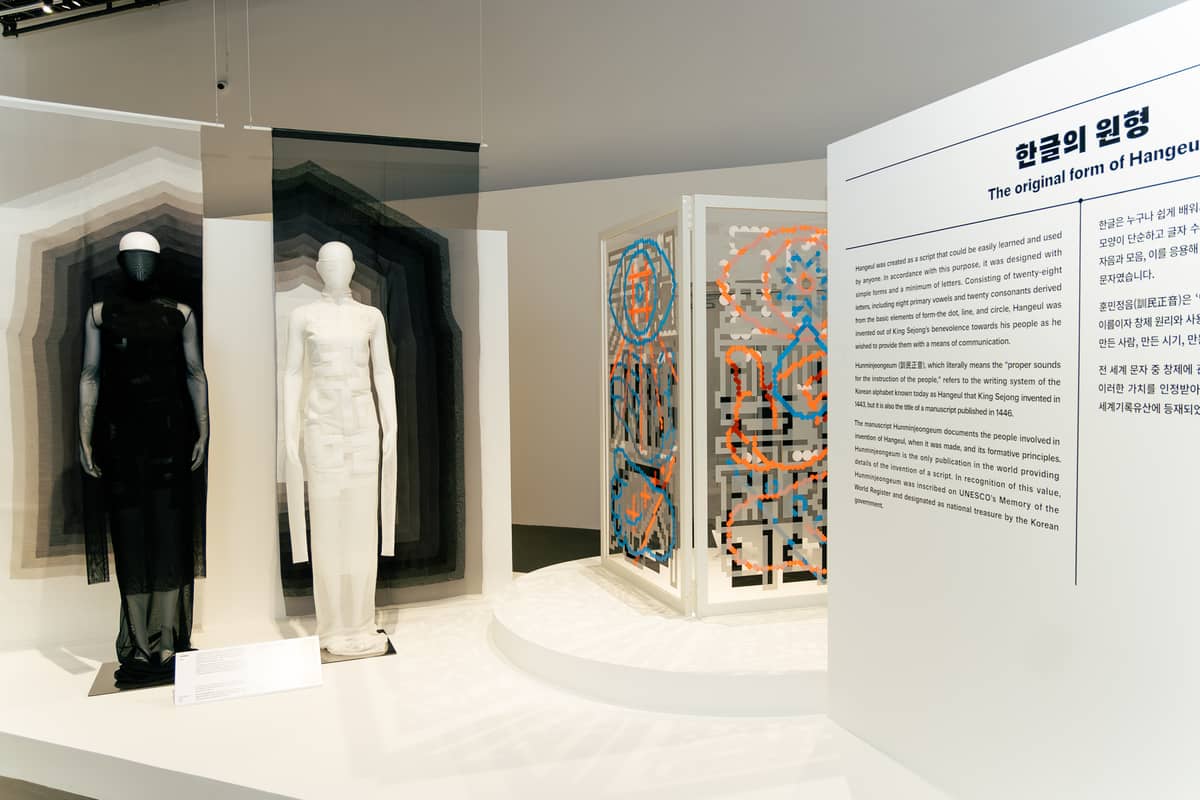
A total of 11 artworks will be displayed, showcasing graphic design, furniture, crafts and fashion from an artistic perspective on the evolution and experimental nature of modern Hangeul.
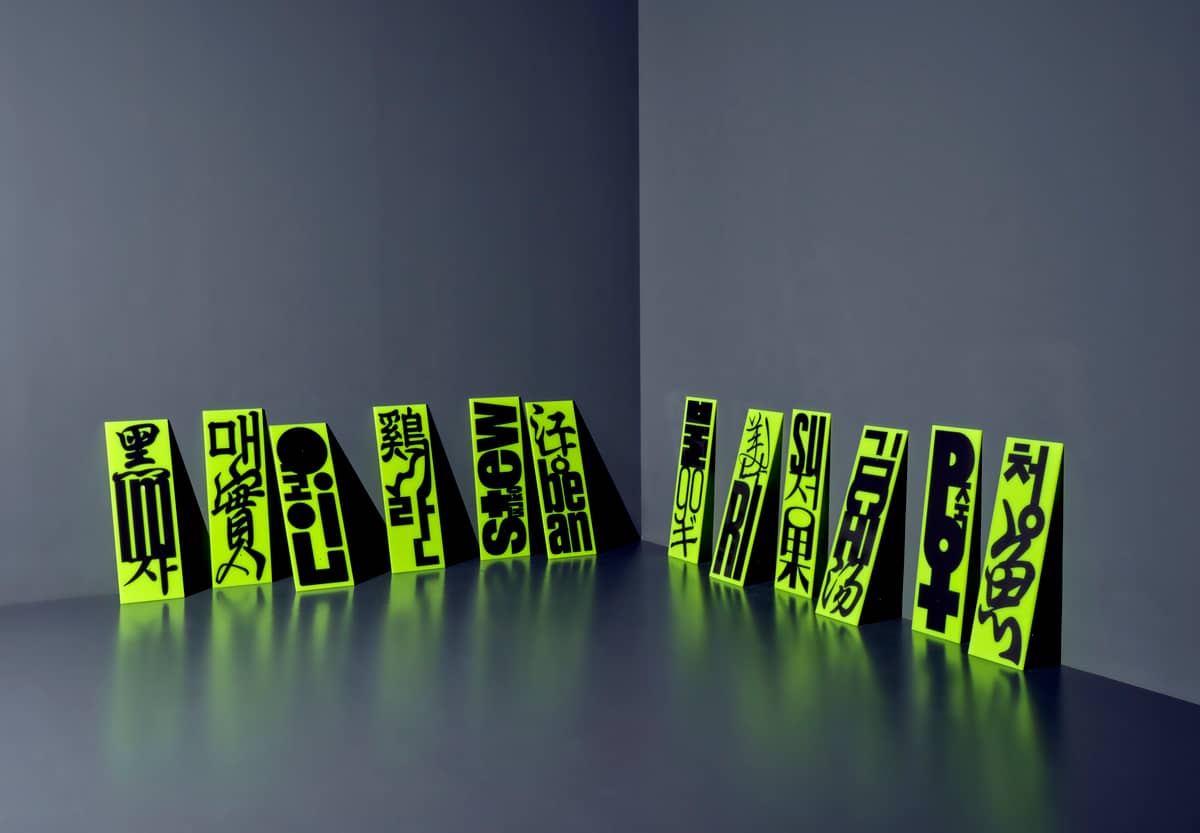
AN artistic perspective on Hangeul. ‘ME뉴판’ by Yoo Hyun Sun, 2022.
A total of 11 artworks will be displayed, showcasing graphic design, furniture, crafts, and fashion from an artistic perspective on the evolution and experimental nature of modern Hangeul.
Kim Myeongjin, director of the Korean Cultural Center in the Philippines, noted “In celebration of the 75th anniversary of diplomatic relations between Korea and the Philippines, this exhibition is expected to offer a special chapter in cultural exchange between our two countries through language.”
KCC in the Philippines was established in 2011 to support active cultural exchanges between Korea and the Philippines. The center has been running annual Korean language teacher training programs for local educators to enhance the presence of the Korean language and Hangeul in the Philippines.