
Justice Singh champions religious freedom
‘By respecting the beliefs of all religious communities, whether they belong to the majority or minority, the law creates an environment of tolerance, mutual respect and dialogue’
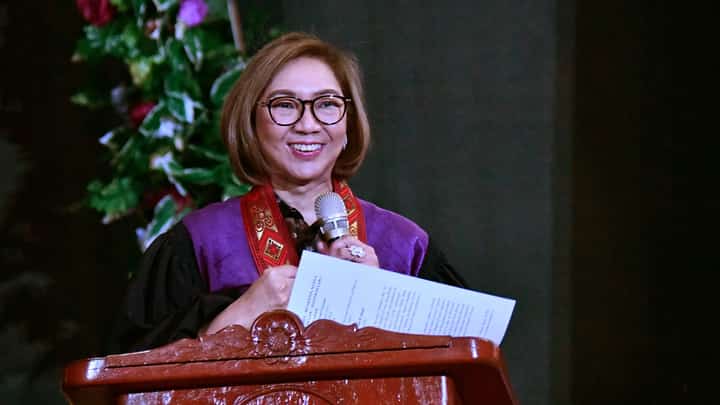
The Philippines, under its Constitution and laws, recognizes the right of religious groups to practice their faith without interference, as well as the equal right to practice no religion at all.
This was highlighted by Supreme Court Associate Justice Maria Filomena D. Singh during the recent 31st International Law and Religion Symposium hosted by the International Center for Law and Religion Studies at Brigham Young University in Provo, Utah.
Justice Singh said the very essence of religious freedom in the Philippines lies in creating an inclusive society where religious differences are celebrated rather than feared and where the State plays a neutral role in ensuring that no group is marginalized based on their beliefs.
During the symposium, Sing shared that “while the Philippines is predominantly a Roman Catholic nation, there is a rich diversity of religious beliefs, including Islam and Christian denominations.”
She pointed out that religious freedom in the Philippines is more than just a constitutional right and must be recognized as a cornerstone for peace-building in a diverse society.
“By respecting the beliefs of all religious communities, whether they belong to the majority or minority, the law creates an environment of tolerance, mutual respect, and dialogue. The various religions in the Philippines — whether Catholic, Muslim, Protestant, Indigenous, or otherwise — are all given space to thrive without fear of discrimination or coercion,” she stressed.
Justice Singh “emphasized that the Philippine Constitution envisions benevolent neutrality through the Non-Establishment Clause and the Freedom of Exercise Clause.”