One more amazing find was Salvador Dali’s rendition of Miren que grabes! (Look how solemn they are!, 1799), with two beasts riding what seem to be donkeys, and Devota profesion (Devout profession, 1799), which depicted a man seemingly forced to read a grimoire.
The image was originally accompanied by a haunting caption which went “Will you swear to obey and respect your masters and superiors, to sweep the garrets, to spin tow, to ring bells, to howl, to yell, to fly, to cook, to grease, to suck, to back, to blow, to fry, everything whatever time you are ordered to?” “I swear.” “Well then, my girl, you are now a witch. Congratulations.”
Other double features included Goya’s Por que? (But why? 1810-1815) and Jake Chapman’s The Unwellness of Wellbeinglessness (2024), which depicted a man being gagged and bound by three officers.
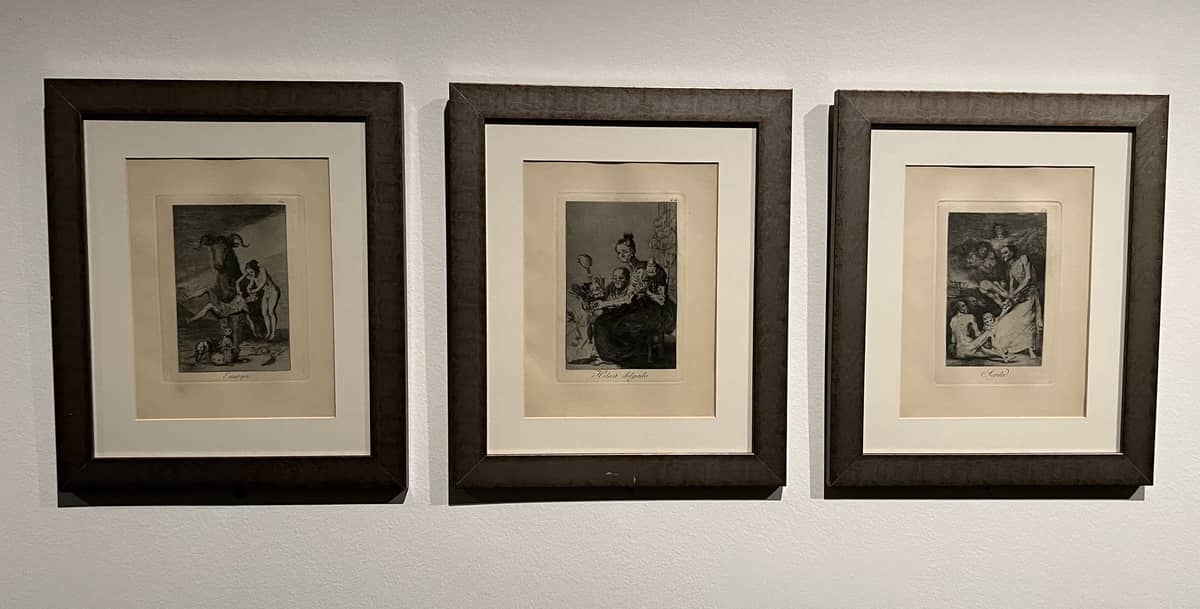
Three sketches entitled Ensayos (Trials, 1799), Hilan delgado (They spin finely, 1799), and Sopla (Blow, 1799) are displayed in quick succession. The first dealt with the fine line between humans and witches and may be a subtle hint on the atrocities of the Inquisition, while the second depicted monsters sacrificing children to the devil, and the third focused on young boys exposed to the obscenities of old men.
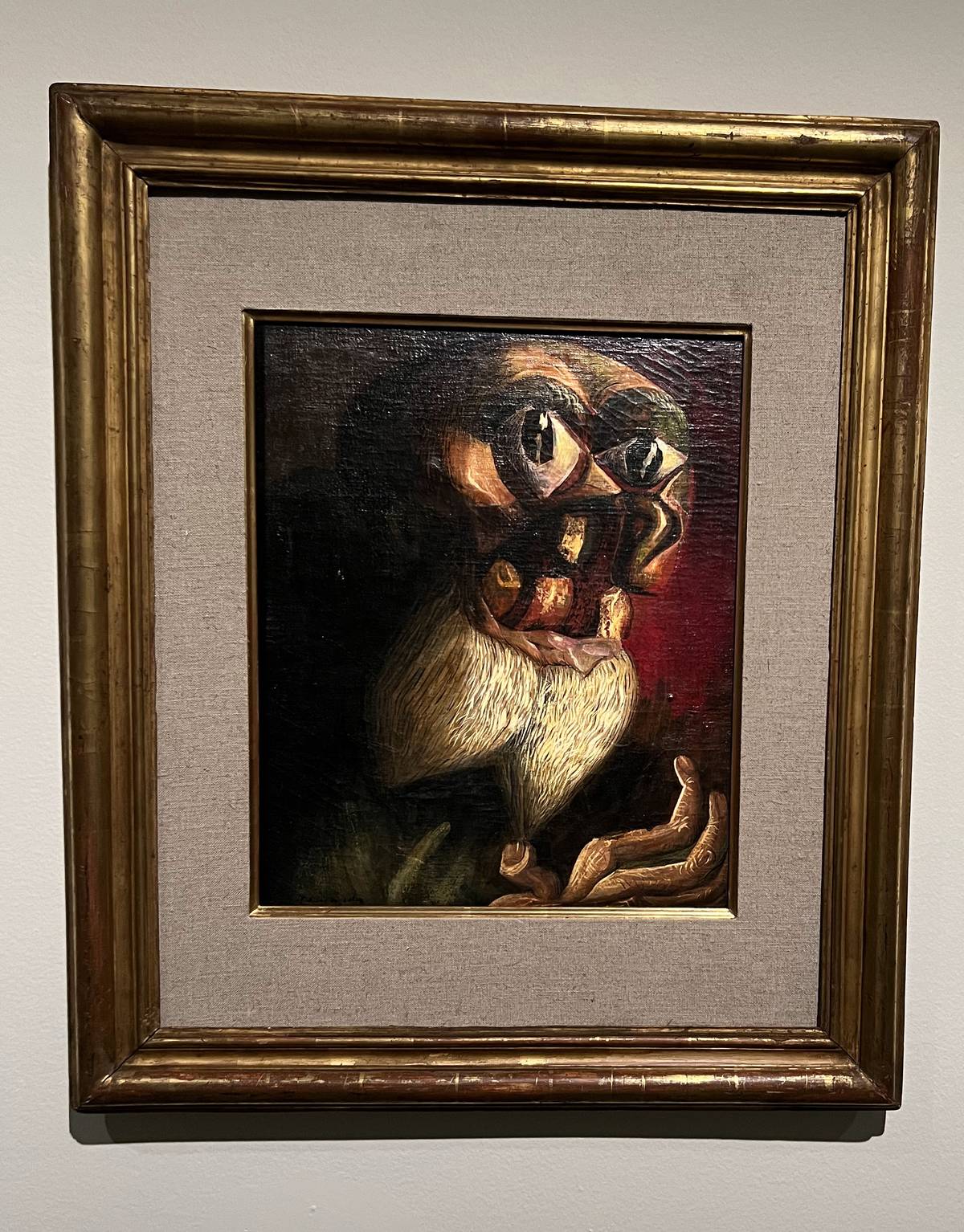
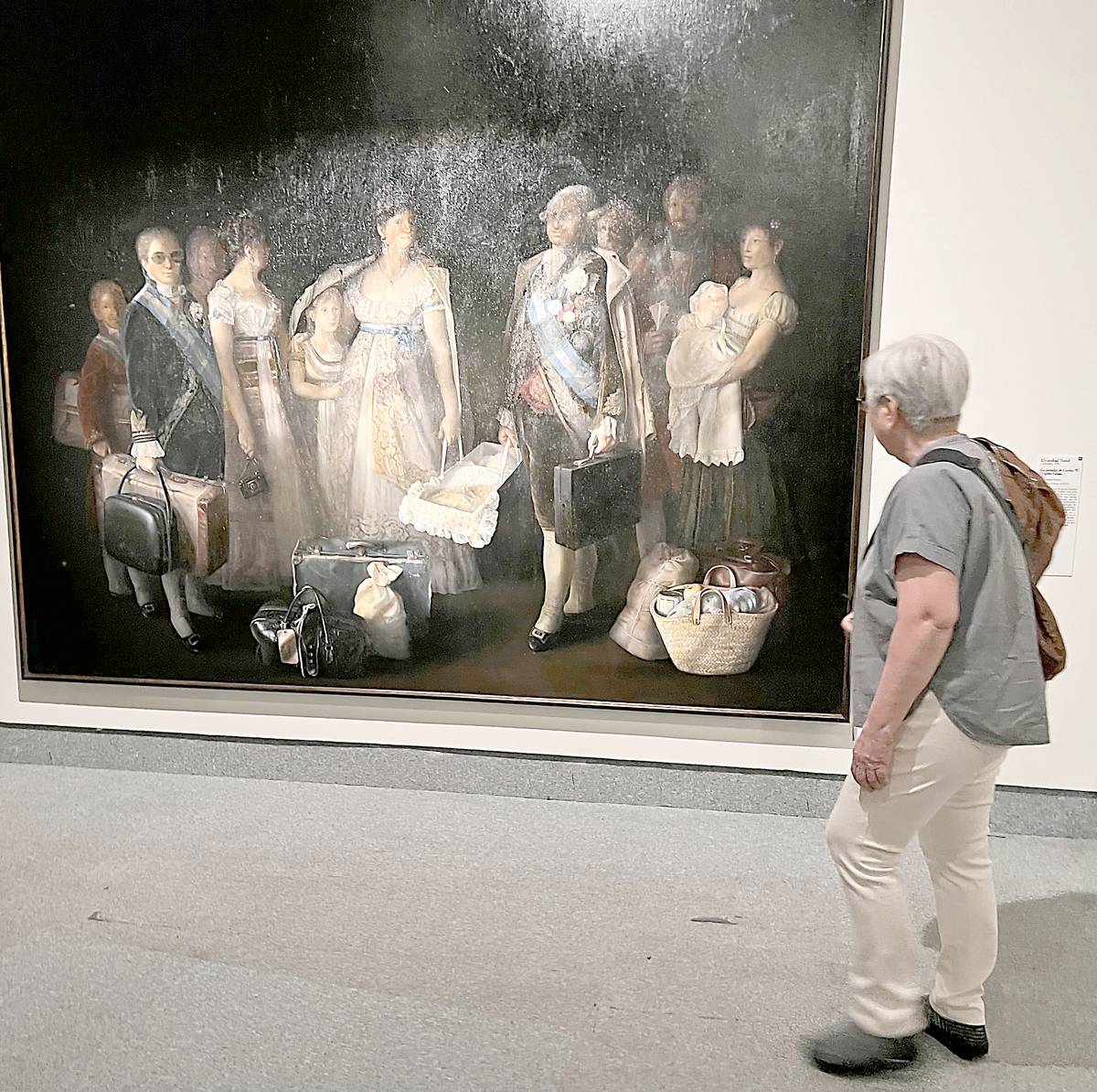
Standalone yet Goya-influenced paintings encompassed a founder of the Abstraction-Creation movement Luis Fernández’s Cabeza grotesca (Tête grotesque) (Grotesque head, 1941), which recalled the monsters in Los Caprichos and presents a deformed head which seemed to be staring straight at the viewer.
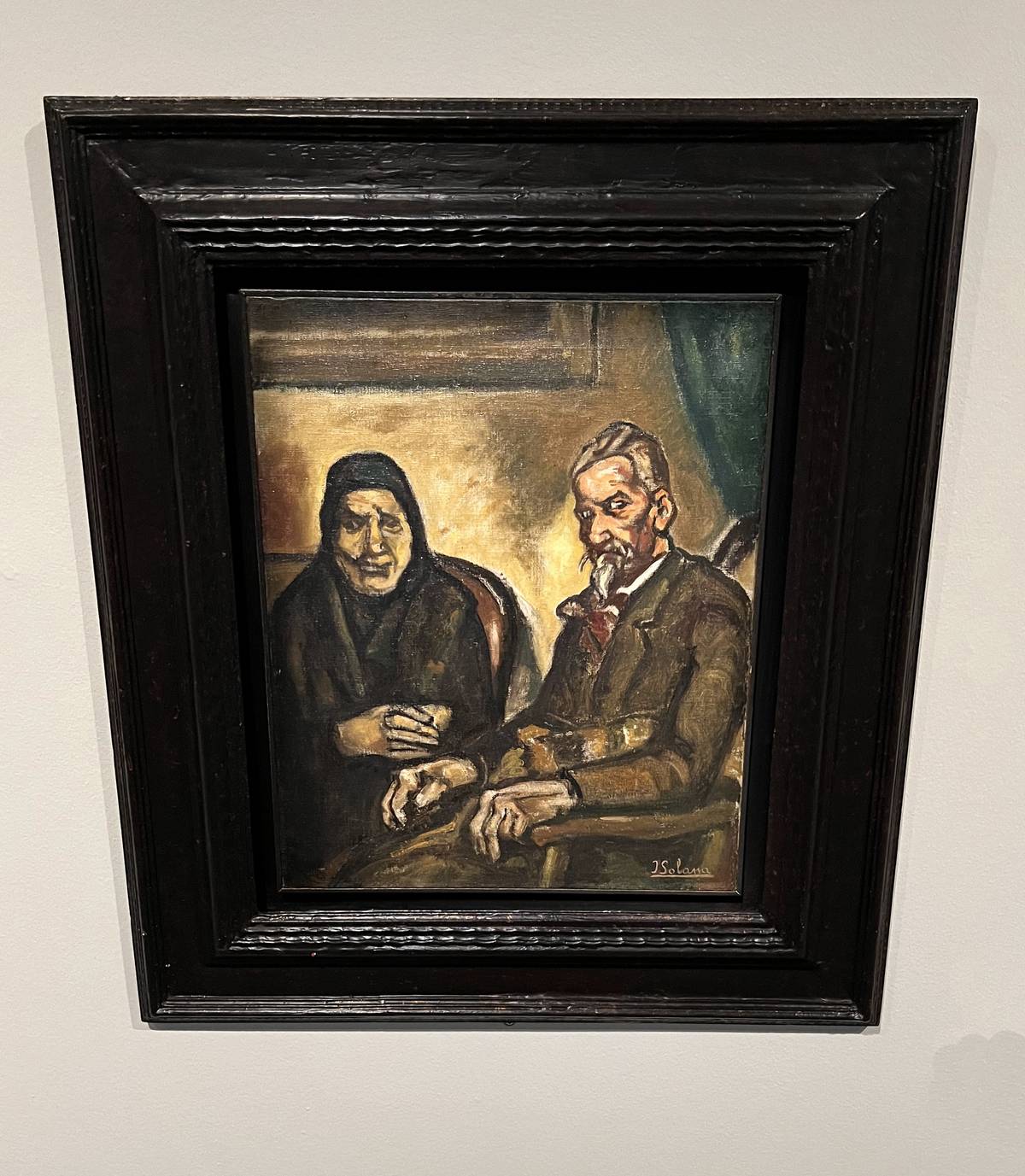
José Gutiérrez Solana’s Estudio de la visita del obispo (Study of the bishop’s visit, 1925) spotlighted a distinguished religious figure in his study, posing for a portrait. However, perhaps unbeknownst to him, over his shoulder was a hooded figure which resembled Goya’s witch.
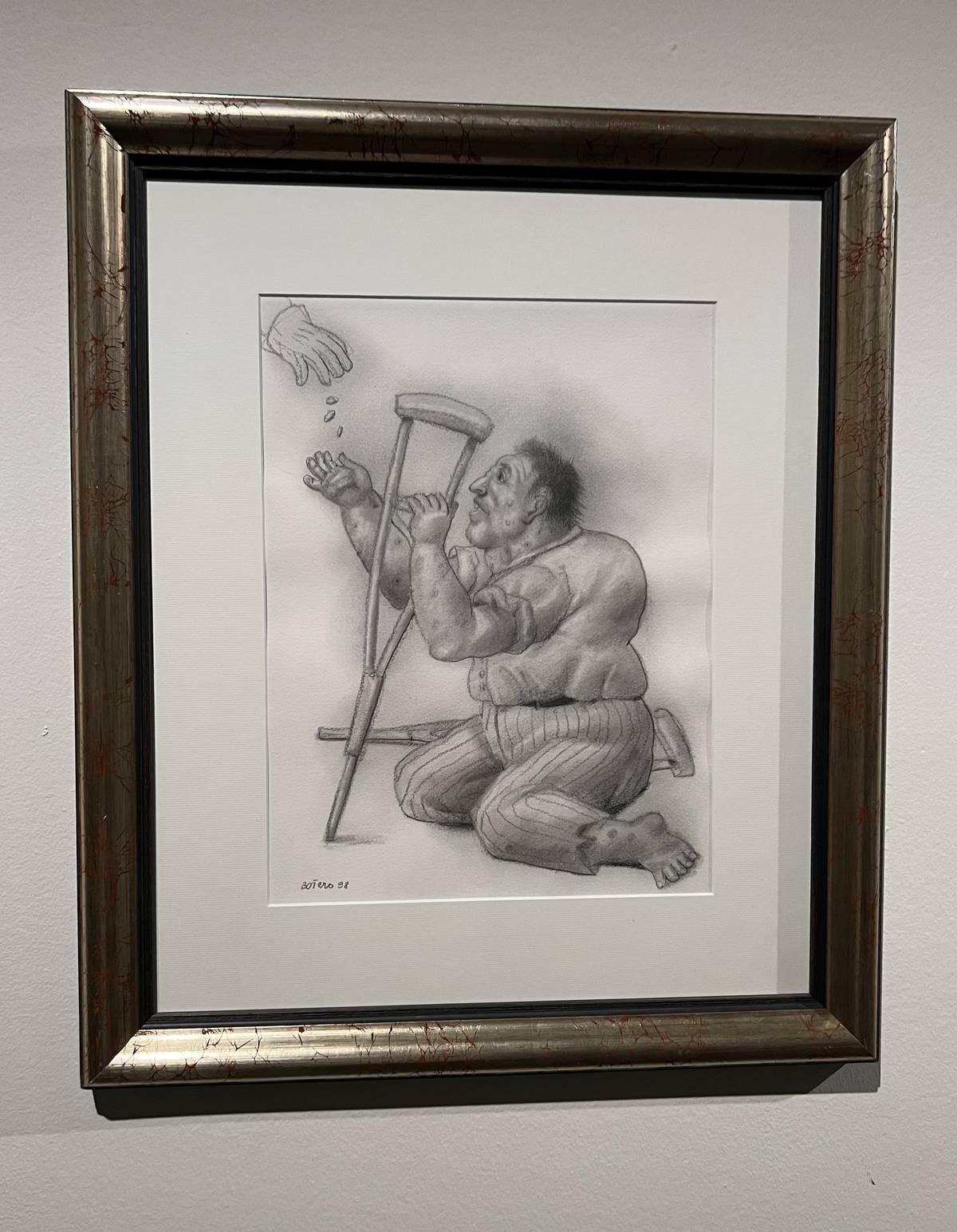
A curious sketch was Fernando Botero’s Mendigo (Beggar, 1998), alluded to Abu Gharib prisoners who were now begging for alms, in direct reference to Goya’s The Disasters of War.
In this eye-opening exhibit, our paseo through his prints had proven more than worthwhile, as we realized Goya’s enduring effect on even the most iconic artists of eras past and present. And to think much of the painter’s most inspirational works weren’t even paintings; they were simply sketches! Even centuries after his passing, Goya continues to be a counterculture icon through and through.