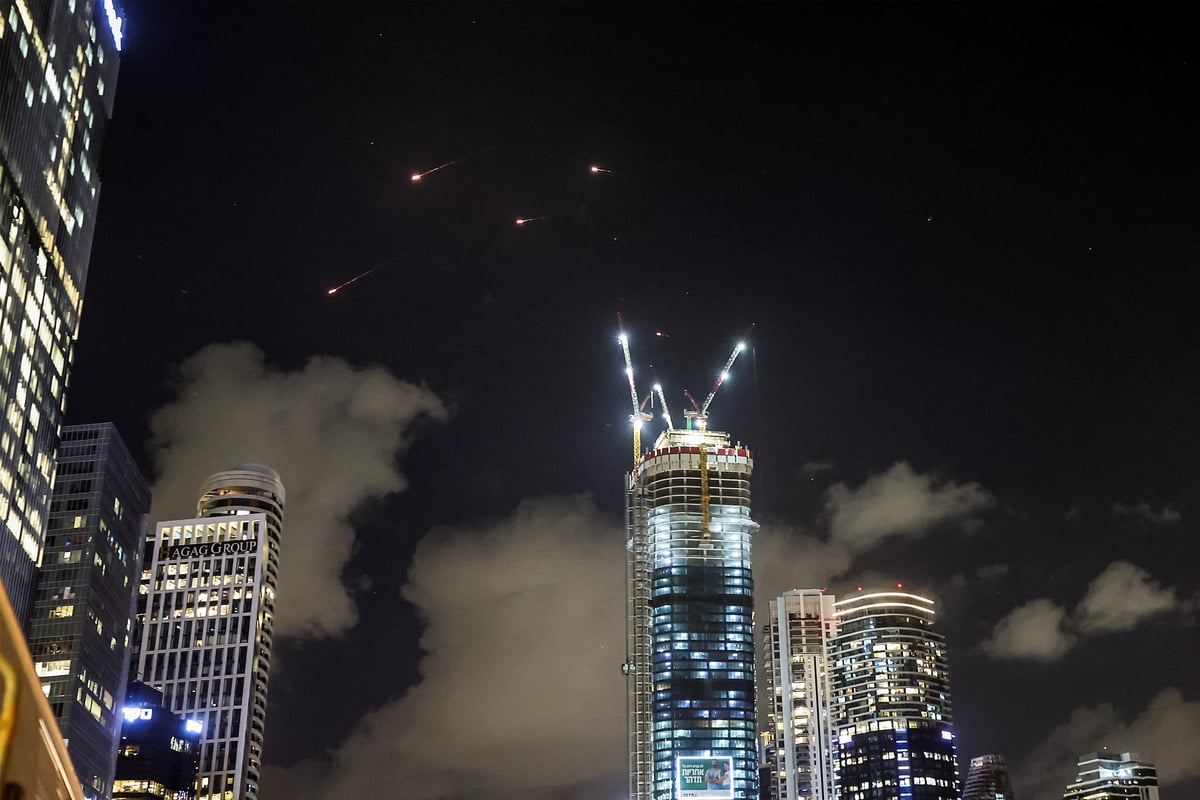
Severe consequences
US Defense Secretary Lloyd Austin slammed the “outrageous act of aggression” by Iran, while National Security Adviser Jake Sullivan told reporters there would be “severe consequences.”
“Iran made a big mistake tonight and will pay for it,” Netanyahu said.
Iran reacted by threatening to fire “with bigger intensity” if its territory was attacked, with Maj. Gen. Mohammad Bagheri warning Tehran would target “all infrastructure” in Israel.
Following the missile barrage, Israeli military spokesman Rear Adm. Daniel Hagari vowed action against Iran. The air force “will continue to strike (tonight) in the Middle East powerfully,” he said.
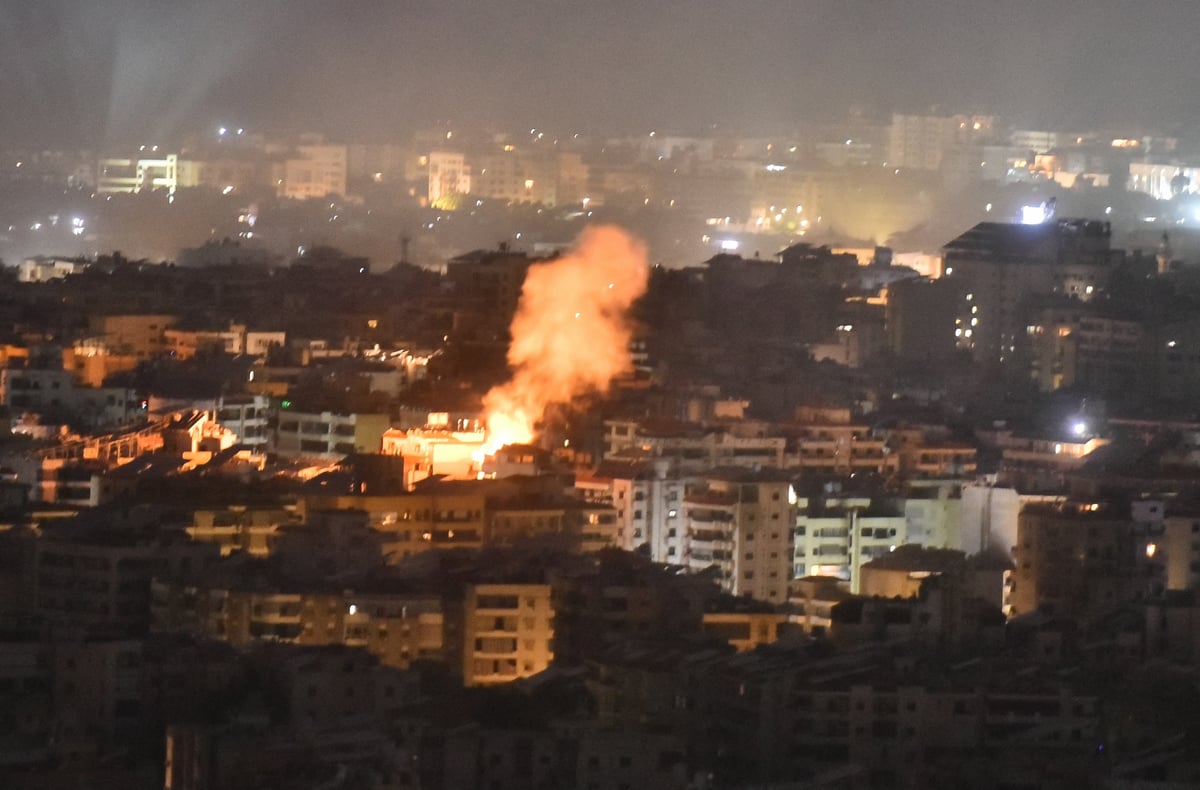
The Israeli military subsequently announced it was bombarding Hezbollah targets in Beirut, with a Lebanese security source telling AFP that Israel had hit the city’s southern suburbs at least five times overnight.
Black smoke billowed over southern Beirut on Wednesday morning, AFP footage showed. Meanwhile, sirens blared in multiple places in northern Israel, warning of incoming fire, with no immediate reports of casualties.
‘This must stop’
UN chief Antonio Guterres led international calls to stem the “broadening conflict in the Middle East,” saying in a statement: “This must stop. We absolutely need a ceasefire.”
While Iran-backed groups across the region had already been drawn into the Gaza war, sparked by Palestinian group Hamas’ 7 October attack on Israel, Tehran had largely refrained from direct attacks on its regional foe.
Iranian President Masoud Pezeshkian said his country had exercised its “legitimate rights” and dealt “a decisive response... to the Zionist regime’s aggression.”
Israel, and Iraq and Jordan — which lie between Iran and Israel — closed their airspace, as did Lebanon before reopening.
U.S. boosts forces
The situation escalated sharply after the Israeli military announced early Tuesday that troops had commenced “targeted ground raids” in southern Lebanon, just across Israel’s northern border. This development occurred despite increasing calls for a de-escalation following a week of airstrikes that resulted in hundreds of deaths in Lebanon.
Lebanon’s health ministry reported that the latest Israeli strikes claimed an additional 55 lives on Tuesday, adding to the rising toll.
The country’s disaster management agency said at least 1,873 individuals have died since hostilities between Israel and Hezbollah intensified following the outbreak of the Gaza war on 7 October 2023.
In a reaction to the situation, Iran declared that the killing of Hezbollah leader Nasrallah would lead to Israel’s “destruction.” However, Iran’s foreign ministry clarified on Monday that Tehran would not deploy troops to engage Israel directly.
In a related development, the Pentagon announced plans to bolster US military presence in the Middle East by deploying “a few thousand” additional troops, signaling Washington’s commitment to regional stability amid escalating tensions.
Japan’s new Prime Minister Shigeru Ishiba said Wednesday that missile attacks by Iran on Israel were “unacceptable,” warning against an escalation into “full-on war.”
Ishiba made the comments after a phone call with Biden, following his appointment as prime minister in parliament on Tuesday.
“Iran’s attack is unacceptable. We condemn this strongly. But at the same time, we would like to cooperate (with the United States) to defuse the situation and prevent it from escalating into a full-on war,” Ishiba told reporters.
Deadly strikes on Gaza
In Lebanon, the UN peacekeeping mission said the Israeli offensive did not amount to a “ground incursion” and Hezbollah denied that any troops had crossed the border.
There was no way to immediately verify the claims, which came as Israel struck south Beirut, Damascus and Gaza.
Israel said it seeks to dismantle Hezbollah’s military capabilities and restore security to northern Israel, where tens of thousands have been displaced by nearly a year of cross-border fire.
In Gaza, the civil defense agency said Israeli bombings killed 19 people on Tuesday. The Israeli military said troops opened fire Tuesday on “dozens” of Palestinians in central Gaza they saw as an “immediate threat.” At least some were hit, it added.
Hamas’ 7 October attack on Israel resulted in the deaths of over 1,200 people, mostly civilians, according to an AFP tally based on Israeli official figures that included hostages killed in captivity.
Israel’s retaliatory military offensive has killed at least 41,638 people in Gaza, most of them civilians, according to figures provided by the Hamas-run territory’s health ministry. The UN has described the figures as reliable.
Hezbollah began low-intensity strikes on Israeli troops a day after its Palestinian ally Hamas staged its unprecedented attack on Israel on 7 October, which triggered Israel’s devastating assault on Gaza.
‘Lost my home’
The escalating violence in Lebanon has killed more than 1,000 people since 17 September, Health Minister Firass Abiad said.
Lebanese Prime Minister Najib Mikati said there could be as many as one million people displaced from their homes in the country, with authorities registering almost 240,000 crossings into Syria since 23 September.