
The Oviedo Cathedral: Inviolable magnetism


There is only one singular constant in all my memorable trips to the principalidad de Asturias in the northern coast of Spain.
I recall memories with my dear parents on a sentimental reunion with familiares y conocidos who previously resided in Cebu, another trip con mas parientes celebrating their ancestral roots, with two sets of travelling buddies — one after a beautiful more-than-a-fairy-tale of a wedding, the other simply taking an extended paseo de iglesias y museos, fincas y playas, comidas y cenas and everything else in between — and most of all, with several visits to my Tia Maria, once a resident of the region.
But we were one to pray for petitions or thanksgivings — the common thread amongst all these viajes — at the Catedral Metropolitana Basílica de San Salvador, or much more commonly known as the Oviedo Cathedral.
Don’t ask me why — it just happened to be.
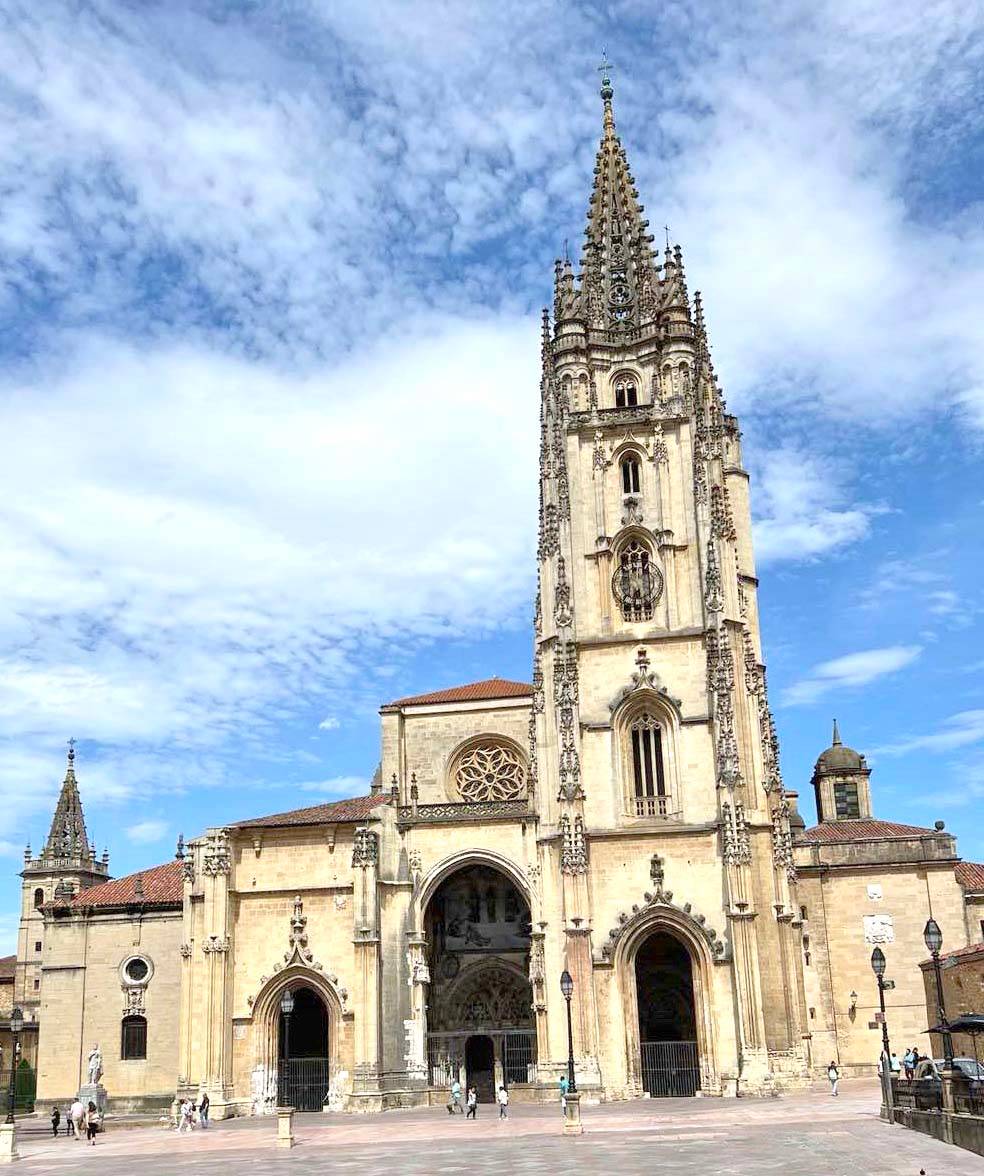
The Oviedo Cathedral.
PHOTOGRAPHS BY EDU JARQUE FOR THE DAILY TRIBUNE
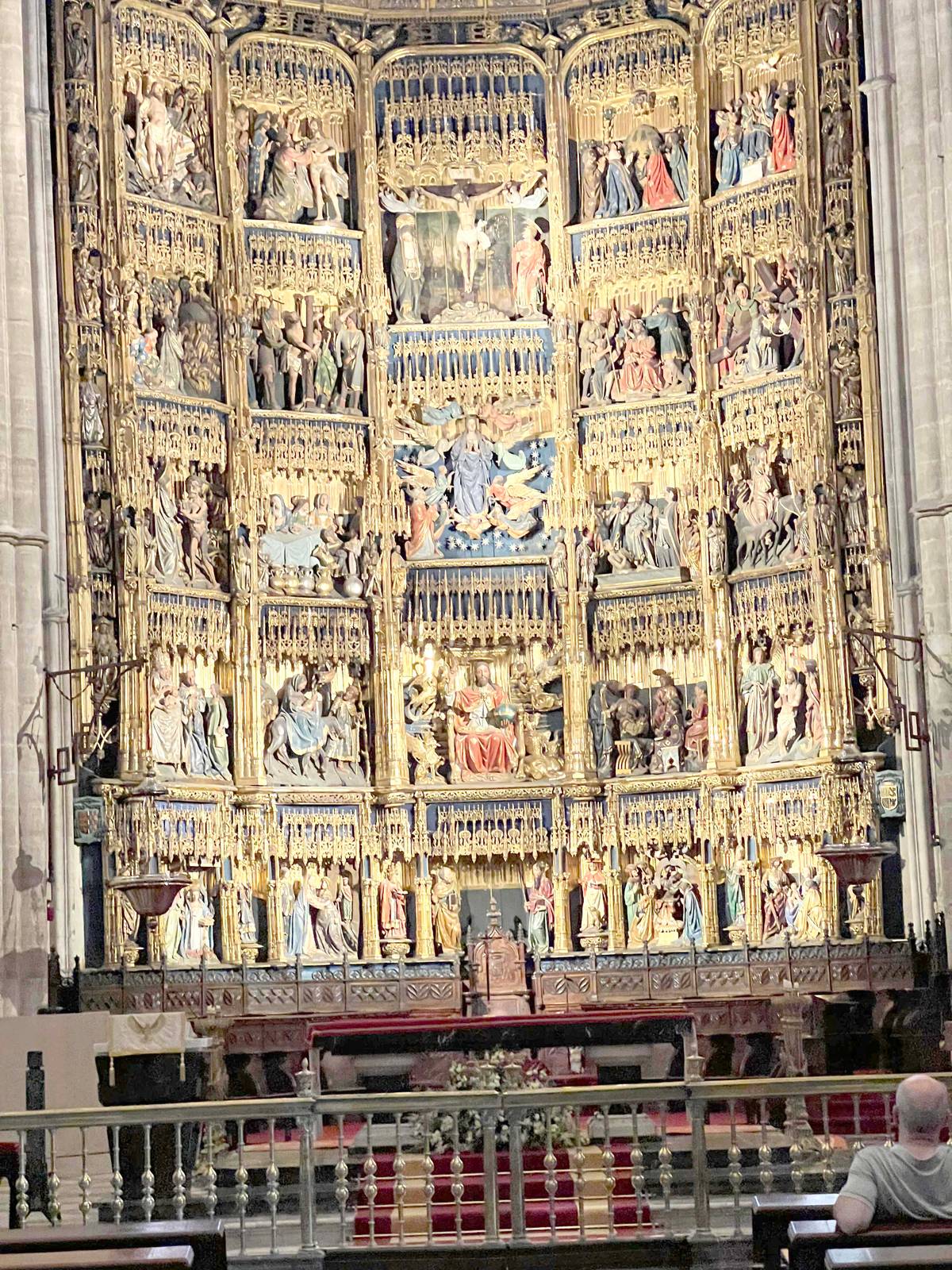
The gilded main altar
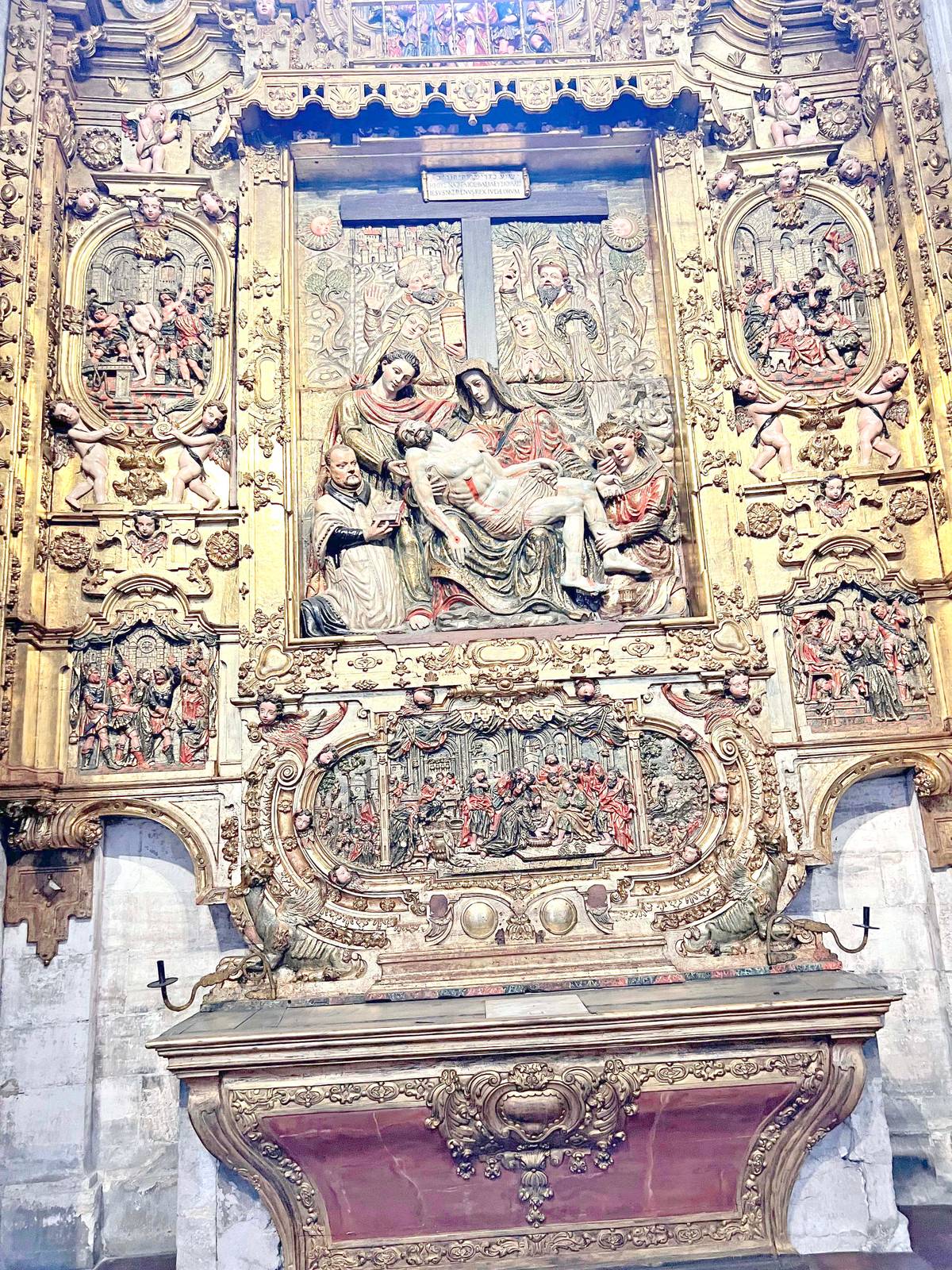
Laboriously carved intricate side altar.
Vague records reveal the pre-Romanesque structure was built from the orders of Rey Alfonso II de Asturias, who wished for a house of prayer in the center of their kingdom’s newly-formed royal court — the hub of religious, political and social activities then.
Its smattering of influences comes from its historical background, as it still stands through the centuries as prime examples of Romanesque, Gothic, Baroque and Renaissance architectures.
As always, we continued to be mesmerized by the Retablo Mayor, the main altarpiece, a majestic masterwork in a late Gothic Hispano-Flemish approach — all entirely made of polychrome wood. But mind you, gilded in finish!
Spanning approximately two-thirds the height of the church and the entirety of its width, the centerpiece is divided into three sections, which all depict the life of Christ — His Childhood, Public Life and Passion and His Death and Resurrection. No matter how I counted in the past, there were 23 scenes in total — I found the number rather odd.
I never fail to take a look at the altar of Saint Teresa, a Baroque creation by Manuel de Pedredo. Its main feature is the awe-inspiring sculpture of one of the doctors of the church by Luis Fernández de la Vega. Lovingly known as Santa Teresa de Avila, one of the Patron Saints of Spain, the sick, and those ridiculed for their piety. Flanking her image are the Carmelite Order reformer Saint John of the Cross and Teresa’s very own spiritual leader Saint Peter of Alcantara.
Though the topmost details touch on the Old Testament prophet Elijah and the origins of the Carmelite order, the lower part focuses on the transverberation — “a mystical grace wherein her heart was mysteriously wounded by an arrow made from the love of Christ” — of Saint Teresa. It’s an ideal area to attempt to take it all in, simply surrender, and meditate.
We likewise make it a point to stop by the shrine of Santa Maria Magdalena — which I personally find a rarity even in Catholic chapels. Her image was with a cross in hand, draped in golden garments. She is best remembered as one who was constantly with Christ and was a witness to his Crucifixion and Resurrection.
As in years past, we found ourselves at the Holy Chamber through a Gothic staircase — an exercise seemingly more difficult to accomplish these days.
La Capilla de San Miguel was ordered to be constructed by the same monarch as the prayer room of his palace. Today, its barren vaults are still as awe-inspiring as ever.
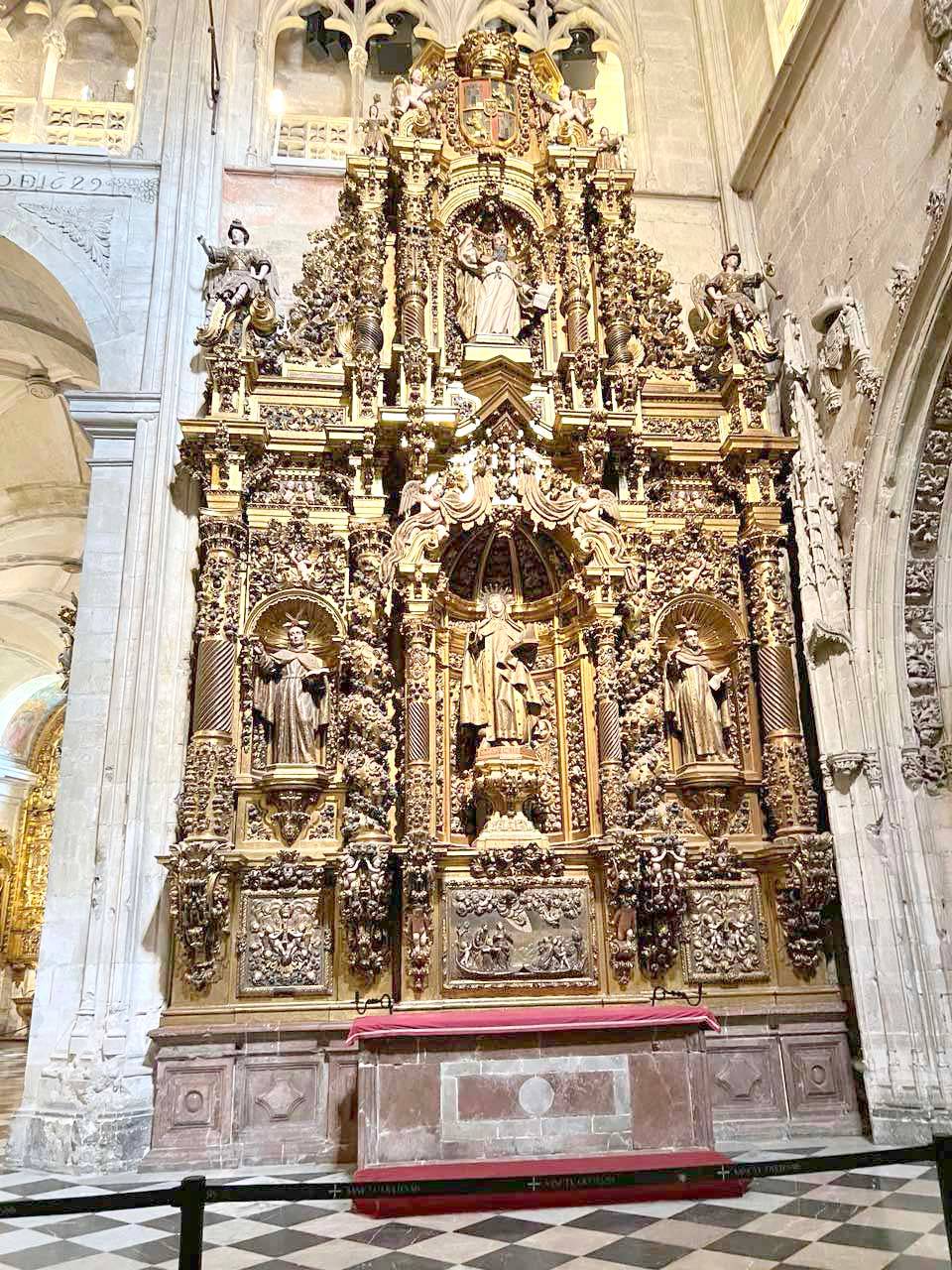
Santa Teresa Shrine.
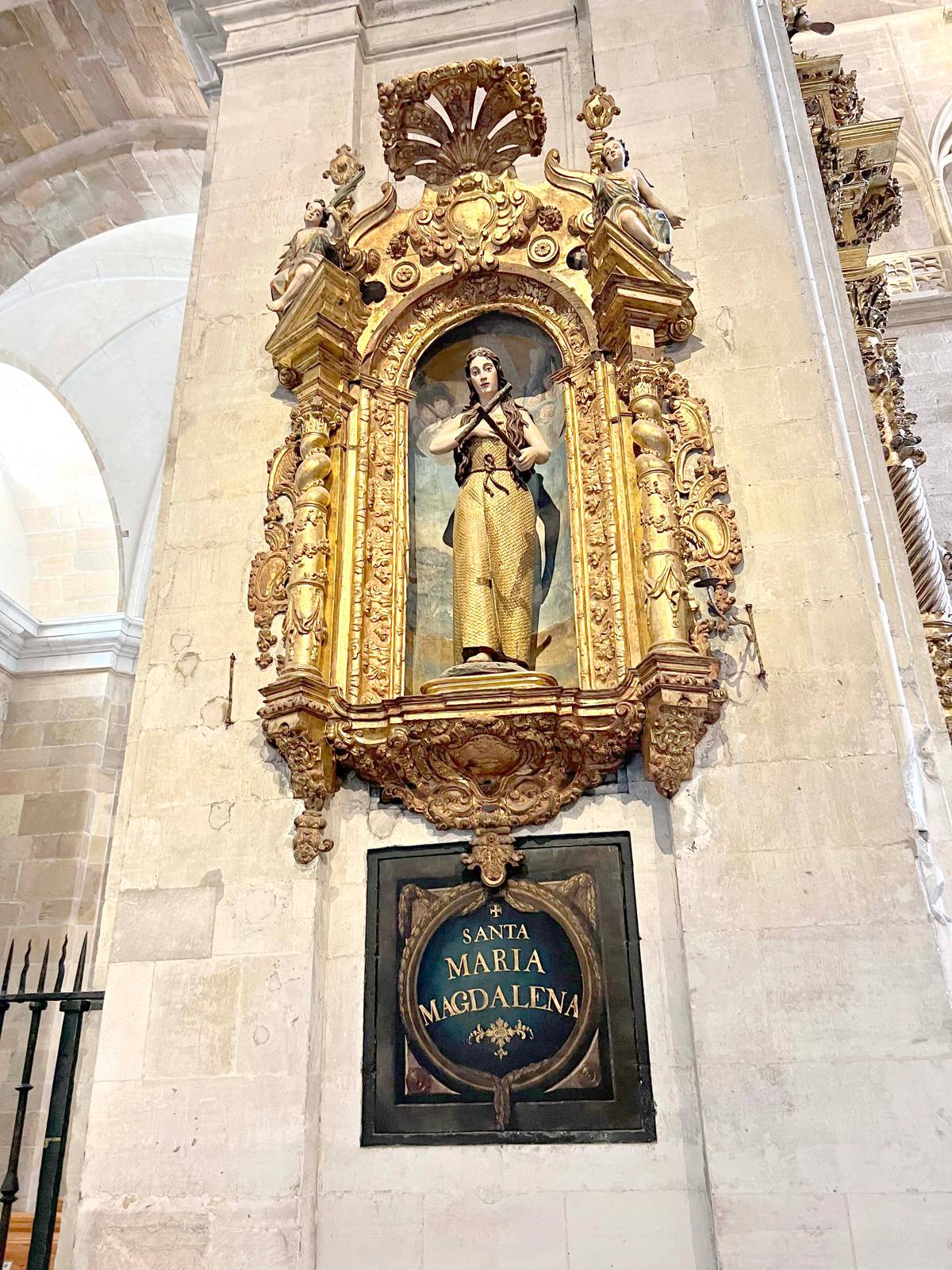
‘Santa Maria Magdalena,’ a rarity in churches.
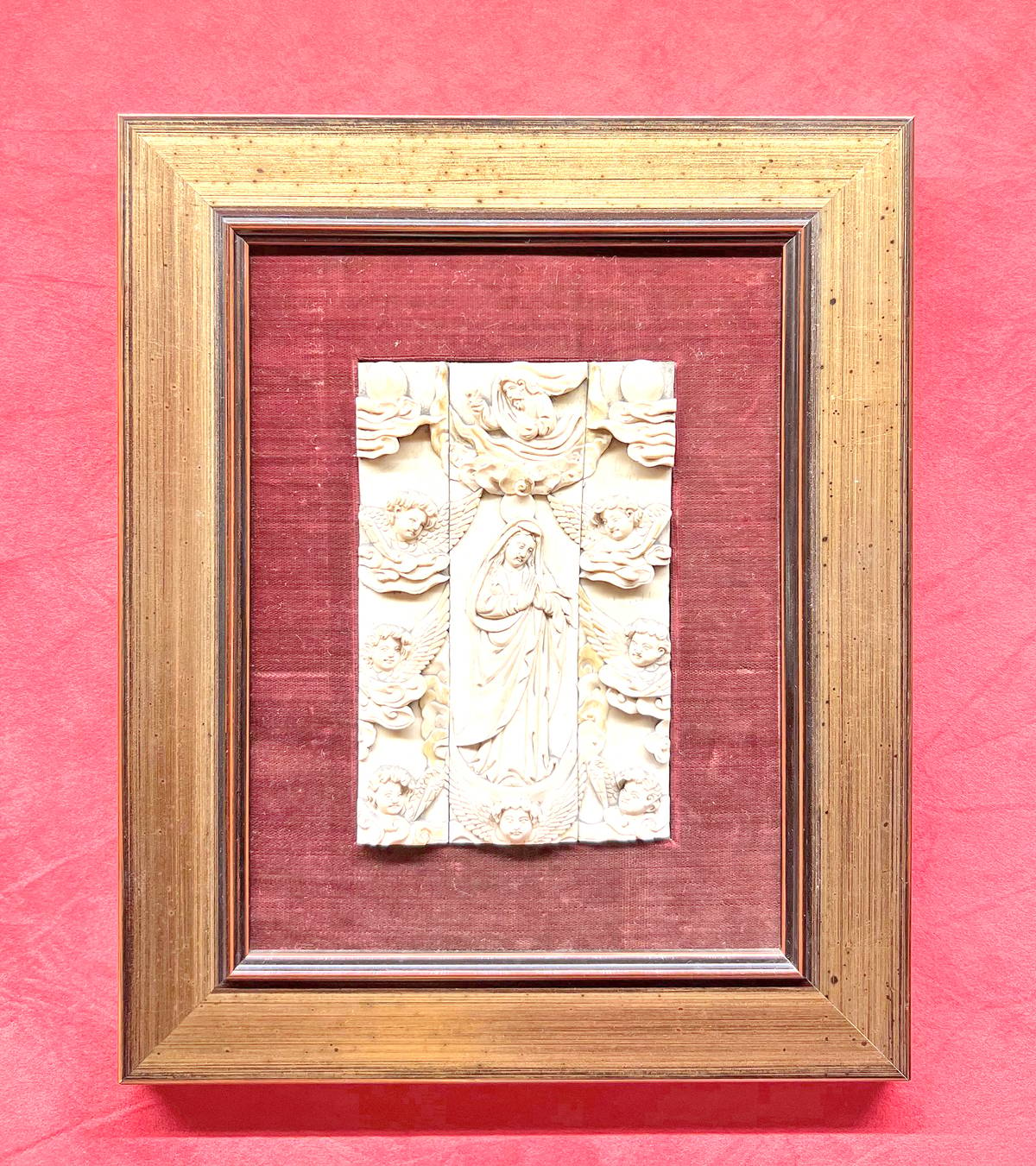
‘La Anunciacion,’ an ivory sculpture.
The hallowed ground is a venue for the Jubilee of the Holy Cross or the Jubilee of the Plenary, a solemn universal indulgence granted by none other than the Pope. However, as a reminder, to actually gain the plenary indulgence, one must visit a church, make a confession, receive communion, and pray for the Pope’s intentions.
Keep in mind should one visit on September 14th until the 21st, one can even see the Shroud of Oviedo — the cloth claimed to be wrapped around the head of Christ — on exhibit.
We never tire of dropping by the adjacent Museu de la Iglesia, where my favorites among the several treasures were the Tenebrario o Candelabro de las tinieblas (Candelabra of Darkness) (1746-1754) by Jose Bernardo de la Meana Costales, plus the touching painting entitled Ascension de Nuestro Señor (Ascension of Our Lord) (1785-1800), whose artist remains anonymous!
Interesting items were the two Anunciacion ivory sculptures. Dated back to the 17th century, we noticed it was credited to be from Escuela Hispano-Filipina, which points to the Philippines as the country of origin. The facial features of the Virgin and surrounding cherubs were likewise distinctly East Asian, which is much to think about — as most showcase them with Western looks.
We would be remiss not to mention the courtyard, a green oasis in the middle of the entire structure. Meanwhile, the hallowed hallways with slabs of trodden stones feel steeped with tales. If only walls could talk!
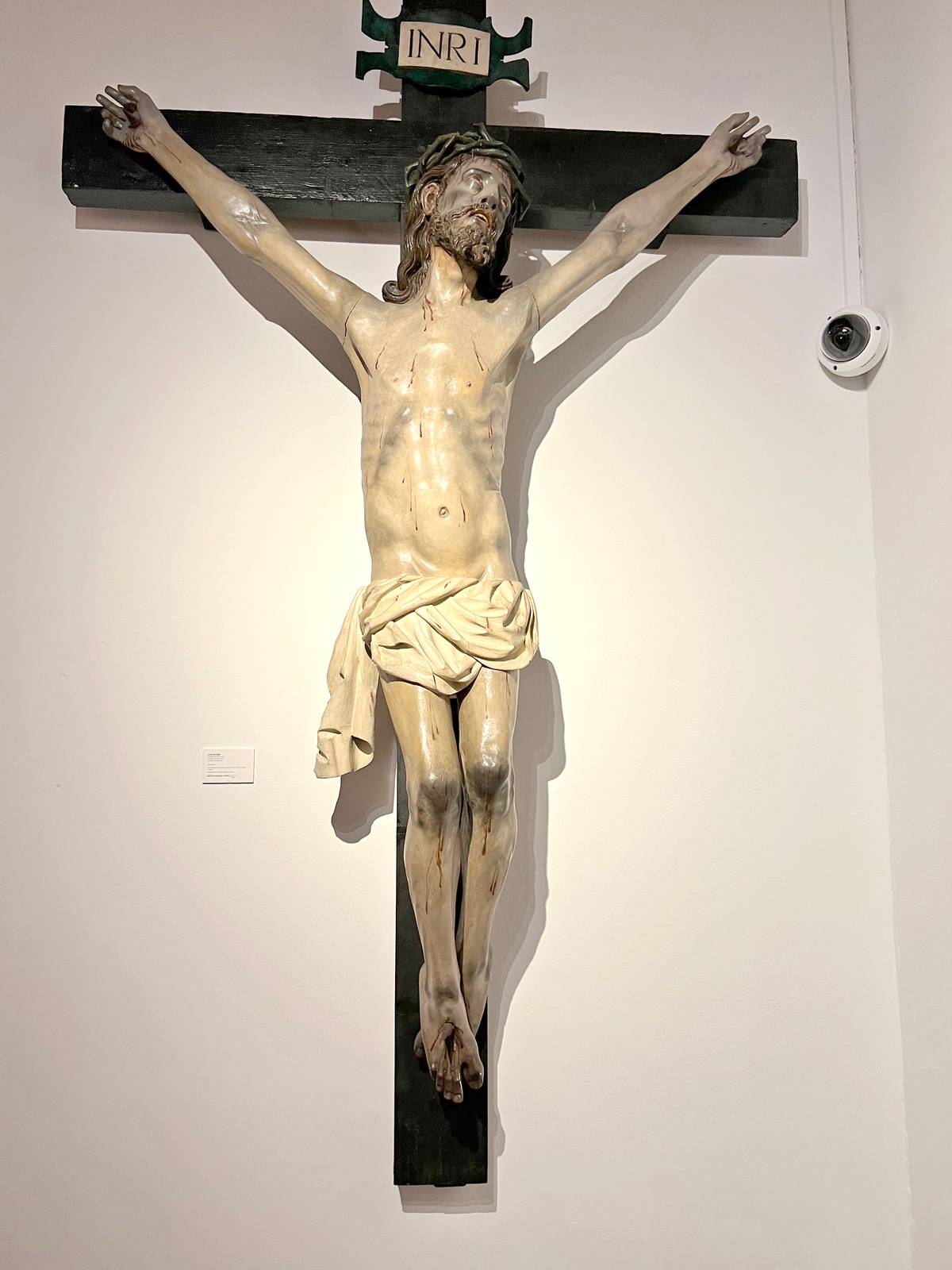
The Crucifix
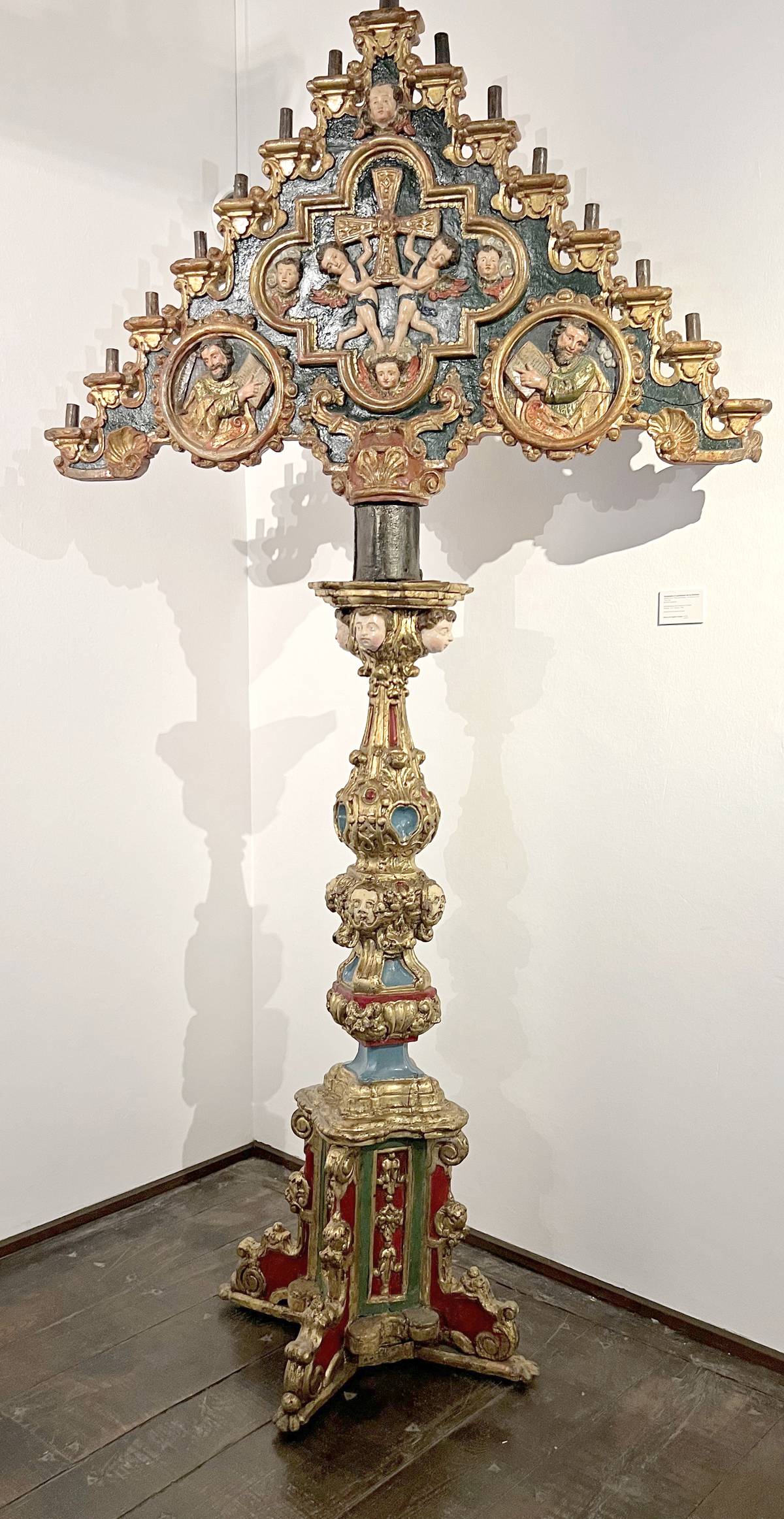
The Candelabra de las Tinieblas.
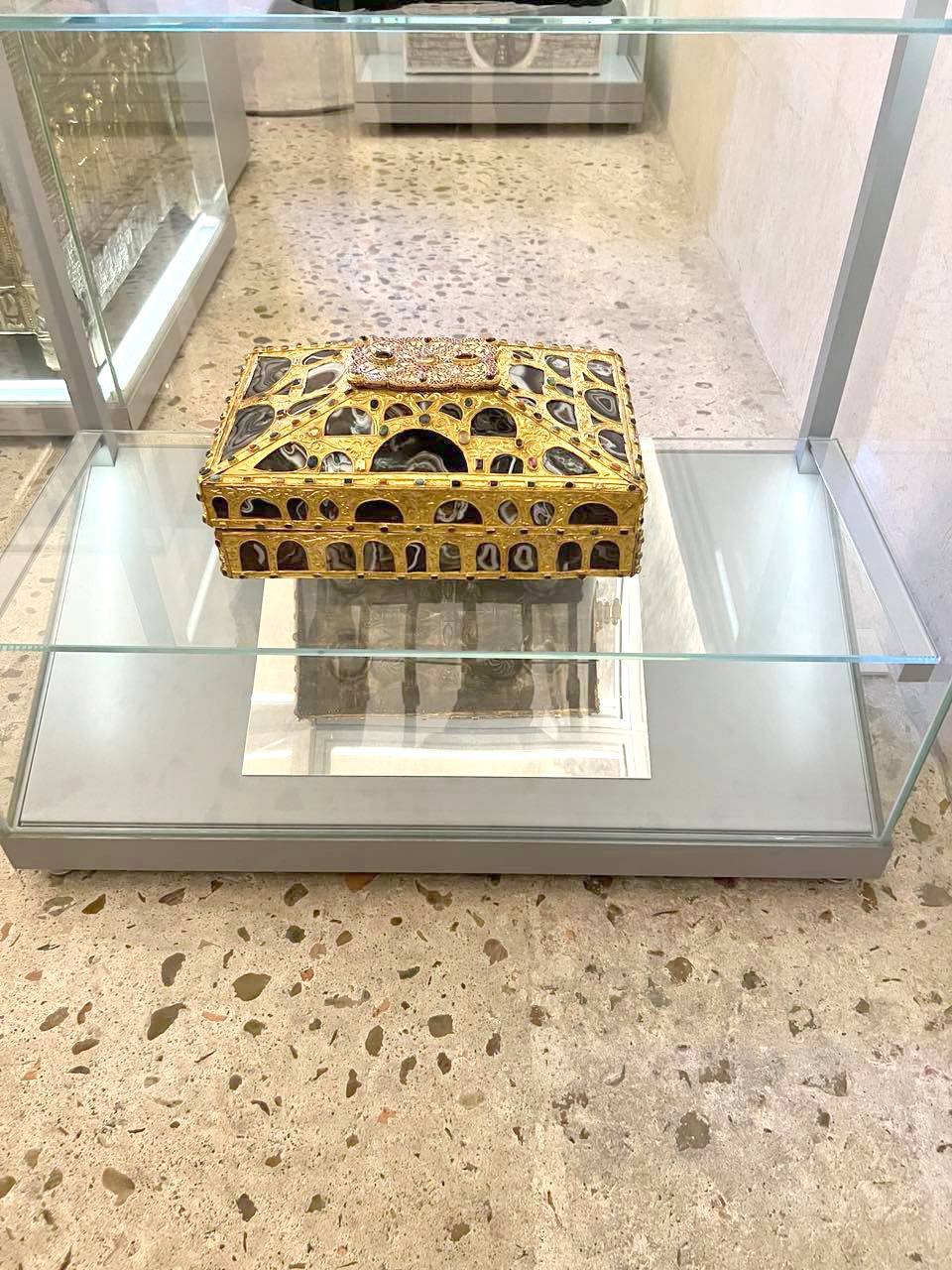
The Agate Casket.
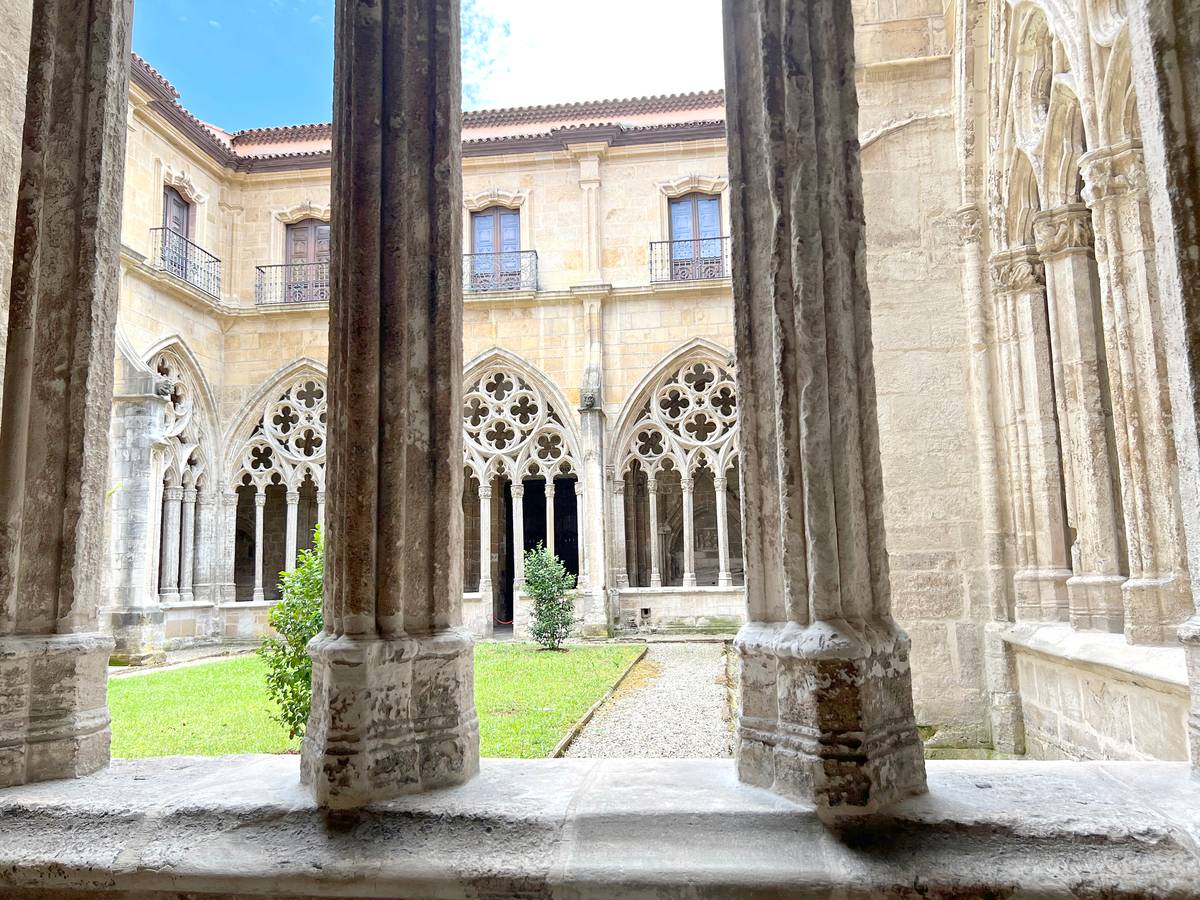
The serene courtyard.
We always end our several religious pilgrimages in the Camara Santa, which houses holy symbols associated with Asturian monarchy, such as the Cross of the Angels, Victory Cross, the Holy Ark and even the infamous Agate Casket — which has not been opened due to religious fears.
Due to its innate value and religious importance, it has been declared a World Heritage Site by UNESCO in December 1998.
After every visit, our souls always feel elated and healed. But still, there’s so many nearby churches — one older than the other — to visit with prayers yet to be whispered.