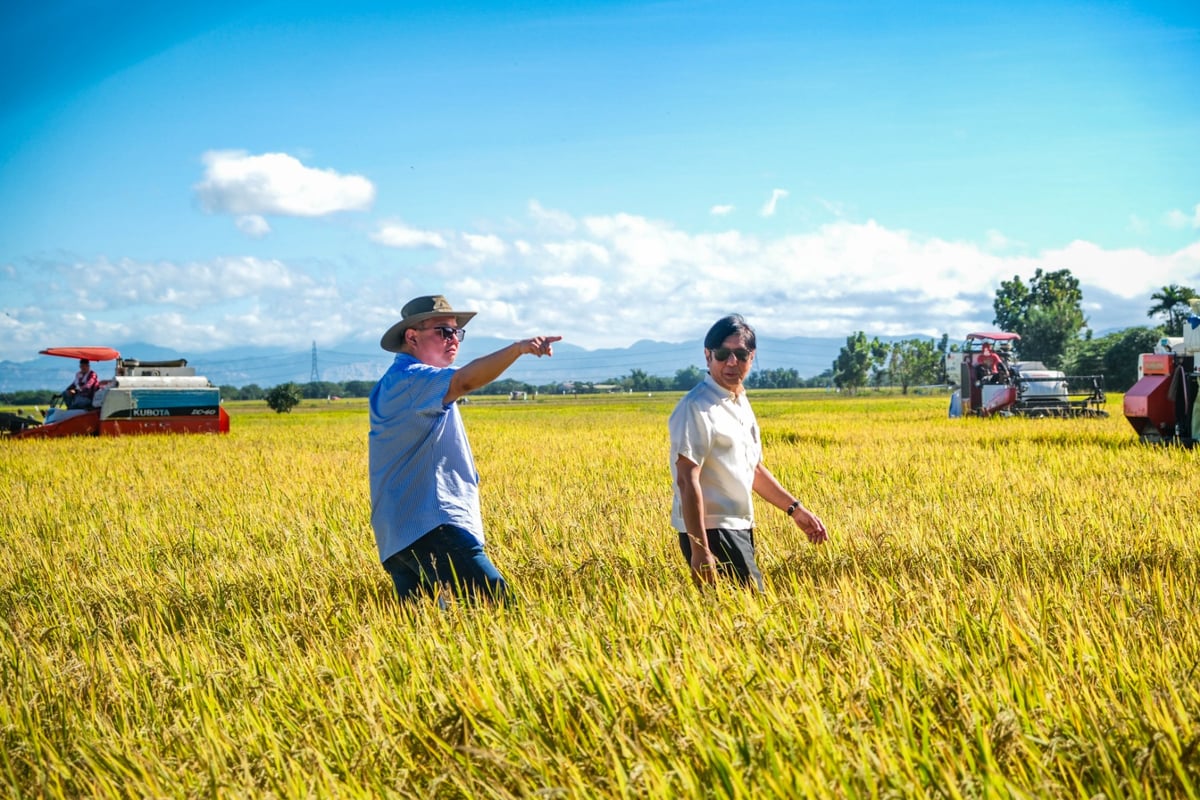
Farmers held a special place in the heart of then-President Ferdinand Edralin Marcos Sr., who implemented major reforms to highlight their importance and provided crucial support to those who have nourished the country for centuries.
This legacy is now being continued by Marcos Sr.’s only son, President Ferdinand “Bongbong” Marcos Jr. He has dedicated significant efforts to providing idle and arable lands to Filipino farmers and ensuring that Filipinos have access to affordable food, with a particular focus on staple rice.
During the presidency of Ferdinand Marcos from 1965 to 1986, several notable proclamations were enacted. On 21 September 1972, he signed Proclamation 1081, which marked the beginning of the Period of the New Society.
Five days after the proclamation of Martial Law, the entire country was designated a land reform area, and the Agrarian Reform Program was simultaneously announced, according to the Department of Agrarian Reform.
President Marcos Sr. enacted Republic Act 6389, (Code of Agrarian Reform) and RA 6390 of 1971, crafting the DAR and the Agrarian Reform Special Account Fund.
It strengthened the position of farmers and expanded the scope of agrarian reform.
Also, the late Marcos Sr. inked Presidential Decree 2, on 26 September 1972, in which he declared the country under a land reform program and enjoined all agencies and offices of the government to extend full cooperation and assistance to the DAR.
It also activated the Agrarian Reform Coordinating Council.
Moreover, Marcos Sr. signed Presidential Decree 27 on 21 October 1972, restricting land reform scope to tenanted rice and corn lands and setting the retention limit at seven hectares.
PBBM follows dad
In 2023, President Ferdinand “Bongbong” Marcos Jr. signed into law the New Agrarian Emancipation Bill, which aims to make farmer-beneficiaries of the government’s agrarian reform program debt-free.
The New Agrarian Emancipation Act condones all loans, including interests, penalties, and surcharges incurred by agrarian reform beneficiaries (ARBs) from land awarded to them under Presidential Decree (PD) 27, RA 6657, and RA 9700.
PD 27 is the Tenant Emancipation Decree of the late President Ferdinand Marcos Sr. issued on 21 October 1972.
RA 6657 is the Comprehensive Agrarian Reform Law of 1988, while RA 9700 is the legislation extending the acquisition and distribution of agricultural lands under the Comprehensive Agrarian Reform Program (CARP).
Under the existing agrarian reform laws, ARBs pay for the lands awarded to them in annual amortization for a maximum of 30 years.
Birthday distribution
On his birthday today, 13 September, PBBM will distribute a total of 9,832 Certificates of Condonation and Release of Mortgage (CoCRoM) to 6,000 agrarian reform beneficiaries (ARBs) in Nueva Ecija Coliseum, Palayan City, Nueva Ecija, according to Agrarian Reform Secretary Conrado Estrella III.
Estrella said the 6,000 ARBs to be provided with 9,832 CoCRoM covering 10,450 hectares of agricultural lands, will be relieved from paying their loans totaling P277 million as prescribed under the Republic Act 11953 or the New Agrarian Emancipation Act (NAEA).
“CoCRoM will open doors and create opportunities for ARBs to make their farms more productive, resulting in greater financial security for farmers and food supply chain security for the Filipino people,” Estrella said.
DAR Central Luzon regional director James Arsenio Ponce disclosed that the distribution of CoCRoMs in Nueva Ecija province will be the first-ever to be held in Central Luzon.
Ponce said aside from the distribution of CoCRoM, the President, the DAR secretary, in partnership with the Land Bank of the Philippines, will also distribute P41 million worth of agri-credit checks to 480 ARBs representing twelve (12) ARB organizations.
“This twin distribution of condonation certificates and agri-credit checks will be doubly significant as the DAR also awarded around 1,000 CoCRoMs for Bulacan ARBs at the DAR Central Office during the birthday of DAR Secretary Estrella on September 12, 2024,” Ponce said.
The RA 11953 is deemed to benefit over 600,000 Filipino farmers nationwide, covering more than 1.7 million hectares of land.
Affordable rice
PBBM’s campaign promise is to make the price of staple rice available and affordable up to P20, a moving target and still an aspiration.
According to a report from the United States Department of Agriculture in January of this year, the Philippines is projected to remain the world’s top rice importer, expected to import a record 3.8 million tons in 2024.
The country is trailed by China, Indonesia, the European Union, Nigeria and Iraq.
However, Malacañang, particularly the Department of Agriculture, said they are doing their best to lessen the imports of rice into the country, erasing the country’s moniker as the world’s top rice importer.
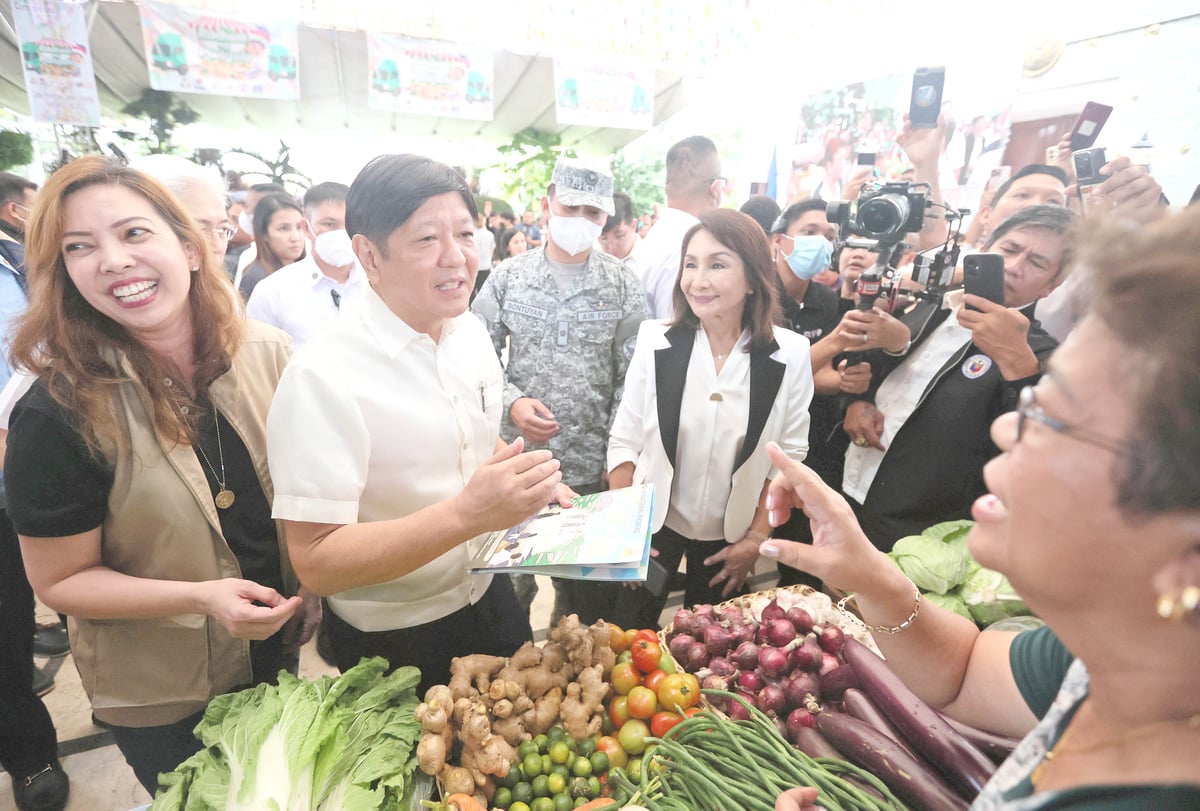
Only on Wednesday, Speaker Martin Romualdez credited the administration of President Marcos Jr. for the significant decline in rice prices, after seeing that a grains store in Metro Manila is selling rice priced at P42 per kilo, during his visit to three key markets in Metro Manila.
Romualdez attributed the reduction to the government’s efforts to stabilize rice prices and ensure affordability for consumers, particularly the move to cut the duties on imported rice.
Starting on 5 July, tariffs on rice imports were reduced from 35 percent to 15 percent under Executive Order (EO) 62, signed by the President.
Romualdez visited Guadalupe Market in Makati City, as well as Nepa-Q Mart and Farmers Market in Quezon City upon the invitation of the Philippine Rice Industry Stakeholders’ Movement (PRISM), the Department of Trade and Industry and the Department of Agriculture.
“On behalf of the House of Representatives, we welcome this positive development. This is truly in line with the Marcos administration’s commitment to ensuring that food, particularly rice, remains affordable and accessible for all Filipinos,” he added.
P96-M farm equipment
Starting on 5 July, tariffs on rice imports were reduced from 35 percent to 15 percent under EO 62, signed by the President.
With its attached agency, the Philippine Center for Postharvest Development and Mechanization, DA awarded Diffun Saranay and Development Cooperative a rice processing facility, including a rice mill and dryers.
The cooperative comprises 2,320 farmers managing 3,502 hectares of rice fields.
Likewise, production machinery like tractors, harvesters, and threshers was also awarded to 13 farmers’ cooperatives and associations.
“This support package to Quirino rice farmers, which features a state-of-the-art rice processing system, is part of the Department of Agriculture’s determined push to improve post-harvest systems and infrastructures across the country to reduce production losses and ensure the country’s food security,” Agriculture Secretary Francisco Tiu Laurel said.
The RPS is equipped with a multi-stage rice mill with a capacity of four to five tons an hour, or over 48 tons per day, and three units of recirculating dryers, each with a capacity of 12 tons per batch, or a total of 36 tons, according to DA.
Two units of recirculating dryers, worth P78.1 million, with a capacity of six tons per batch, were also provided to the cooperative.