
Tzu Chi boosts transplant care: Philippine-Taiwan medical cooperation improves cancer, blood disease treatment
Specialists from the Tzu Chi Hualien Hospital train their Filipino counterparts using the latest technology in cancer and blood disease treatment.


TAIPEI Economic and Cultural Office in the Philippines representative Wallace M.G. Chow (middle, front row, seated) led the opening ceremony of the 2024 Taiwan-Philippines Advanced Medical Forum at the Tzu Chi Eye Center (TCEC) in Sta. Mesa, Manila on 16 August. With him are (from left, front row, seated): TCEC deputy medical director Dr. Susan Irene Lapid-Lim, Tzu Chi Hualien Hospital’s (TCHH) Dr. Soon-Hian Teh, TCHH Center of Stem Cell & Precision Medicine director Dr. Chi-Cheng Li, Cardinal Santos Medical Center chief medical officer Dr. Antonio Say, Tzu Chi Medical Foundation Philippines CEO Alfredo Li, and TCEC medical director Dr. Bernardita Navarro.
PHOTOGRAPHS COURTESY OF TCMFP
Six years of medical cooperation by Taiwan and the Philippines under the auspices of global humanitarian movement Tzu Chi and support from the Taiwan government are benefiting Filipino doctors and patients through advanced skills and technology shared by their Taiwanese counterparts.
The number of haploidentical hematopoietic stem cell transplant cases in the country to treat certain types of cancer and blood-related diseases, for example, has been increasing since 2018 and saving lives, Dr. Alma Reyes Calavera, head of the Bone Marrow Transplant Program at The Medical City (TMC), revealed during the Taiwan-Philippines Advanced Medical Forum held at the Tzu Chi Eye Center in Sta. Mesa, Manila on 16 August.
The number, including nearly a hundred cases performed at TMC, indicates the success of the training of Filipino hematologist and oncologist at the Tzu Chi Hualien Hospital (TCHH) of Taiwan.
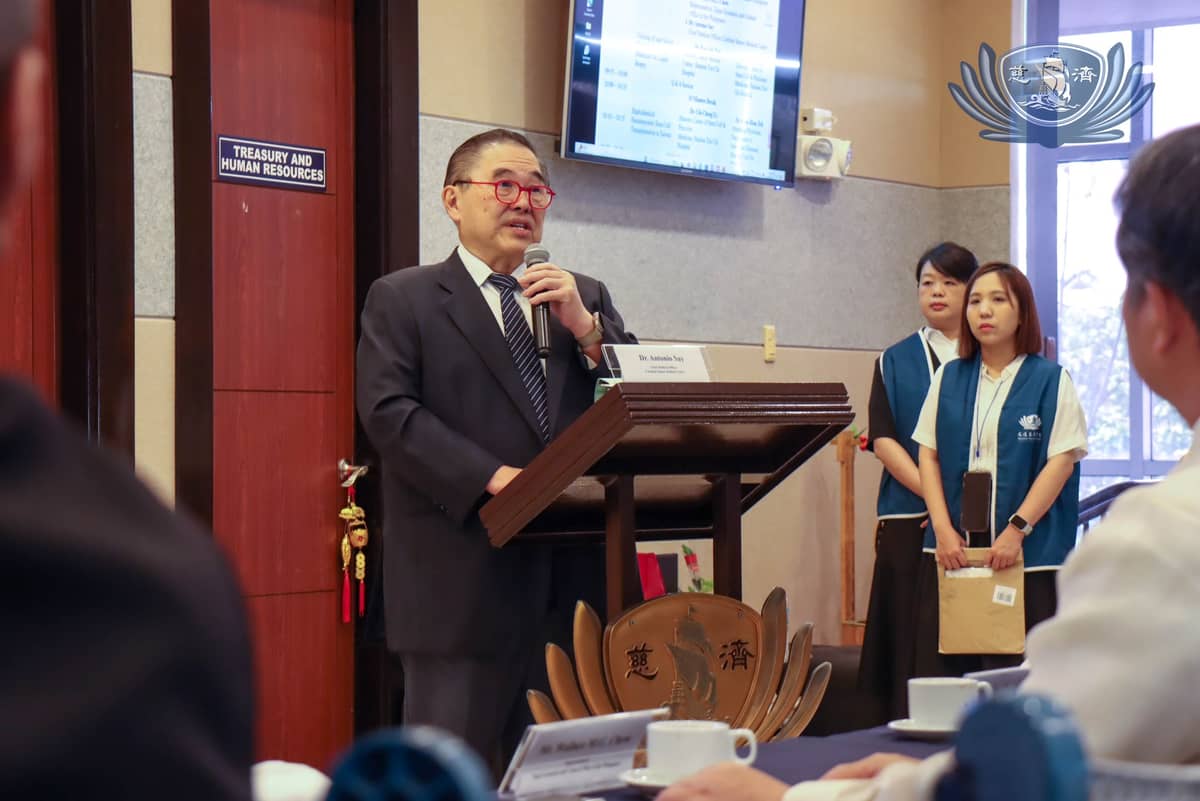
CARDINAL Santos Medical Center chief medical officer and TCMFP president Dr. Antonio Say thanks Taiwan and TCHH for sharing their expertise with Filipino doctors during the forum. He also lauds the hard work and dedication of Filipino physicians in learning and improving their skills to benefit patients.
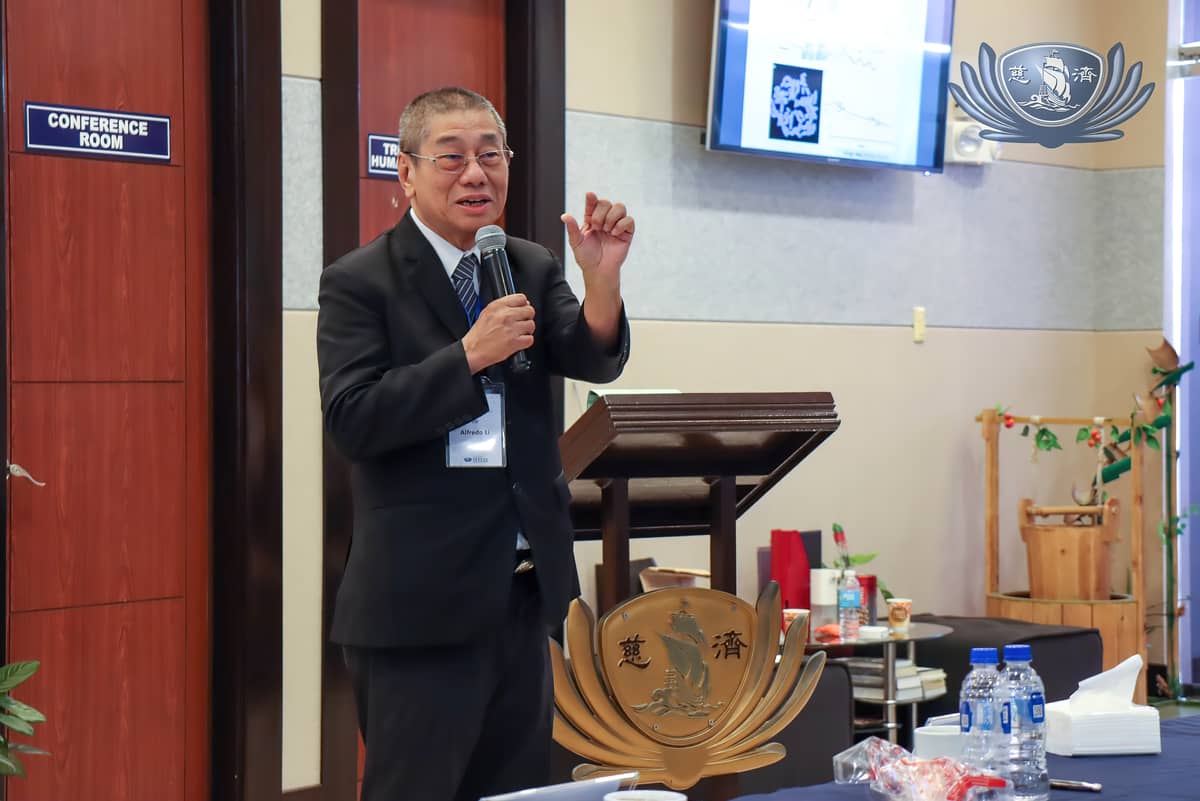
TCMFP CEO Alfredo Li expresses his hope to gather more participants and to discuss more interesting topics in future medical forums to further enhance doctors’ skills and knowledge.
A haploidentical transplant uses healthy, blood-forming cells from a half-matched donor, usually a family member, to replace the unhealthy ones.
Calavera said TCHH has had an undeniable impact on their transplant program.
“For over several years, Dr. Chi-Cheng Li has been helping us train our transplant specialists. For difficult cases, we usually call him to mentor us,” she said, referring to the TCHH Center of Stem Cell & Precision Medicine director.
“We will not progress if we do not have these international collaborations and the generosity and kindness of people like them who are very willing to accommodate us,” Dr. Lynn Bonifacio, an adult hematologist and blood and marrow transplant specialist from the National Kidney and Transplant Institute, said at the forum.
“Our introduction to the technology and experience they offer is very important because for those whom we sent for training, when they come back, they will form the new generation of specialists who will help foster the younger generation in learning. More transplant doctors mean more access for patients to this treatment,” Bonifacio added.
Li praised the Filipino surgeons for their determination to help their patients.
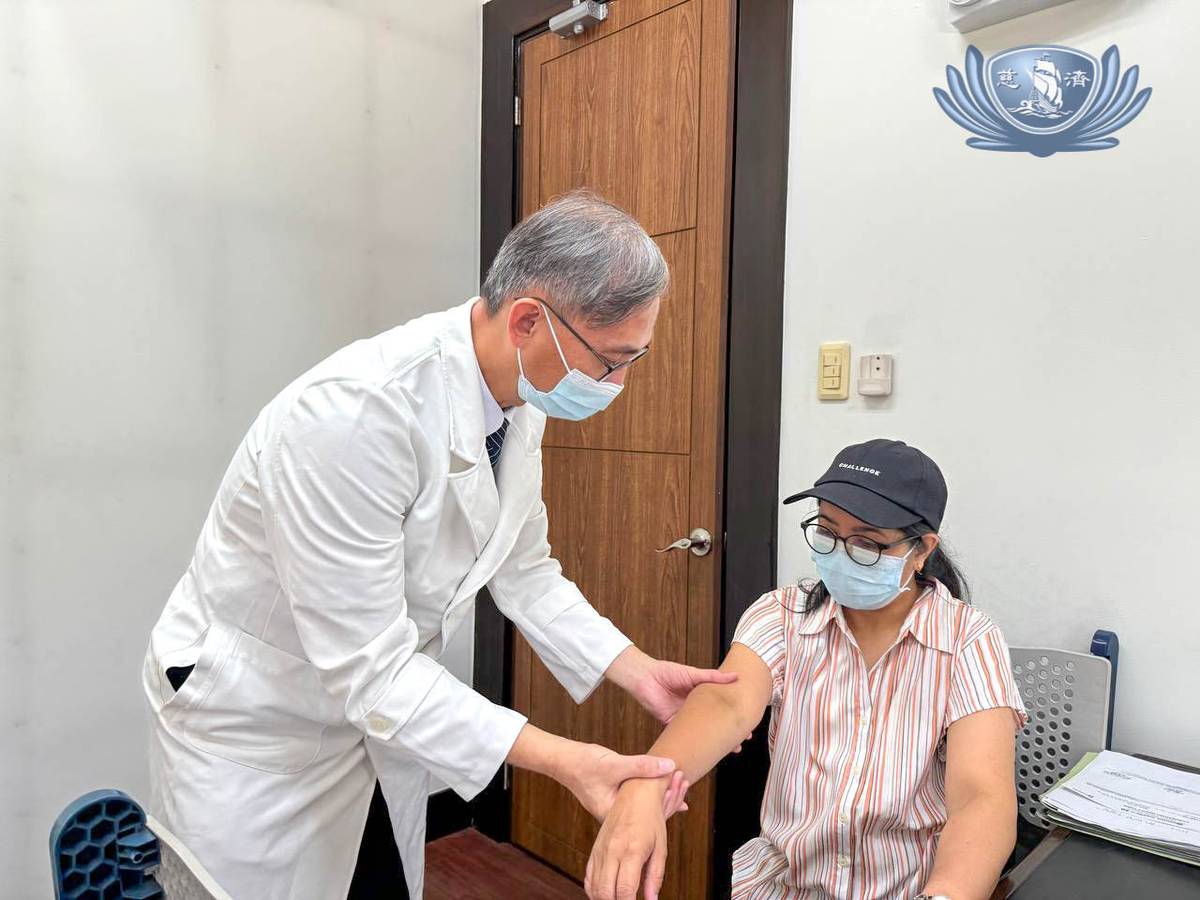
TCHH Center of Stem Cell & Precision Medicine director Dr. Chi-Cheng Li examines a local patient at the TCEC as part of the free consultations and treatments provided by visiting Taiwanese doctors.
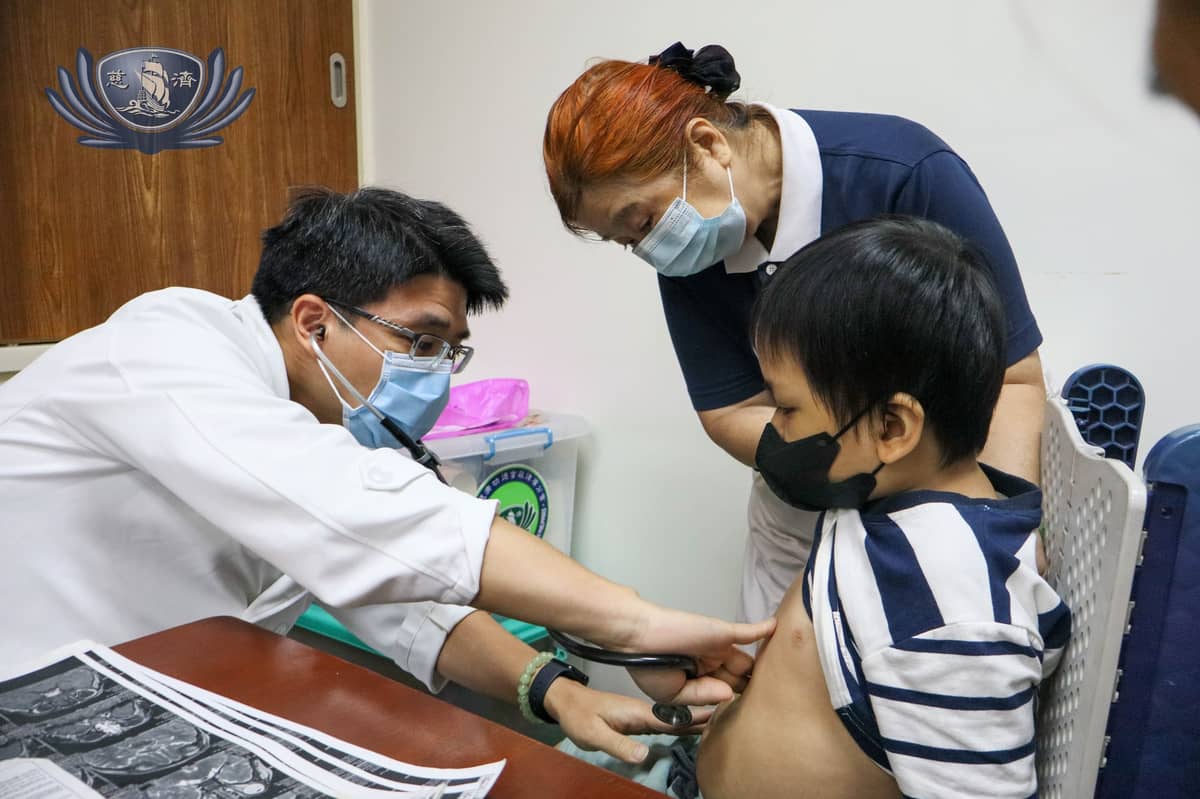
DR. Shang-Hsien Yang, a pediatric hematology and oncology specialist from TCHH, attends to a young Filipino patient at the TCEC.
“Performing transplants is not easy for a developing country because it is very costly and requires a team with knowledge of the latest technologies. However, in the past several years, many of the younger generation doctors have been very smart, very bright, and have worked hard with me in Taiwan. They stay for several months or even two years to learn a great deal of knowledge and skills and then bring it back to the Philippines to perform very successful transplants. I congratulate them,” Li said.
The life-saving efforts of Filipino transplant specialists have paid off.
“I have a patient who just visited me last week. We did a transplant on him, and now he has graduated and is a dentist,” Calavera shared. “Another post-transplant patient was able to fulfill her dream of becoming a lawyer. Those kinds of things really fill the heart.”
Filipino and Taiwanese specialists attending the forum provided free consultation to 87 patients at the TCEC. Those suspected of having blood diseases were referred to local partner hospitals and doctors for further evaluation and treatment.